Vicente Barrera: "None of the Fine Arts Escapes the Influence of Bullfighting"
The bullfighter and former vice president of the Generalitat states at the Alicante Bullfighting Museum that "bullfighting has never been in danger, they want us to believe it" | Writer and journalist Paco Delgado presents the books 'Brillos y barro' and 'La llamada de la casta'
Miguel de Clara
Alicante
Friday, 31 October 2025, 11:00
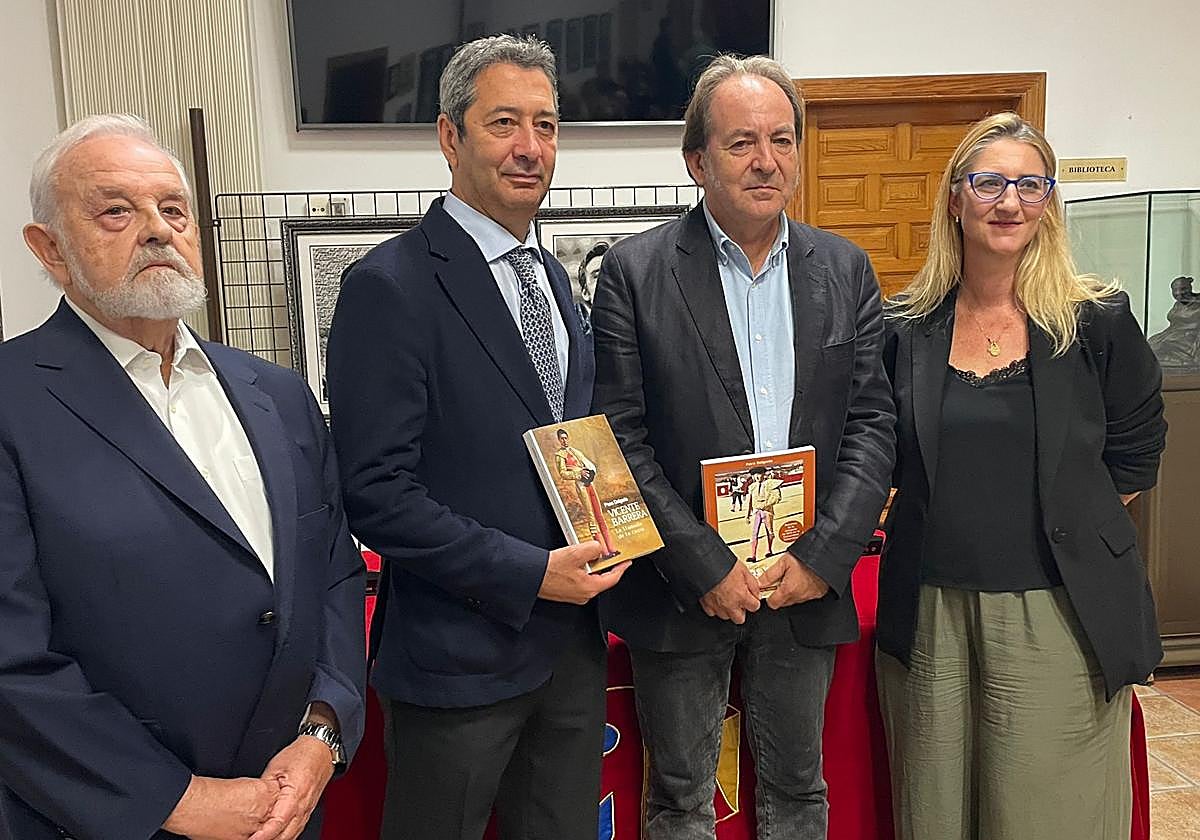
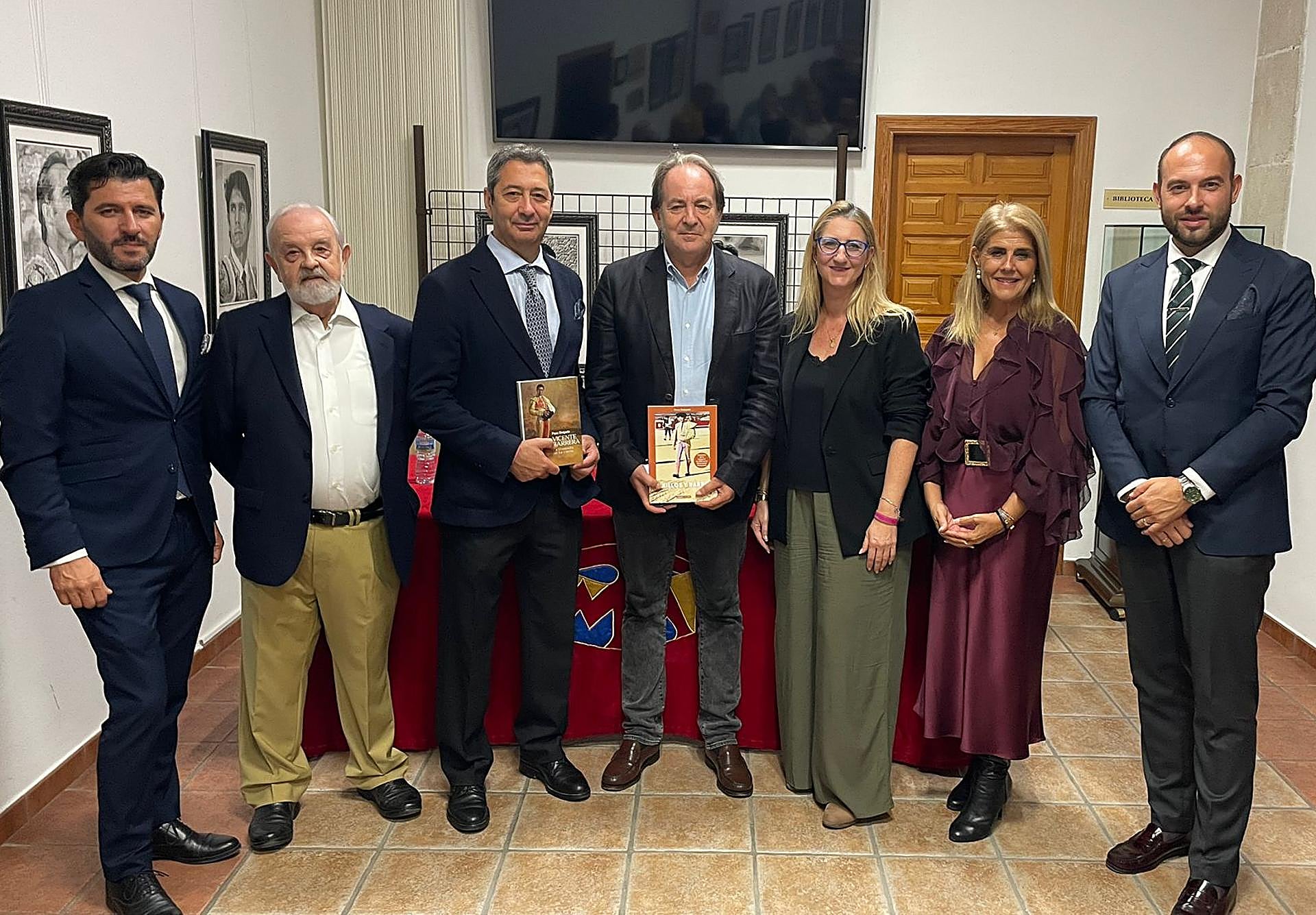
Vicente Barrera, a bullfighter and former president of the Generalitat Valenciana, asserted this Thursday at the Alicante Municipal Bullfighting Museum that "none of the Fine Arts has been able to escape the influence of bullfighting throughout history." He made this reasoned defense during the presentation of writer and journalist Paco Delgado's books 'Brillos y barro' - a summary of the 2025 season in the Valencian Community - and 'La llamada de la casta' - which reflects Barrera's career.
This event is part of the autumn programming of the Tertulia Taurina 'Amigos de Nimes', presided over by José María Jericó, and will have its second part in the Gala scheduled for next Sunday, November 30. Students from the Alicante Municipal Bullfighting School did not miss the appointment of someone who is also a Law graduate from the CEU-San Pablo University of Valencia.
Barrera dismissed the notion that bullfighting is in danger by asserting that "it is being proven with the attendance of spectators at the arenas. Another matter is that they want us to believe it. The only hope that opponents have is prohibition." At this point, he debunked another circulating myth, "in the Canary Islands and Catalonia, bullfighting is not banned. It is other types of circumstances that prevent the celebration of bullfighting events."
The former Valencian vice president recalled that if during his time in the Consell he supported bullfighting "it was not because of being a bullfighter. I did it out of obligation, as Minister of Culture, to protect and promote bullfighting in all its aspects, not only in the bullfighting one. All aspects related to culture received the same treatment in terms of equality and freedom to express themselves. I fulfilled the responsibility acquired with my position."
Reflecting on his career, he joked, "I was not a bullfighter who became vice president of the Generalitat; yes, the first vice president who was a bullfighter." He recalled that he became a bullfighter "by chance" after attending a rejoneo festival at the Valencia bullring, "which greatly impacted me," accompanied by his grandfather Pepe Simó. That, he confessed this Thursday, "was a madness for me that ended up overwhelming me, and I came to think what a pity it was to be so old and not be able to become a bullfighter!" This budding passion led him to attend the Faculty of Law "with folders covered with photographs of bullfighters."
He continued to question himself in those years, "if what I like most is this, why not bullfight?" And, determined, he went to enroll in the Valencia Bullfighting School, "but it was impossible for me as I was of age, although I did go to train with the students." It was in Ondara, along with some colleagues, the first time he stood in front of a cow, "almost at the same time I discovered the figure of my grandfather Vicente Barrera Cambra."
In his speech, he recounted anecdotes from his early beginnings at the ranches of Alipio Pérez-Tabernero or Álvaro Domecq. He mentioned the later bullfighter Manolo Carrión and the banderillero Paco Honrubia as some of his companions in those exciting beginnings. And, as some of the milestones of his seasons in the arenas, he evoked his presentation at the Valencia bullring (20-3-1993); the first exit on the shoulders of a Valencian bullfighter from the Maestranza (2-5-94), alternating with Rivera Ordóñez and Pedrito de Portugal; the alternative in Valencia (25-7-94) with Curro Romero as godfather and Miguel Báez 'Litri', as witness, before bulls of Alcurrucén; or the historic afternoon of March 19, 1996, with the exit on the shoulders from the Valencia bullring alongside Jose María Manzanares and Enrique Ponce after fighting a herd of Luis Algarra. He retired in the 2011 season, although in recent months he returned to bullfight in the charity festivals held in Utiel and Bocairente.