Major Operation Against Sexual Exploitation: 162 Women Freed and 37 Arrested, Three in Alicante
The criminal network recruited victims, primarily from South America and in vulnerable situations, forcing them into prostitution in properties acquired and converted into brothels.
Alejandro Hernández
Alicante
Tuesday, 22 July 2025, 09:55
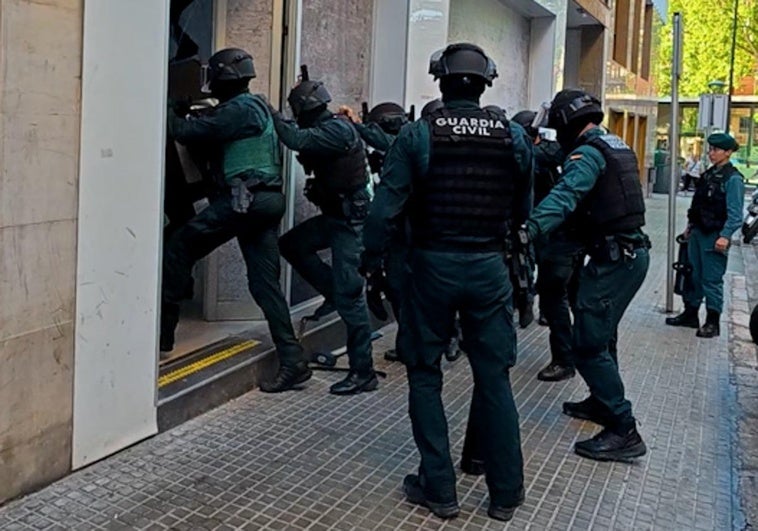
A major operation against sexual exploitation, conducted jointly by the Civil Guard, National Police, and Customs Surveillance, has dismantled a criminal organisation that recruited women from South America in vulnerable situations and forced them into prostitution in properties they acquired and converted into brothels.
The operation resulted in 162 victims being freed across the country, 39 raids, and 37 arrests, three of which were in Alicante, according to investigation sources. Nine of those arrested have been remanded in custody.
The police investigation began following the report of three victims who claimed to have been sexually exploited by several individuals in different Spanish towns. From this information and the extensive inquiries conducted by investigators, the existence of a criminal network dedicated to the sexual exploitation of women was determined, primarily based in the three provinces of the Valencian Community, but expanding to other provinces such as Barcelona, Malaga, Murcia, and Tarragona.
The criminal network was involved in recruiting women from South America both in Spain and in their home countries. In most cases, these women were in vulnerable situations, lacking residence and work permits, and were forced into prostitution in various locations across Spain.
Properties Converted into Brothels
To carry out this criminal activity, the organisation purchased or rented properties directly or through companies set up for this purpose, attempting to give them a legal appearance by disguising them as massage parlours. The chosen properties were mainly single-family homes or commercial premises, with members responsible for renovating and converting them into spaces where prostitution was conducted.
The victims slept crammed into bunk beds or directly in the same bed where they attended clients. These places were often closed, poorly ventilated, and in deplorable living conditions.
Each property had supervisors on duty 24 hours a day, responsible for controlling the women inside, collecting payments from clients, providing drugs to clients who requested them, and answering phone lines linked to prostitution ads on various specialised websites, reporting to higher-level members.
The victims were only allowed to leave for two hours in the morning, having to be available at all times. The main suspects monitored the premises and victims in real-time through a video surveillance system installed inside all properties used for prostitution. Fifty percent of each service went to the organisation, with the other half to the women, although they could be fined for various reasons, according to the same sources.
The victims were rotated and moved between different locations according to the criminal organisation's convenience, with evidence showing that besides the initially known locations, the organisation had begun expanding to Catalonia, Murcia, and Malaga, where new properties had been converted into brothels.
Structured Organisation
The investigation confirmed that the network was structured into three levels of responsibility. At the top were the organisation's leaders, who had family and sentimental ties among them. They owned or rented the properties, reaping the most significant financial benefits.
The second level consisted of trusted individuals responsible for supervising the premises, collecting profits, and coordinating supervisors. Finally, the third level included supervisors who monitored the victims, drivers, property renovators, and drug distributors.
The operation concluded with the search of 39 properties in the provinces of Valencia, Alicante, Castellón, Barcelona, Malaga, Murcia, and Tarragona, including the homes of the eleven main leaders of the organisation and the premises used for exploiting the victims, where €141,000 in cash and three vehicles were seized.
Money Laundering
Alongside the police investigation, the Regional Customs Surveillance Area of the Tax Agency in Valencia launched a financial investigation into the criminal organisation, as well as conduct that could constitute money laundering offences, identifying the individuals controlling the companies used by the organisation as fronts to channel the profits from their criminal activities.
This financial investigation remains open, with banking information and other data obtained in home searches being analysed, where numerous notebooks detailing the accounting of each exploitation site were found, as well as computers used by the organisation's leaders and their trusted individuals to manage accounts.
The identification and seizure of movable and immovable assets (in addition to the more than 60 bank accounts detected) of the alleged leaders have also been crucial, with these assets being seized to ensure their eventual confiscation.