
The VIVE Plan Boosts Alicante's Real Estate Market with Over 3,300 Future Affordable Homes
Of these, 929 are under construction, while 1,742 are in the bidding or awarded phase | The EVHA maintains 237 properties under affordable rental, many of which are aimed at young people
Óscar Bartual Bardisa
Alicante
Thursday, 4 December 2025, 07:25
The VIVE plan, one of the major initiatives of the Consell in housing matters, is achieving milestones. The Generalitat has set out to increase the real estate stock of the Comunitat through public-private collaboration and the transfer of municipal land. A combination that, for now, is bearing fruit and flooding the market with affordable developments that will be delivered in the coming years.
Among the different provinces, Alicante is one of the most dynamic, with 3,366 social housing units (VPO) within this regional plan, as detailed by the director general of the Valencian Land and Housing Entity (EVHA), Estefanía Martínez, during an informative breakfast on the VIVE Plan organized by TodoAlicante together with the Generalitat Valenciana and the Valencian Federation of Municipalities and Provinces (FVMP).
Martínez stated during the forum held this Wednesday at El Corte Inglés that "housing is going through one of the worst times" and recalls that, "after many years of stagnation, it has been a long time since public housing was built, it was not on the market, and free housing prices are now unaffordable for a large part of the population." The director of the EVHA has highlighted the value of these types of policies in "a complicated matter," as it shares regulations between the Government, the autonomous communities, and the municipalities themselves.
During the expert panel, the head of the EVHA detailed how this ambitious housing plan is progressing in the province of Alicante. Of the nearly 3,400 VPO within this program, 929 are under construction, while 1,742 are in the bidding or awarded process.
As for the rest, 382 are viable and are in the pipeline to go out to tender "shortly," while another 76 are in the same situation but are for facilities. Additionally, the EVHA maintains 237 properties under affordable rental.
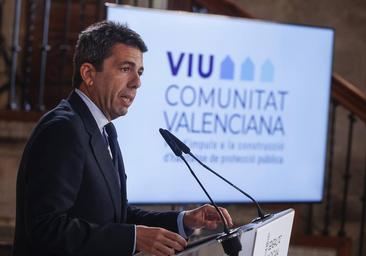
Martínez highlighted the success of the VIVE Plan and the importance of mobilizing unused land to build new homes. "We are encountering normalized salaries that do not have access to housing, and here comes the solution: the VPO," detailed the director of the EVHA, who emphasized that this is the main goal of the regional program, which allows "immobilized land to be put into construction for housing."
The Generalitat is focused on 2027 to meet the objectives of the regional program, and Martínez is confident that these deadlines will be met. "We already have many awards, and the numbers of the VIVE Plan are positive; we will reach the 10,000 homes as projected," reaffirmed the director of the EVHA.
One of the models that is working best within this program is the swap for future work. An instrument that promotes public-private collaboration in which the administration, in this case, the Generalitat through the EVHA, transfers the land to the developer, who in return delivers a certain number of homes that become part of the public stock. "These are plots that are transferred and made available to developers, who pay us in homes the cost of the land," explained Martínez during the TodoAlicante forum.
Pillars of the plan
Among the mechanisms on which this plan is based are legal certainty, cooperation between public administrations, and public-private collaboration. Much of the responsibility lies with the municipalities, which can transfer municipally owned plots to build social housing, receiving in return a percentage of them or even other modalities, such as social centers.
In addition to these plots, the plan also includes the rehabilitation of buildings, such as those being carried out in the Miguel Hernández neighborhood in Alicante. These homes that are rehabilitated or built are intended for rent, rent with purchase, or affordable purchase, and a large percentage is for young people up to 35 years old.
Estefanía Martínez detailed that 40% of the offer is for young people, who can apply for a place in six months. After this time, the developer can offer it to the general public.






.jpg)