UMH Researchers Pioneer Early Parkinson's Diagnosis via Blood Test
Parkinson's is the second most common neurodegenerative disease and a leading cause of neurological disability
Pau Sellés
Alicante
Monday, 27 October 2025, 13:55
Early detection of Parkinson's disease could soon be possible with a simple blood test. Researchers at the UMH-CSIC Institute of Neurosciences are conducting a study that could make this diagnostic breakthrough a reality. Although not yet available for clinical use, the method has been tested on newly diagnosed patients and has proven effective.
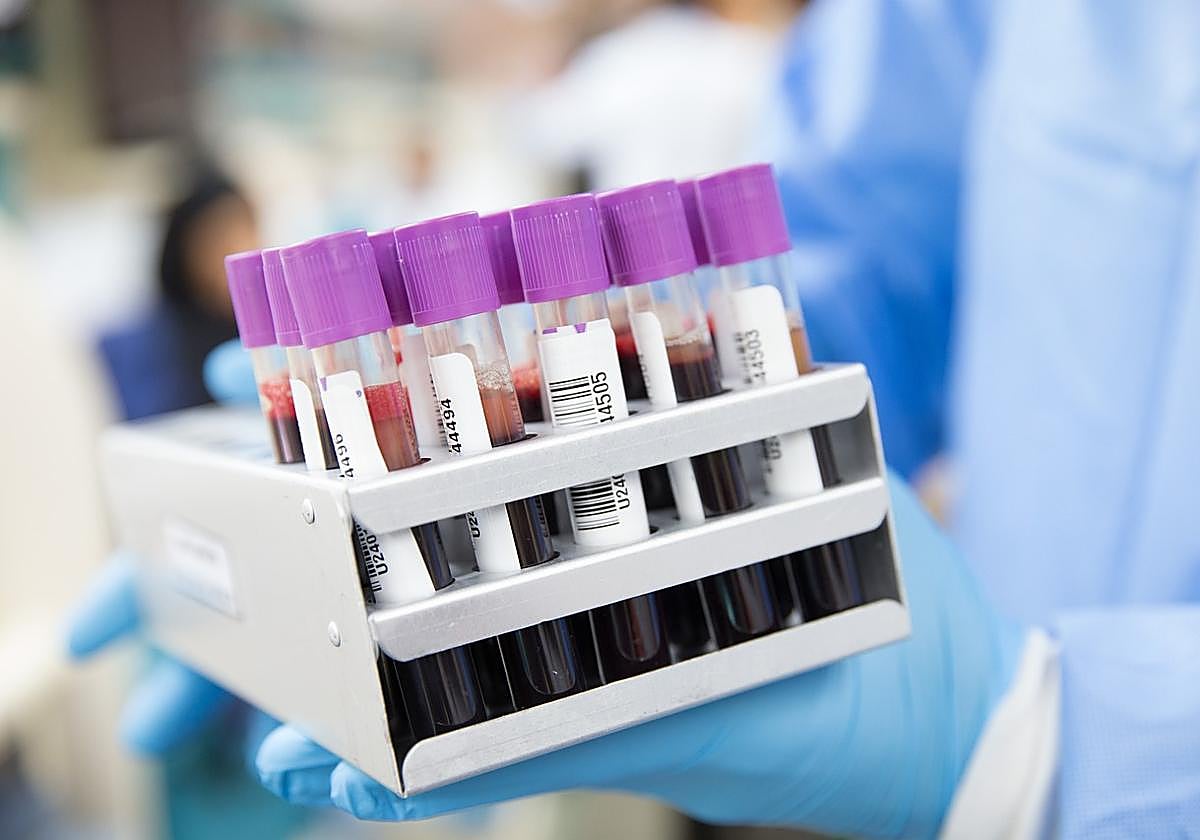
The method studied by experts requires only a blood sample. The analysis is conducted using equipment available in many hospital laboratories and allows for the identification of genetic alterations associated with the disease in its early stages.


"The key lies in analysing the gene expression of a type of immune system cell called 'peripheral blood mononuclear cells'," explains Professor Francisco Navarrete, the first author of the article. The expert indicates that, as with all cells, they contain genetic information, but not all their genes are active all the time. Some genes are 'switched on' or 'off' according to the body's needs, for example, in response to an infection or the development of a disease.
The results, published in the journal Neurotherapeutics, are the fruit of collaboration between researchers from the Translational Neuropsychopharmacology Laboratory of Neurological and Psychiatric Diseases, led by UMH Professor Jorge Manzanares, and the Cellular Plasticity and Neuropathology Laboratory, both at the IN, the Alicante Institute for Health and Biomedical Research (ISABIAL), the Carlos III Health Institute, and the 12 de Octubre Hospital in Madrid.
12 million affected
Parkinson's disease affects around 12 million people worldwide. It is the second most common neurodegenerative disease and a leading cause of neurological disability. One of the major challenges in combating this disease is advancing its diagnosis, ideally before the most severe motor symptoms appear.
Currently, the diagnosis of Parkinson's disease begins with a clinical examination when the most visible symptoms start. "However, tremors appear when there is already advanced neurological damage and can also be confused with those of other neurological diseases," explains Manzanares. "Until a few years ago, the only way to definitively diagnose the disease was through post-mortem tissue analysis," the expert points out, "but it is crucial to have non-invasive and rapid methods that detect the disease earlier."

Using sequencing techniques and bioinformatic analysis, the team identified more than twenty genes whose activity was altered in patients with Parkinson's disease who had not yet received pharmacological treatment. "These changes are not observed in healthy patients," highlights Marina Guillot, a predoctoral researcher who led the gene expression analyses alongside CSIC scientist José P. López-Atalaya, and adds: "This indicates that they could be considered good markers for diagnosis, and also provide us with clues about the biological mechanisms occurring during the development and progression of the disease."
The sample analysis is conducted using equipment available in many hospital laboratories and allows for the identification of genetic alterations associated with the disease in its early stages
Specifically, the researchers have identified 22 genes that are expressed differently in patients with Parkinson's disease and healthy individuals. Some of these genes are involved in immune responses, reinforcing the hypothesis that inflammation and the immune system play a role in the disease's development. Other genes are related to substance transport mechanisms in brain tissue and iron homeostasis, whose dysfunction has previously been linked to neurotoxicity.
In addition to changes in gene expression, researchers detected alterations in cellular pathways linked to survival, inflammation, cell death, and immune cell composition. "The exact onset and progression of Parkinson's disease are still not well understood, and current treatments have limited effects," notes Manzanares, who hopes these analyses will contribute to designing more effective and personalised therapies in the future.
The exploratory study was conducted with 23 patients with Parkinson's disease and 16 healthy individuals as a control group. Despite the small sample size, the researchers have compared their results with other independent studies conducted over the past decade in Italy and the United States, confirming the potential of this diagnostic method.