
The Government Declares Alicante as a 'Place of Memory' for its Role in the Civil War and Post-War Period
The plaques will be located at the Port of Alicante, the Municipal Cemetery, and the Central Market
Todo Alicante
Alicante
Saturday, 22 November 2025, 17:25
The Secretary of State for Democratic Memory, Fernando Martínez López, attended the commemorative events for the declaration of Alicante as a Place of Democratic Memory, which was published today in the Official State Gazette.
Martínez stated that "the city of Alicante is closely linked to Spain's Democratic Memory through three particularly significant episodes: the bombing of the Central Market on May 25, 1938, the dramatic exile through the city's port, and the tomb of Miguel Hernández."
These milestones alone constitute events of singular relevance due to their impact on collective memory, associated with repression and violence against the population as a consequence of resistance to the coup d'état of July 1936, the War, and the Dictatorship, as well as exile. For this reason, the declaration of Place of Memory is published today in the Official State Gazette, as a result of the agreement signed by the Secretary of State last Thursday, November 20.
The city's Central Market, which was bombed on May 25, 1938, when the Italian aviation aiding the rebel army dropped up to 90 bombs on the market, was completely crowded with people. The consequences of that massacre were 273 dead and at least 244 injured, some of them seriously, in addition to destroyed or damaged buildings.
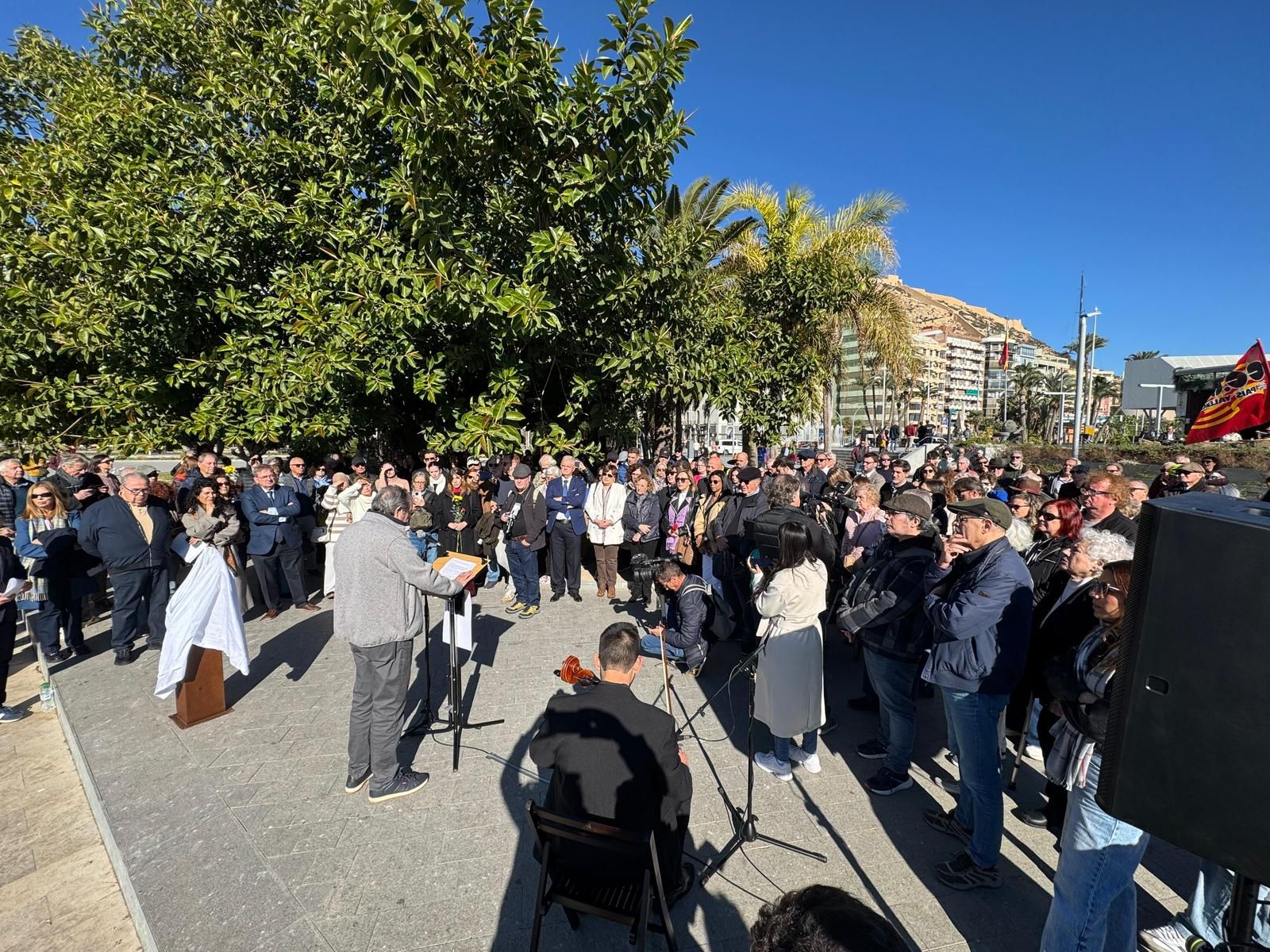
The Port of Alicante became the major point of exile. From this location, the ships Winnipeg and Marionga departed in the early days with the first refugees. On the 12th, the Ronwyn followed with more than 700 refugees. On the 19th, the American Trader sailed with 859, joined by small boats departing from the ports of El Campello, La Vila Joiosa, Santa Pola, and Torrevieja. By the end of the month, the humanitarian drama intensified with the arrival of thousands of refugees in the city fleeing the advance of Franco's troops. Finally, on March 28, the last two ships departed: the Maritime, with 32 passengers, and the Stanbrook, with 2,638 refugees. Today, the event was held next to the bust of Captain Archibald Dickson, who led the evacuation on the Stanbrook.
The third site is the tomb of Miguel Hernández, a place of remembrance and tribute to the people's poet who died in the infirmary of Alicante prison on March 28, 1942, as a result of neglect, abandonment, and mistreatment by Francoist authorities.
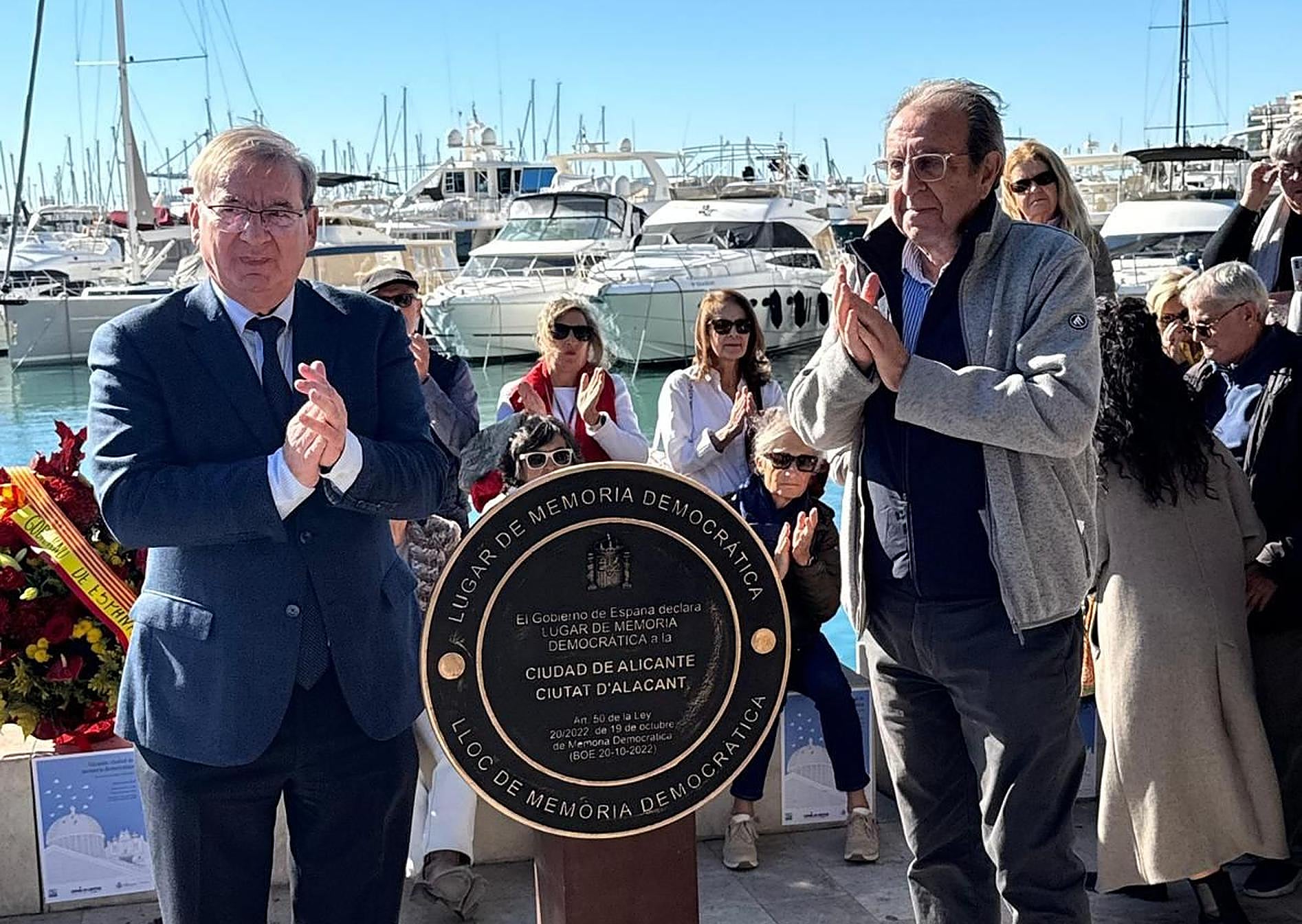
Martínez highlighted the Spanish Government's commitment to recovering the memory of the victims of the war and dictatorship on the third anniversary of the approval of the Democratic Memory Law. He also lamented that the Valencian Community insists on repealing the regional Memory Law, "an attack on the dignity of the victims and the families who still seek recognition of the facts and the pursuit of truth and justice."
The Secretary of State emphasized that the Spanish Government will continue the path set by the law, with the declarations of 'Places of Memory', -which to date are 19, with another 18 files already initiated-; and with the application throughout the territory "of a law that complies with the UN mandate, respects Human Rights, and defends the dignity of the victims."





-kXs--1200x840@TodoAlicante-TodoAlicante.jpg)