Villena investigates the destruction of Iberian remains at the site that gave rise to the city
The damage may have occurred during the construction of the Senior Centre in 2010
P.S.
Villena
Friday, 28 November 2025, 13:50
Villena Town Council is investigating the destruction of 4th century BC Iberian remains at the site that could represent the origin of the city. The council's hypothesis is that this damage occurred during the construction of the Senior Centre in 2010.
The Councillor for Public Works, Javier Martínez, has publicly revealed the technical reports from 2009, which apparently "were not heeded by the municipal government at the time." This document has come to light due to the surveys conducted on the municipal plot at Plaza Mayor last spring, which is pending development.
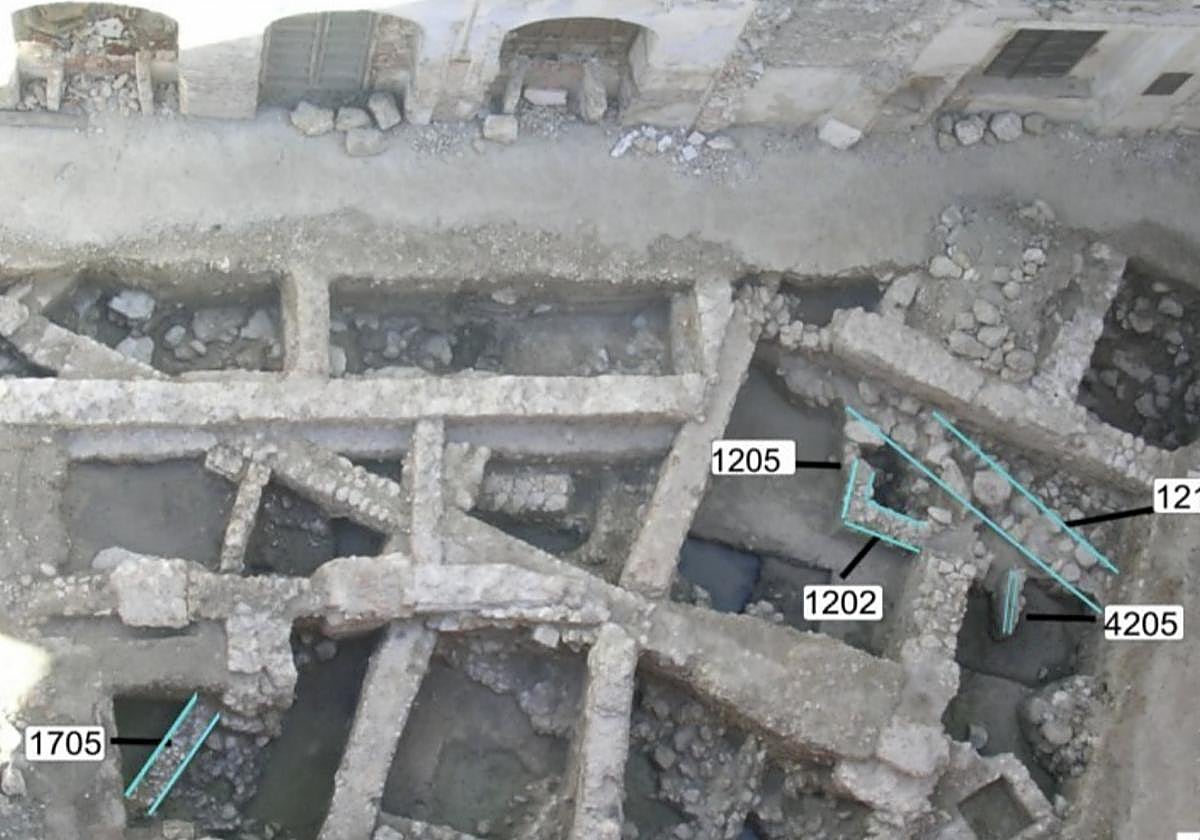
Martínez has shown the photograph that captures the vestiges of the city's origin found during the 2010 excavations, prior to the construction of a municipal building where the Hotel Alicante once stood.
Photographic evidence
"What you see here is the photograph taken during the archaeological work for the construction of the current Senior Centre, on the former site of the Hotel Alicante. During the archaeological work we are conducting on the Plaza Mayor site, we found a 2009 document with conclusions that detailed the importance of this discovery, which was not communicated to the public by the municipal government at the time," Martínez stated.
The councillor has stated that, despite "the museum's technicians advising that these remains be integrated into the building, it was not done because it would have delayed the works and they would not have been able to inaugurate it before the 2011 elections." Martínez speculated that the construction of the Senior Centre's basements could have permanently destroyed the historical remains.
The councillor noted that "integrating this type of heritage is something that is usually done with archaeological finds of interest," such as Villena's first Iberian settlement. As an example, Martínez recalled that during the recent urbanisation works in the historic centre, remains of the city's medieval wall were found, catalogued, protected, and then highlighted through surface works that explain their path and the purpose of the defensive structure.