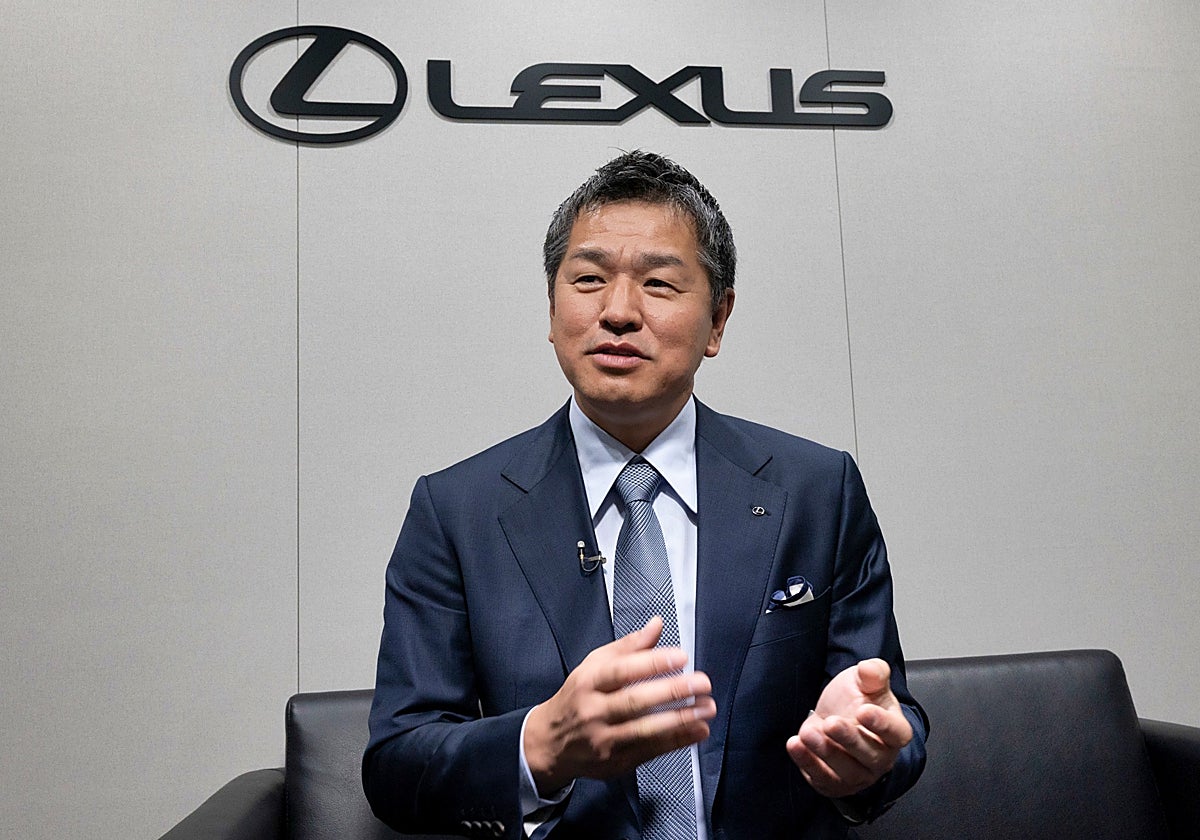
Takashi Watanabe, President of Lexus International: "Space and Comfort Outweigh Speed in the New Perception of Luxury"
JOSÉ RAMÓN ALONSO
Thursday, 20 November 2025, 08:05
At the Japan Mobility Show held in Tokyo in the last week of October, where electric vehicles, SUVs, and futuristic prototypes vie for attention, Takashi Watanabe, President of Lexus International, moves with the calm of someone who understands the value of Japanese patience.
Watanabe is the voice of a brand that is redefining luxury in the era of electrification, without losing its identity. We are the only Spanish media outlet he receives in the Japanese capital, and he does so with a discreet smile and the courtesy typical of Japanese culture.
"The world of luxury has changed profoundly," he explains. "Our customers no longer seek just a powerful or sophisticated vehicle. They look for something that reflects their mindset and respect for the environment. At Lexus, we believe modern luxury combines technology, sustainability, and human emotion."
This vision translates into an increasingly free design language, where Japanese tradition blends with the exploration of new forms and materials: "We want every Lexus car to tell a story," he states. "The 'takumi' craftsmanship and 'omotenashi' hospitality remain our essence, but now we apply them to a rapidly evolving world."
Among the models that have sparked the most curiosity at the Japan Mobility Show is a surprising six-wheeled vehicle prototype from Lexus, the LS Concept, which is halfway between a luxury minivan and a spaceship. A proposal that has garnered interest within the automotive industry.
Watanabe smiles when we mention it: "It's not just an aesthetic provocation," he says. "In Asia, minivans are the new form of luxury. Space and comfort outweigh speed. This concept allows us to explore new technical solutions and better understand what 'premium' mobility might look like in the future."
At a time when most manufacturers are accelerating towards full electrification, Lexus adopts a more nuanced strategy. "We don't believe in a single technological answer," Watanabe explains. "Depending on the market, an electric, hybrid, or even advanced combustion engine might be the best option. The important thing is to offer an emotional and sustainable driving experience at the same time."
The executive emphasizes that Lexus does not intend to abandon its DNA. "Electrification does not mean losing the soul of the car," he clarifies. "We want that connection between the driver, the vehicle, and the road to continue to exist, even if the energy comes from a battery."
When the conversation turns to another novelty presented in Tokyo, the LS Concept Sport, reminiscent of the 2010 LFA, Watanabe's eyes light up. That limited edition supercar (500 units produced) with a V10 engine delivering 560 horsepower is considered one of the purest cars in recent history and continues to shape the brand's philosophy.
"The LFA was a symbol of what Lexus can achieve when it combines passion and engineering. Our next sports car will inherit that spirit, but with the technology of the future. We want to show that emotion can also be electric."
Regarding commercial and tariff tensions between major markets, Watanabe responds with Japanese pragmatism: "It's a volatile environment, yes, but Lexus is a global brand. Our production is diversified, allowing us to adapt quickly. Instead of worrying about external changes, we prefer to focus on what we control: quality, innovation, and customer experience."
Before parting, the President of Lexus sums up his vision in a phrase that could well serve as a motto for the entire company: "Our challenge is to maintain the thrill of driving in an increasingly automated world. Technology should serve to amplify sensations, not replace them."