The 'Symphonic' Picasso and the 'Chamber' Klee Harmonise at the Thyssen
The two brilliant 'destroyers of reality' are juxtaposed in 60 masterpieces from the Berggruen collection
Miguel Lorenci
Madrid
Sunday, 9 November 2025, 00:30
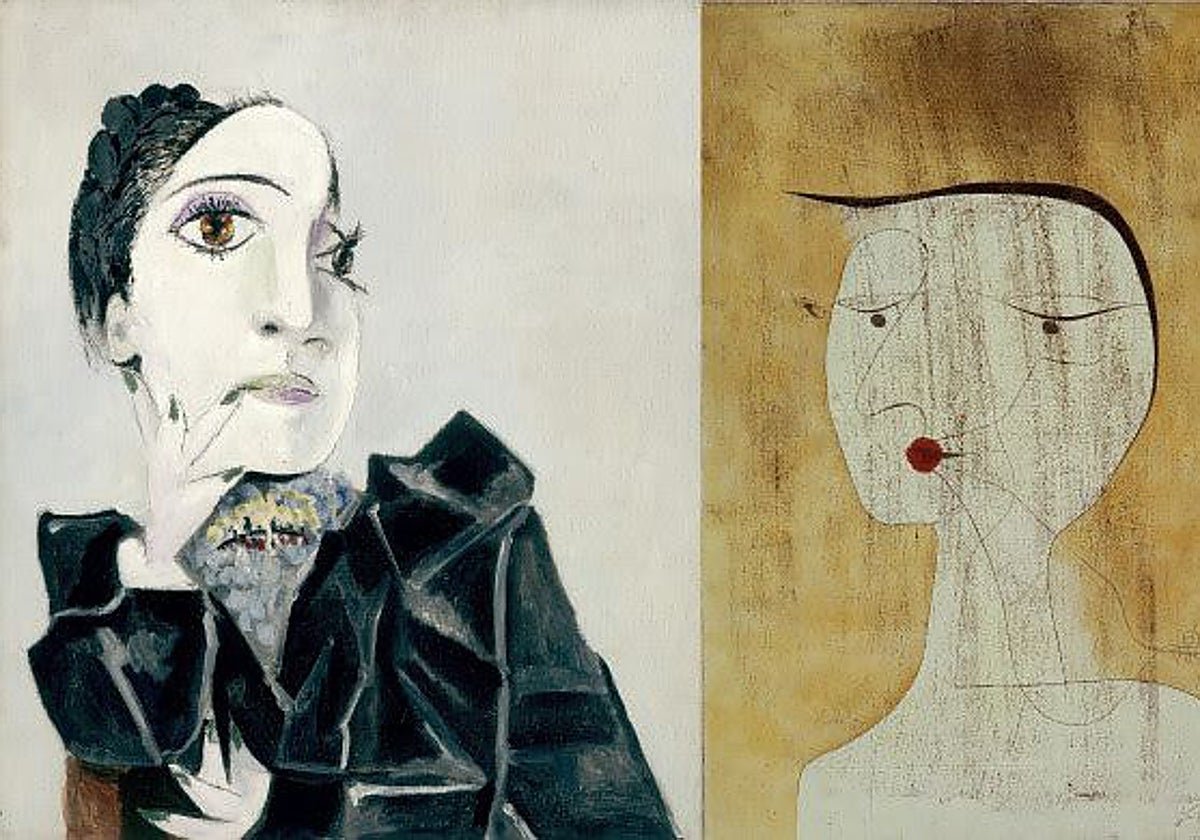
"Pablo Picasso is a grand symphony and Paul Klee is chamber music." Olivier Berggruen, son of the legendary German collector and dealer Heinz Berggruen, uses this metaphor to describe his father's two favourite artists, who gathered works from "the two greatest geniuses of 20th-century painting" in his collection.
Now, these distinct yet complementary plastic chords resonate in harmony at the Thyssen-Bornemisza Museum in Madrid, which presents a brilliant exhibition where both giants "harmonise" once again, following their confrontation in Bern in 2010.
The works, from the Berggruen Museum in Berlin—closed for renovations for four years—have travelled to Spain to be juxtaposed with those of the Thyssen. "We have two disparate geniuses, two 'Pablos', Picasso and Klee, two great collections and two museums facing each other," celebrates the artistic director of the Madrid museum, Guillermo Solana, delighted to host "the second great duel of titans of the autumn" weeks after connecting Jackson Pollock and Andy Warhol in another 'duet' of giants.
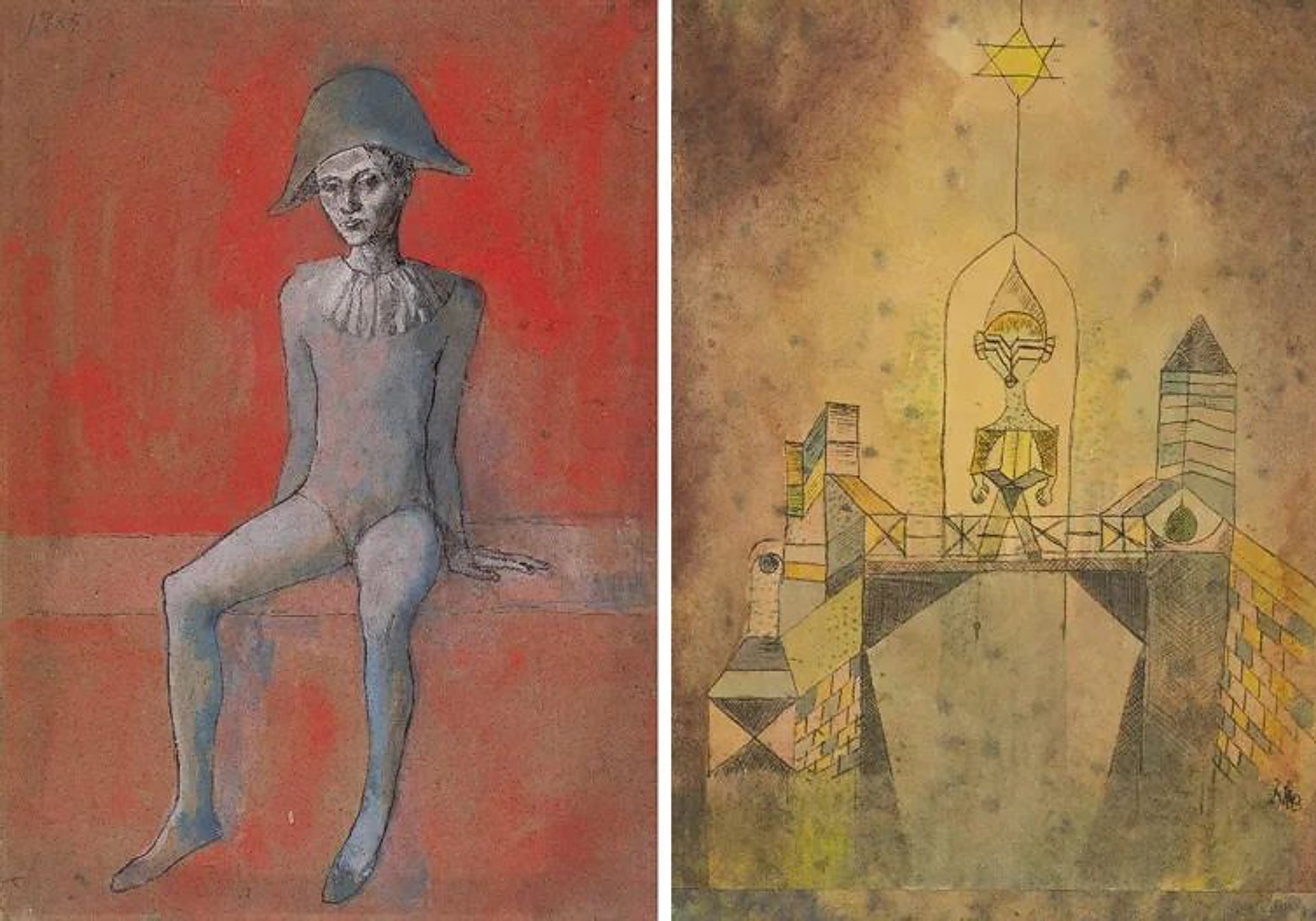
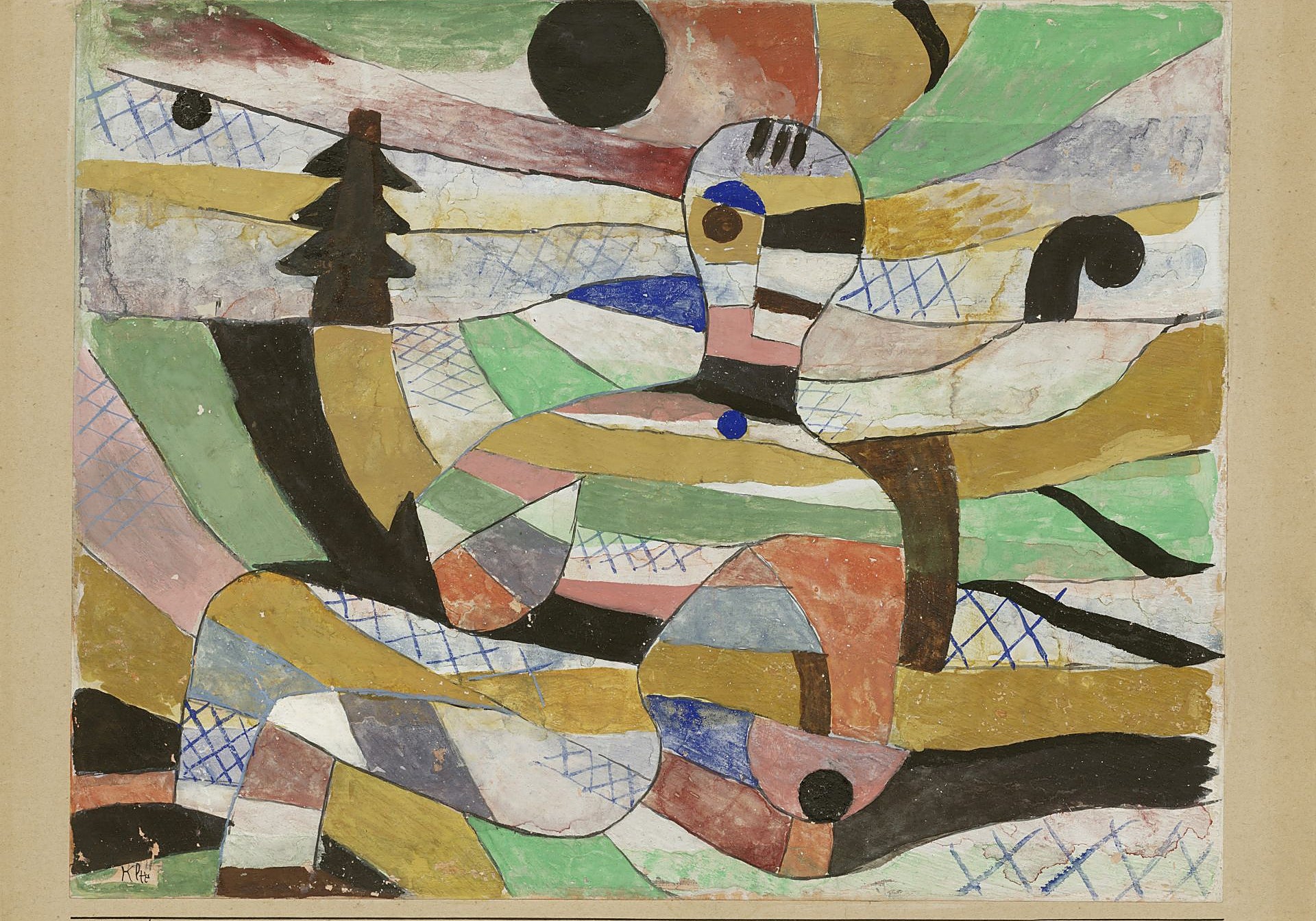
"It's a great gift for the Thyssen," adds Paloma Alarcó, curator of modern painting and curator of 'Picasso and Klee in the Heinz Berggruen Collection', alongside Gabriel Montua, director of the Berlin museum. The exhibition, open until February 1, brings together 60 exceptional pieces organised around four thematic axes: portrait, landscape, still life, and nude, genres that Picasso and Klee revolutionised. Giants of modernity, Picasso (1881–1973) and Klee (1879–1940) shook the foundations of 20th-century art by stirring surrealism, expressionism, and cubism. Masters of drawing, they deformed faces and bodies playing with masks and irony.
Alarcó highlights the "opposite personalities" of both creators. "Picasso is earthly, excessive, southern, and sensual; Klee is introspective, northern, spiritual, and intellectual," she enumerates. "A deep affinity united them despite their differences," she says.
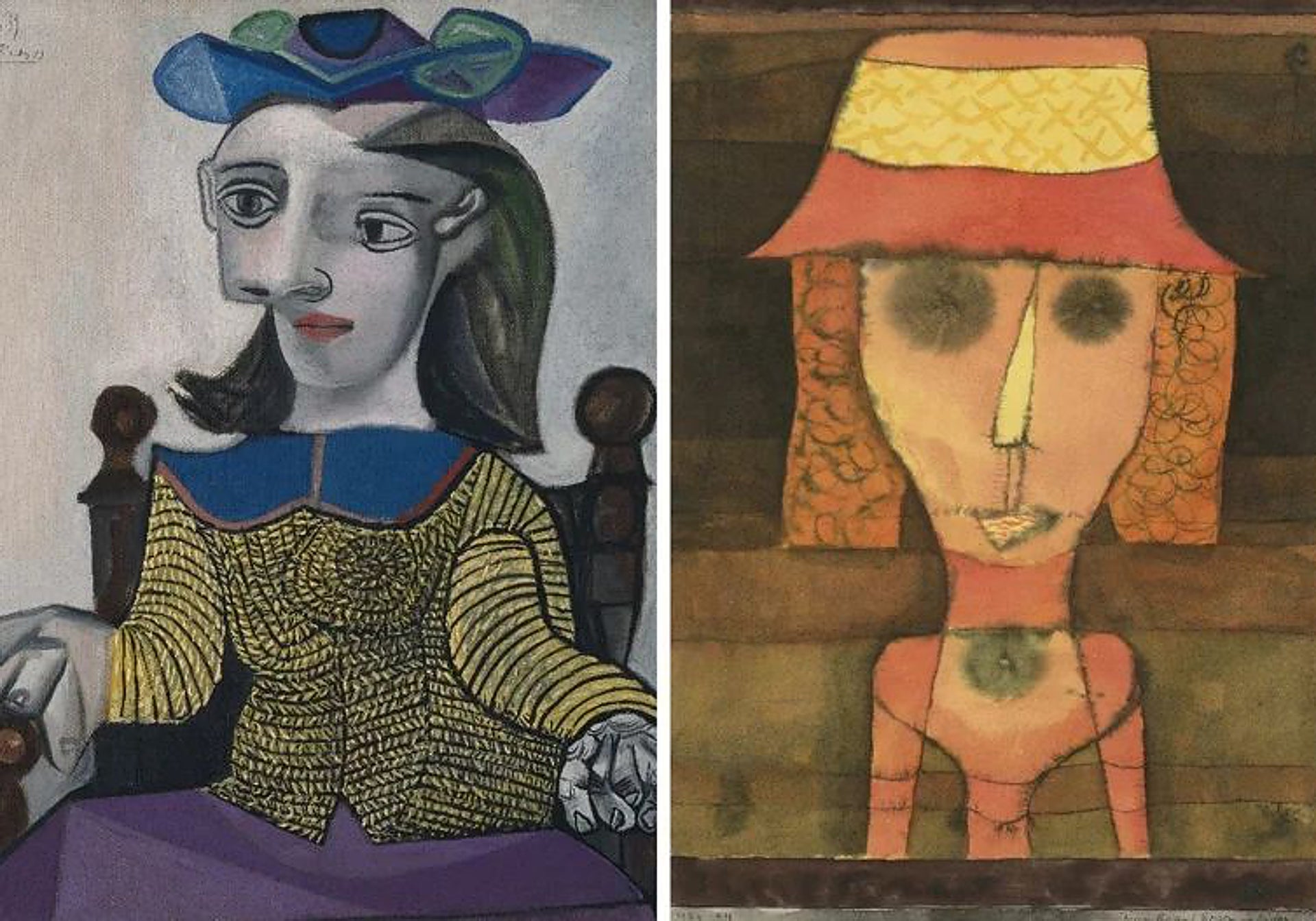
The curator asserts that they "shared a spirit of experimentation, thematic repertoires, and similar creative processes." "Their formulas, as antagonistic as they were revolutionary, destroyed reality through a radical plastic language. They forever changed the way of seeing and understanding the contemporary world," she notes.
The exhibition pays tribute to two great patrons: Heinz Berggruen (Berlin, 1914–Paris, 2007) and Baron Hans Heinrich Thyssen-Bornemisza (The Hague, 1921–Girona, 2002) by confronting their achievements. "Both Germans, expatriates, collectors, and founders of two great museums," recalls Solana.
_20251106195620-U23850883231jEO-1920x1344@RC.jpg)
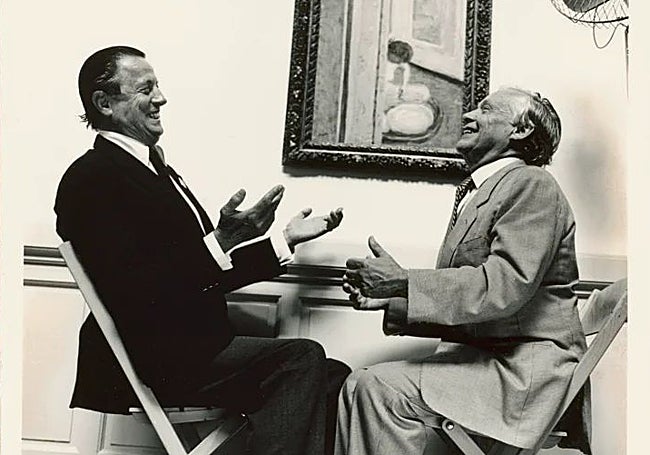
Born into a middle-class Berlin family, Berggruen studied Literature in France and was a journalist before going into exile with the rise of Nazism. In San Francisco, he began his life as a dealer working with Diego Rivera. He would become an American soldier in Europe and a UNESCO collaborator. In 1950, he opened his legendary modern art gallery in Paris, where for three decades he provided avant-garde works to select clients like Baron Thyssen.
Passion
His passion for collecting began with a Klee watercolour acquired in 1940. Since 1980, he dedicated himself to expanding an exquisite modern art collection that the German government acquired in 2000. With the Berggruen Museum, now part of the Neue Nationalgalerie in Berlin, he fulfilled his dream: to keep his collection together and share it with the public, as Baron Thyssen did with his in 1993.
One of the pieces Berggruen sold to the Swiss collector was 'Harlequin with Mirror' (1923), an iconic 'Picasso' now a symbol of the Thyssen collection that once hung in the German dealer's Parisian salon. "He collected few artists—Cézanne, Matisse, Giacometti...—but in depth," highlights his son Olivier. He confesses that his father had "a complicated relationship" with late Picasso, "although he ended up collecting him."
"I was my best client," wrote the shrewd dealer and great philanthropist in his memoirs, who donated 90 works by Klee to MoMA in New York and another 13 to the Museum of Modern Art in Paris.
The exhibition also includes works by some old masters who inspired both artists. Pieces like 'Nymph of the Fountain' (c. 1530–1534), by Lucas Cranach the Elder, in the portrait section, or 'View of The Hague' (c. 1690), by Gerrit Berckheyde, in the landscapes section.
Encounters and Disagreements in a World on the Brink of Collapse
Picasso and Klee met at a couple of group exhibitions in Paris in the 1920s, but they were not friends. They admired each other and met at least three times, the last in 1935 in Bern, when the Swiss artist was already very ill. The Spaniard arrived with a friend but got distracted drinking. He arrived late and tipsy to the meeting, which annoyed the strict and formal Klee. Picasso picked up a drawing by the Swiss without knowing if he was placing it right side up or upside down. "Look at it however you want, because now everything is upside down and it doesn't matter. The world is falling apart," Klee retorted. A phrase that for Alarcó is "a metaphor for the tumultuous historical moment they were living."
"The critic Clement Greenberg wrote that between them there was an opposition similar to that which existed between the School of Siena and the School of Florence in the Renaissance," recalled Solana. "A relationship analogous to that established between Sassetta and Masaccio: between the page and the wall, calligraphy and plasticity, miniature and monumental."