Spain Boasts One of the World's Most Qualified Early Childhood Teaching Staff
Nine out of ten teachers in this stage are women, but the figure drops to 70% when it comes to holding managerial positions, according to an OECD study
Alfonso Torices
Madrid
Tuesday, 2 December 2025, 11:10
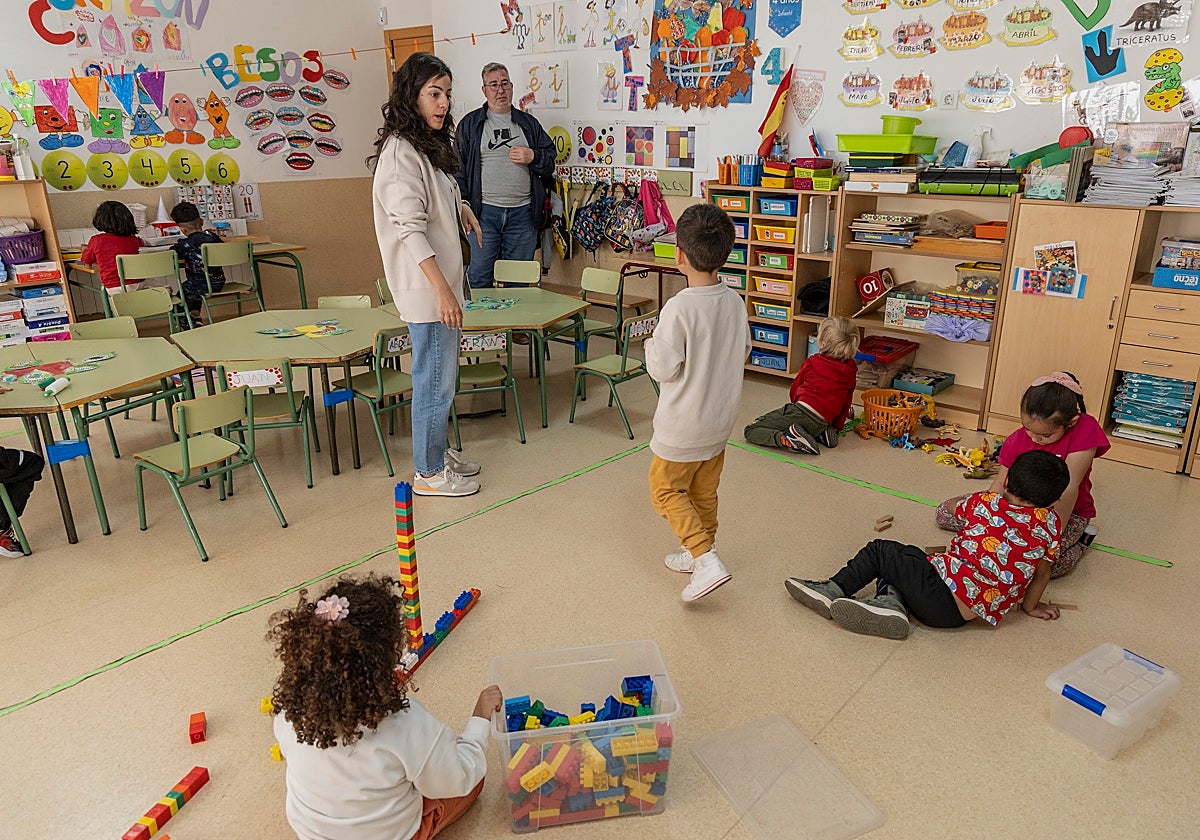
Spain is among the countries with the most qualified teaching staff in the second stage of early childhood education, where children aged 3 to 5 are prepared for primary school. This is highlighted by the Talis Early Childhood Education report, the largest international survey on teaching work, conducted by the OECD in 15 countries, with educators and management teams from 498 Spanish centres participating.
Although the second stage of early childhood education is not mandatory in Spain, it has almost universal coverage, offering free enrolment to approximately 98% of children aged 3 to 5, about one million students. This represents one of the highest international enrolment rates at these levels, about 13 points above the OECD average and eight more than the EU partners' average. Three-quarters of these children are educated in public centres.
According to survey responses, 99% of teachers in Spain's second stage of early childhood education hold a university degree. While the report does not provide averages for international comparison (only isolated data from each state), Spain's high qualification level is evident, considering, for example, that university graduates in Denmark are 69% and in Germany, 68%.
There is a need for more staff, resources, and training in special needs education to improve the cycle's quality.
Spain also stands out for the high participation of early childhood teachers in ongoing professional development activities, with 87% participating in courses, seminars, and workshops, surpassing most European and Latin American countries in this category. However, teachers feel a need for better training to support students with special educational needs, mostly children with some form of disability or behavioural, communication, or language disorder.
The profile of Spanish early childhood teachers is predominantly female. Women make up 92% of the teaching staff at this stage, yet there is a clear gender bias in managerial positions, with women holding only 70% of these roles, twenty points below the staff percentage.
Spanish early childhood professionals have a very positive view of their profession and high job satisfaction, among the highest of all participants. More than 96% feel valued by families and 99% by children, with the only blemish being the lack of social recognition for their work, noted by only 45%. Almost all (97%) are satisfied with their job, and the vast majority (90%) say they would choose to work in this stage again if they had to. 96% enjoy working at their centre, although 17% express interest in moving to another.
Baja tasa de abandono
Professional autonomy is also high, with 95% satisfied with their level of control over teaching practices. In fact, 91% of principals state that teachers have "ample opportunities to actively participate in school decisions," placing Spain above the international average in teacher collaboration and autonomy.
As a logical result of the above, Spain ranks among the countries where second-stage early childhood teachers have the least intention of leaving the profession. Those seeking a job change mainly aspire to professional mobility to higher levels (34%), such as primary education, especially among younger teachers, a much higher option than those who would like to work outside the sector (10%) or leave to attend family responsibilities (27%).
Despite the abundance of positive responses to most aspects of the profession, Spanish early childhood teachers also believe there is a lack of staff and resources in schools to ensure higher quality care, while there is a very high rate of job temporality and excessive administrative burden, as well as too many changes in educational regulations and laws.
Buena práctica docente
Another aspect where Talis places the second stage of Spanish early childhood education in a good light is in pedagogical practices and language development. According to teachers' responses, in early literacy, 55% of teachers use book reading, and between 73% and 80% conduct phonological awareness exercises in class. Social skills development is also high, with 91% of teachers promoting sharing, 92% mutual help, 88% inclusion in games, and 90% emotional support. Spain has high and close to international maximum figures in these pedagogical practices.
Regarding language development, daily practices include encouraging conversation, helping express ideas, and using new vocabulary, reaching between 74% and 94% of teachers, also ranking among the international maximums.