Santana Ready to Revive Linares Factory
Juan Roig Valor
Monday, 27 October 2025, 14:06
Historic Spanish brand Santana is officially back on the road. More than a decade after the closure of its plant in Linares (Jaén), the company is reborn under the name Santana Motors, backed by its Chinese partners Zhengzhou Nissan Automobile (ZNA) and Anhui Coronet Tech. The project not only marks the return of a legendary name in the 4x4 world but also the industrial revival of a significant area in the Spanish automotive sector.
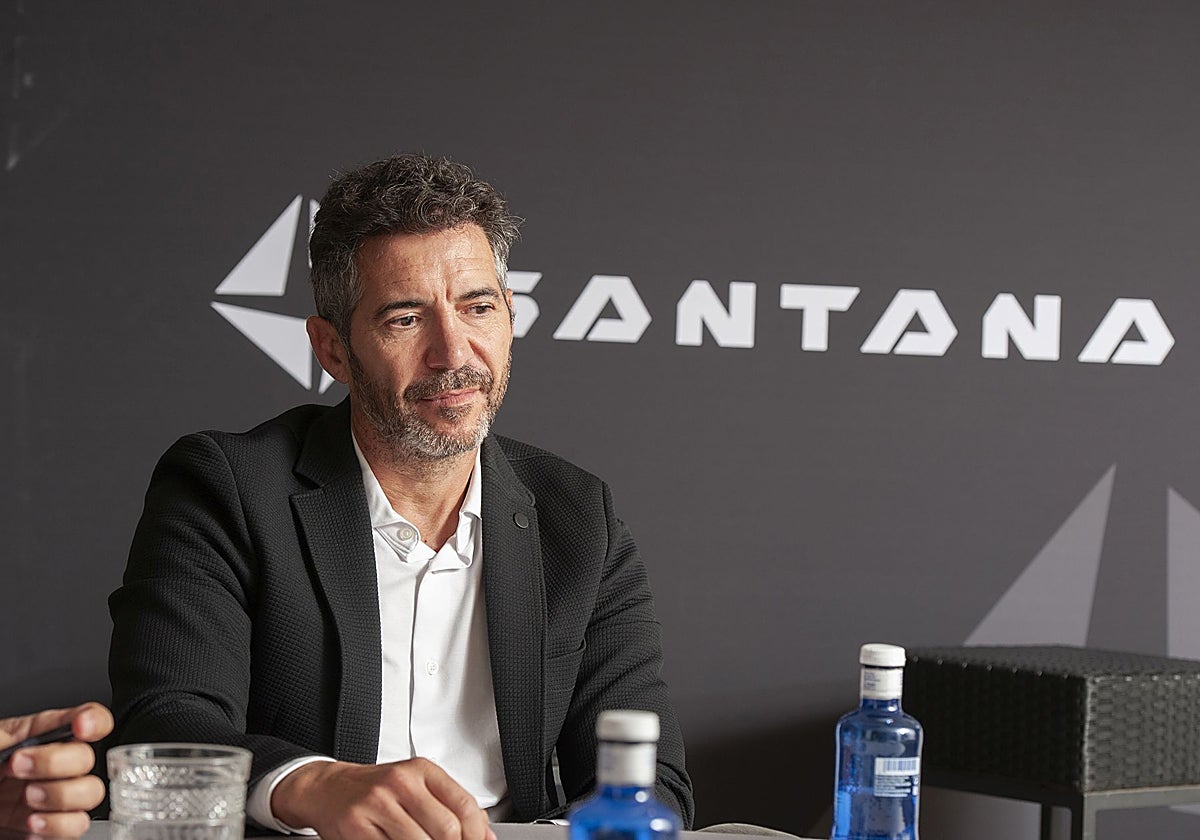
Santana Motors CEO Eduardo Blanco and new commercial director Enrique Lorenzana unveiled the relaunch strategy, which includes the market release of the first vehicles at the beginning of 2026. In its first full year, the company plans to sell around 3,000 units across Spain, Portugal, Italy, Gibraltar, and Andorra. In a second phase, expansion will reach Switzerland, France, Belgium, and the Netherlands, aiming to "cover Europe from south to north," according to Lorenzana.
The Santana Factory, located in the former Linares facilities, will be the core of the industrial revival. The plant will focus on assembling vehicles manufactured in China under the SKD (Semi-Knocked Down) model, meaning modules sent in containers will be assembled in Jaén. Initially, the production capacity will be 5,000 units annually in a single shift, but the plan is to reach up to 40,000 units with three operational shifts and a second assembly line.
Although components will initially arrive from Asia, the company plans to gradually increase local industrial work by incorporating Spanish suppliers as production volumes grow. Santana Motors estimates the group will generate around 300 jobs in the next three to four years.
For now, the company will focus exclusively on the civilian market, ruling out the production of military vehicles, such as the iconic Aníbal, which was a symbol of the brand for decades.
Santana Motors has signed agreements with 25 dealerships in Spain, allowing it to cover 80% of the national territory before the launch of its new models. The medium-term goal is to reach between 35 and 40 sales points and develop a profitable and customer-friendly network. Lorenzana dismissed the agency model used by other brands and emphasized the importance of offering a strong after-sales service.
"We cannot kill the brand in the workshop," warned the executive, who confirmed an alliance with JPG to ensure the rapid supply of spare parts. The goal is to guarantee the delivery of parts within 24 to 48 hours, or a maximum of 72 hours when shipments from China are necessary.
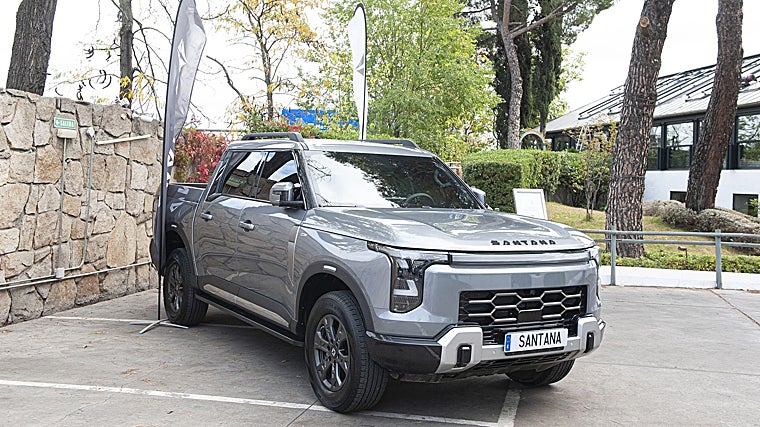
The first model of this new era will be the Santana 400 pickup, available in diesel and plug-in hybrid versions. The latter will offer up to 120 kilometers of electric range, with a system designed by Dongfeng and Mitsubishi. The diesel engine comes from Horse, the thermal engine division of Renault and Geely.
With a length of 5.5 meters, the Santana 400 aims to capture 20% of the pickup market in Spain, a segment that totals around 12,000 units annually. By the third quarter of 2026, the brand will launch an SUV version on the same platform. Additionally, in 2027, the offensive will expand with a compact 4.5-meter SUV, featuring all-wheel drive and a more urban orientation, which will help increase sales volume.
Lorenzana, who has nearly three decades of experience with brands like Audi, Maserati, Aston Martin, Genesis, and Piaggio, highlighted the importance of "combining legacy and innovation with a global vocation." Meanwhile, CEO Eduardo Blanco emphasized that "the history of the automotive industry in Spain cannot be understood without Santana," and that this revival represents "a unique opportunity to restore Linares to its rightful industrial role."