Rain Causes Most Motorcycle Accidents Due to Bad Weather
Canal Motor
Tuesday, 25 November 2025, 17:06
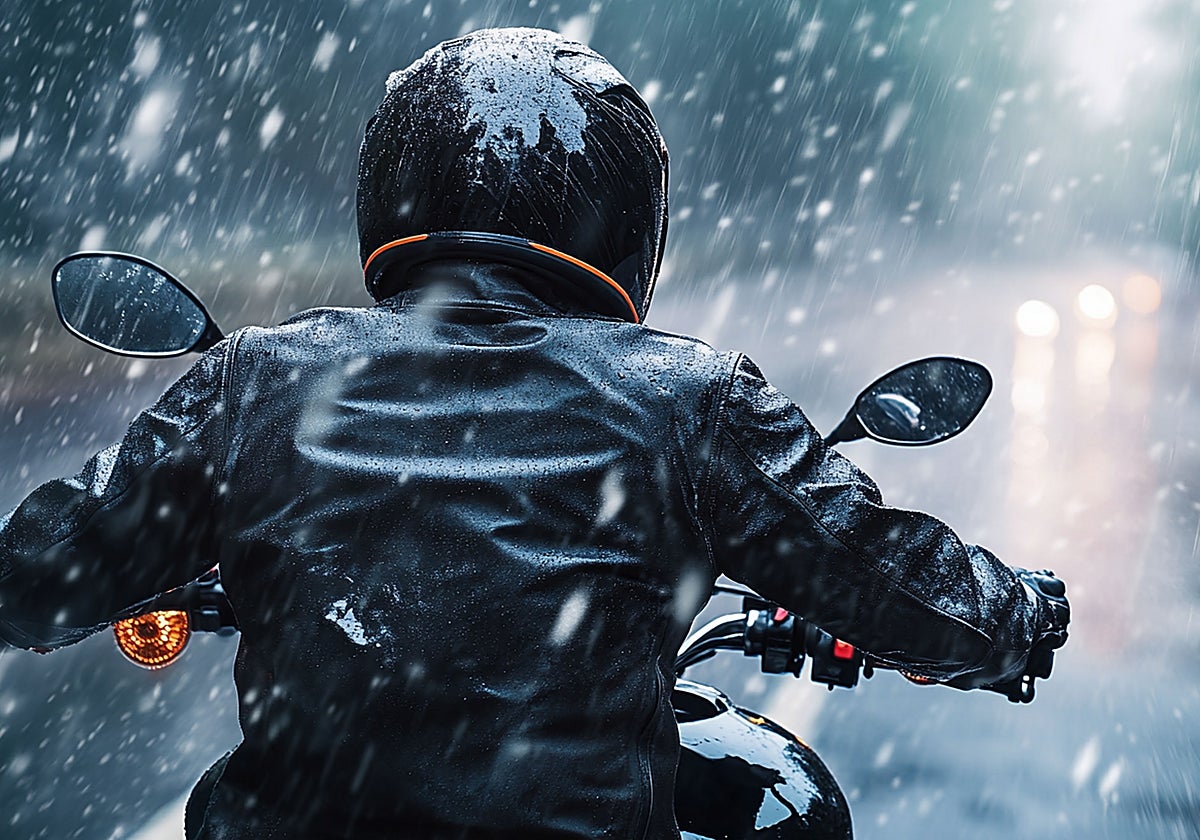
Many motorcyclists or two-wheeled vehicle users store their motorcycles or scooters during the colder and rainier months of the year. This is because, in autumn and winter, the adverse weather conditions increase the risk while riding. According to a recent report by AMV, the insurance company specializing in motorcyclist policies, 20% of motorcycle accidents are due to bad weather, with rain causing eight out of ten of these incidents.
Therefore, it is crucial to follow a series of tips for rainy days to ride comfortably and safely. To begin with, although the motorcycle should be in perfect condition at any time of the year, special attention should be paid during bad weather months, ensuring proper maintenance.
We must check the pressure of our tires, always doing so with cold rims and ensuring they match the manufacturer's recommended values. It's also important to inspect the tires for cracks, cuts, or deformations, and ensure the tread depth is correct, typically more than 1.6 millimetres.
Brakes are essential in adverse weather conditions, so it's necessary to check the fluid level in both hydraulic circuit reservoirs (for the rear and front brakes) and the wear of the brake pads.
Both the indicators and the low beam, rear brake light, and high beams must be operational to ensure visibility in the rain.
The condition of the suspension is a critical factor as it provides stability to the motorcycle, especially in rainy conditions. If not in good condition, it can contribute to tire wear.
Every time we hit the road, it's essential to check the weather forecast to know if there is a risk of rain. Depending on the intensity, we may need to alter our route or even postpone or cancel our ride.
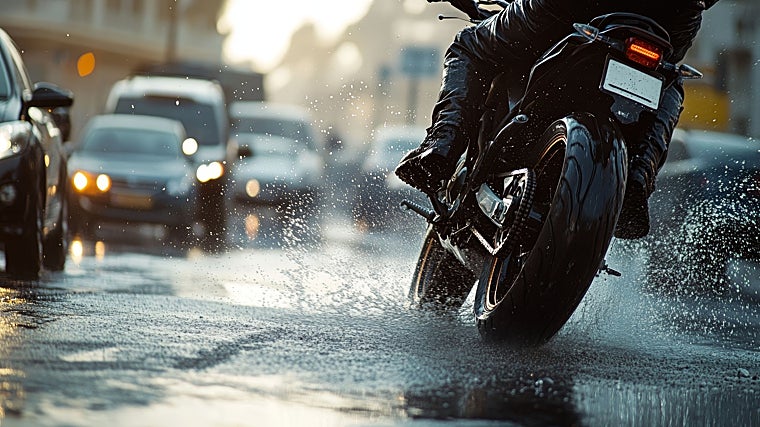
Rain reduces our visibility, as the helmet visor can fog up, raindrops reduce our field of vision, and there is less natural light due to clouds. This makes it harder to notice other vehicles on the road, especially during sudden stops, so it's crucial to increase the safety distance to react more quickly and avoid the spray from other vehicles.
Moreover, when it rains, our motorcycle has less grip on the asphalt, which can lead to aquaplaning. This occurs when a layer of water forms between the tire and the road, causing a loss of traction and grip. Therefore, reducing speed on rainy days is essential for safety.
On wet roads, we should accelerate gradually and gently to prevent the rear wheel from slipping. When braking, apply the rear brake first, followed by the front brake. Remember, sudden braking can destabilize us and lead to a fall.
We must anticipate and predict the movements of other vehicles to avoid sudden actions that could cause a fall. Additionally, lane changes, leaning, accelerating, and braking should be done more smoothly on rainy days.
On rainy days, it's important to watch out for manhole covers, ventilation grilles, metal plates, and road markings like zebra crossings, as they become more slippery when wet. It's also advisable to avoid puddles, as they may conceal potholes that could cause a fall.
To combat the rain, another crucial factor is using the correct motorcycle gear.
The helmet, besides being approved, should be as aerodynamic and closed as possible, so an integral or modular model with a pinlock is recommended to prevent visor fogging.
The jacket and trousers should be waterproof, as wet clothing reduces reaction time and should also include protective gear.
Gloves should offer good grip and have a visor wiper on the index or middle finger.
Boots should be waterproof and cover the ankle. Waterproof leg covers are very practical for scooter riders.
Finally, it's advisable to choose clothing with bright colours and reflective inserts to increase visibility, or use reflective vests.
Do not hesitate to stop if you feel your safety is compromised while riding in the rain. It's better to find a safe place, like a service area, to take a break, recharge, hydrate, and stretch until the rain subsides.
Finally, to be better protected in case of an accident resulting in personal and material damage, AMV experts recommend a motorcycle insurance policy that includes the following coverages:
- Driver Accidents. This coverage includes medical, hospital, and pharmaceutical expenses resulting from injuries sustained in a motorcycle fall.
- Travel Assistance or Towing. If the motorcycle is damaged, this coverage ensures it is transported to a repair shop or the insured's home.
- Equipment. It covers the motorcyclist's clothing and accessories installed on the motorcycle.