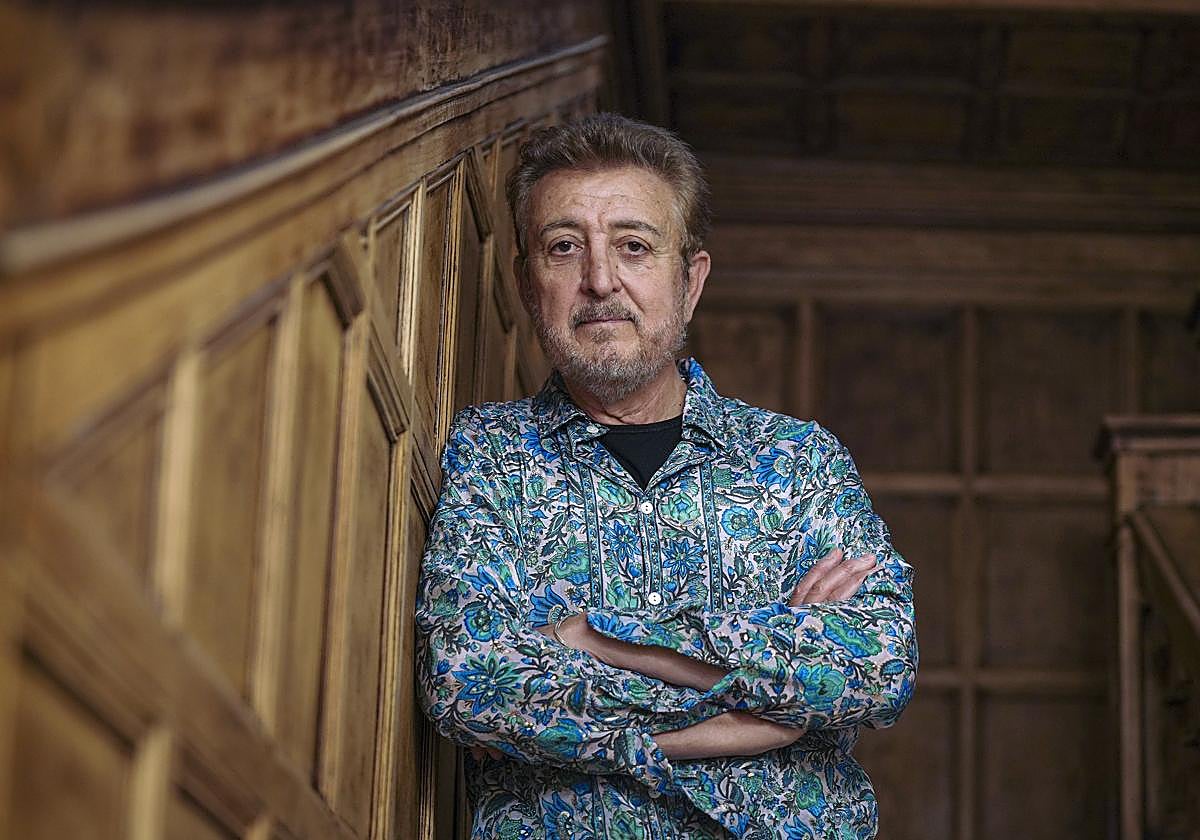
Manolo García: "The World Has Become a Large Industrial Estate I Dislike"
Manolo García unveils his new album, 'Drapaires poligoneros', and embarks on a solo tour, with another on the horizon: the reunion of El último de la fila
Carlos G. Fernández
Sunday, 2 November 2025, 00:16
Manolo García (Barcelona, 1955) is always creating something. In his triple role as a musician, painter, and writer, he has developed a philosophy of a calm and peaceful life, actively seeking moments of tranquility and knowing that good things take time to mature. He is now starting a theatre tour to present 'Drapaires poligoneros', an album with 16 new songs. Next year, a very different tour: the much-anticipated reunion of El último de la fila with his companion Quimi Portet.
–The 'drapaires' in the title refer to a street figure from the past.
–Fifty or sixty years ago, there were people, at least in my neighborhood in Barcelona, who would walk around shouting, "Drapaire! Drapaire!", it was the rag-and-bone man, he would go around with a whistle and people would bring him things, collecting odds and ends. Today it no longer exists, but in a way, it's what we're all doing: making junk and collecting junk, rubbish. And the world has become a large industrial estate I dislike. We all sell things, and I always ask myself, do we need so many things? Do we need to sell so much, move so much money?
–The cover, a drum kit made of buckets, pans, and other objects, also seems like an approach to the physical, to materials, to manual work.
–In the centuries when humans have done such work, wood, leather, esparto, materials within our reach, humans find peace, a way to walk through life, walking towards the nothingness we are all heading to in a reasonable, kind, and useful way towards others. Now we have been stripped of that, everything is done by others, everything is done by machines. Manual work calms you, when I paint I feel placid. Life makes sense to me when I am painting.
–You have managed to lead a life where you have plenty of time to create: you compose a lot, paint a lot, and have written books.
–If you are always on the same line of work, in the end, you get exhausted, you get bored with yourself and eventually, you will end up boring others.
–What differences do these disciplines have, how do you choose what to dedicate yourself to at each moment?
–They all have a common result, which is that I manage to abstract myself from the passage of time. I have no calendar, I don't care what day of the week it is... it's a life I chose, a life of mental nomadism. Of course, I play with an advantage because I have my back covered: my other job provides for me.
–Are you excited that the reunion tour of El último de la fila will thrill thousands of people?
–Well, but they won't be thrilled because of Quimi or me. They will be thrilled because of the songs. I am Uncle Manolo, I am like their cousin. Quimi and I are... well, just some guys who have been playing guitars for a long time, playing and making songs. When people see themselves singing along with three thousand, eight thousand, or twenty thousand or however many there are, when they all sing together, they will feel that everything makes sense.
–That must be very impressive.
–Yes, but they are the protagonists. They are the protagonists of their nostalgia, of their memories. They are the true heroes of their movie. That's what satisfies me. The important thing is the work, not the author. That's why I don't put my photo on the covers, what matters are the songs.
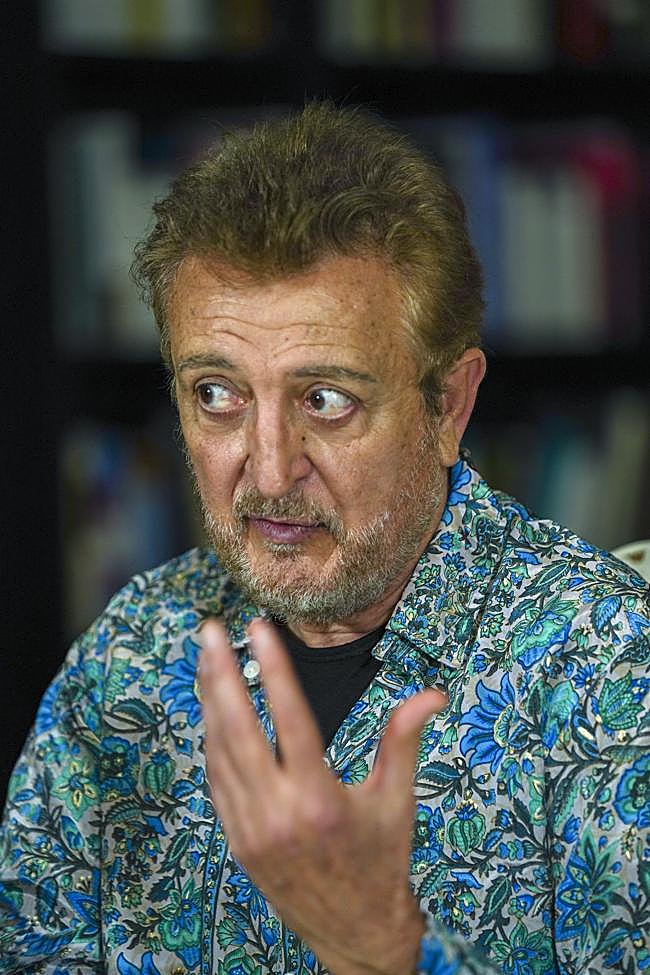
–You are very protective of your private life, of which hardly anything is known and that's very good. But today it seems impossible for a young musician not to expose every little detail of their intimacy if they want to succeed.
–Being tied to that slavery of 'likes', which you later find out are even bought... that way of spreading music is not enjoying it, it's stoning it. Those who have invented all this mobile and social media paraphernalia have hit the exact key: the human ego, enhanced. This 'likes' and 'dislikes' thing... frankly, I don't care. Okay, if a certain number of people don't like it, if I do things and no one is interested, then I'll go home. I'll keep playing for myself and my neighbor, who does like it. And then I'll work on something else. This new mode doesn't interest me at all. I don't promote it, I don't use it, I don't want it.
–Did you always think this way, or is it something you have learned over time?
–Well, you need a certain popularity to carry on a musical career, of course, but from there you don't have to get carried away. I want to lead a life where I can walk down the street. I am the son of a neighborhood, I was born in a neighborhood and I don't go above others in a spaceship. I always say that like everyone: dandruff, cavities, halitosis, alopecia. All like that. When I was young, we loved rock magazines. And I remember reading that the singer of the Scorpions, or some other like that, had made a new album because he wanted to buy another mansion. Wow, how sad, right? I make an album for an emotional reason. I need to make songs because that way my life regains meaning.
–We are doing this interview in a bookstore. Do you feel comfortable here?
–It was the team's idea, I didn't intervene, but they got it right because I am a regular visitor to bookstores, I am a compulsive reader, I am always reading.
–What are you reading now?
–Well, I am rereading Bolaño's brick, 2666, which impacted me the first time I read it. It's modern literature, which there isn't much that impacts you like that. I am also going back to what I read in my youth and liked very much. Baroja, for example, a writer I have always loved.