Juan Uslé's Transatlantic Dream
The Reina Sofía Museum recreates the long 'journey' of the Cantabrian painter over four fruitful decades / "My own pulse is the background music that moves the brush in a kind of trance," the artist asserts.
Miguel Lorenci
Madrid
Tuesday, 25 November 2025, 18:15
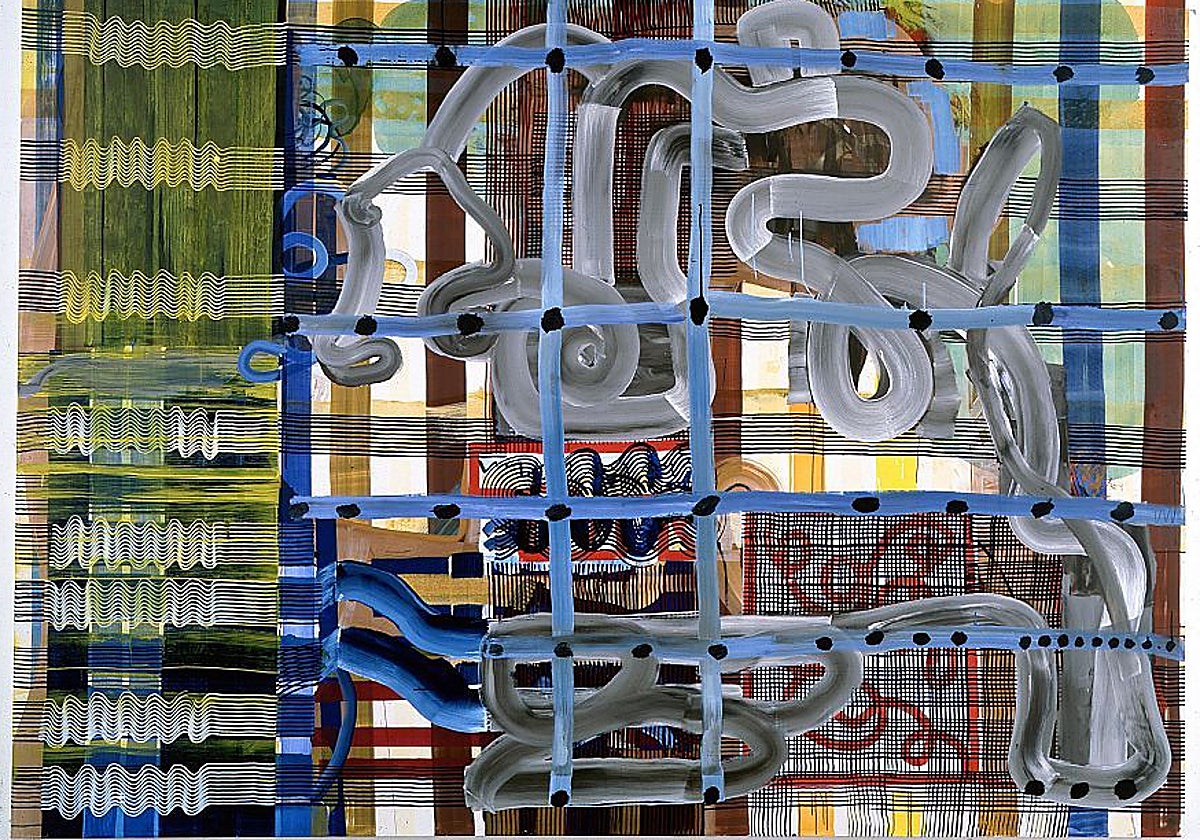
Between Cantabria and New York lies the artistic and life journey of Juan Uslé (Santander, 1954). A voyage through the paths of abstraction, geometry, darkness, and colour spanning over 40 years. This journey is now recreated by the Reina Sofía Museum, which revisits this path in the second major retrospective dedicated to the internationally renowned Cantabrian artist. A creator who has made his own pulse the driving force of his pictorial adventure.
'Juan Uslé. That Ship in the Mountain' is the title of the exhibition. With nearly a hundred works, it will be on display until April 20th. In a circular tour through eleven rooms of the Nouvel building, it progresses chronologically, connecting Uslé's 'families' of works and life experiences, with expressionist, abstract, and some figurative episodes.
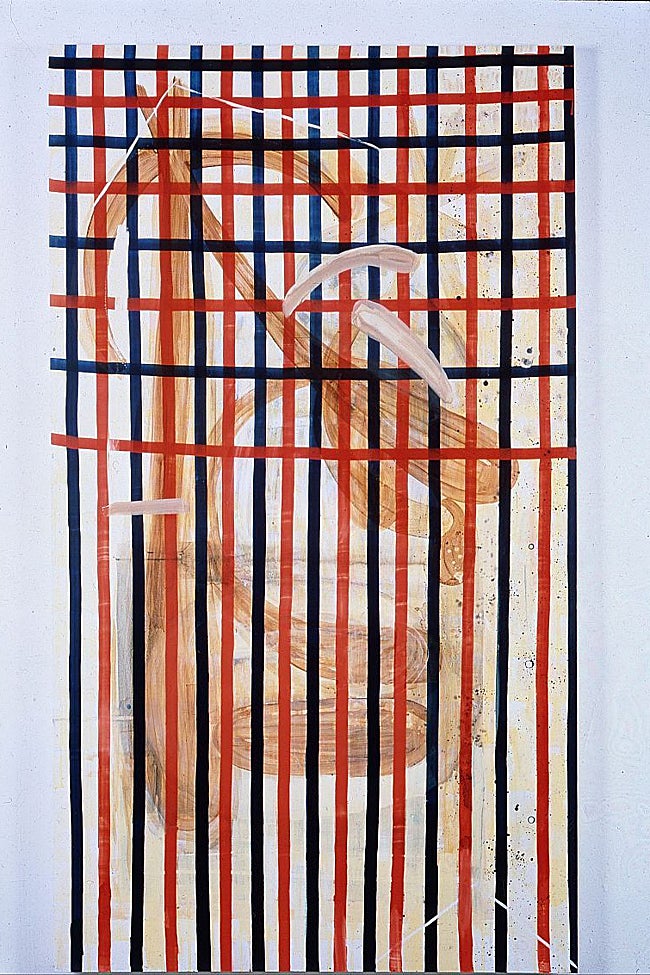
It stems from an event that was seared into the painter's memory: the sinking of the Elorrio ship in 1960 off the coast of Langre, near his family home in Cantabria. An event anchored in his childhood memory that he recreated in dark creations in New York.
New York Greenhorn
Uslé arrived in the Big Apple "like a greenhorn" in 1985. Without speaking a word of English or having a concrete project, he secured a Fulbright scholarship that proved "miraculous" and caught the attention of major gallery owners. "Those were times of confusion, and I painted what I could and how I could on papers and boards I found in the trash," he explains, referring to the pages of an accounting book found on the street, which he intervened with the first New York watercolours of 'duchampian' inspiration. A strange series of figurative air in an abstract galaxy that he exhibits alongside the dark landscapes with which he evoked, among skyscrapers, the tragedy of the Elorrio and his longing for Cantabria.
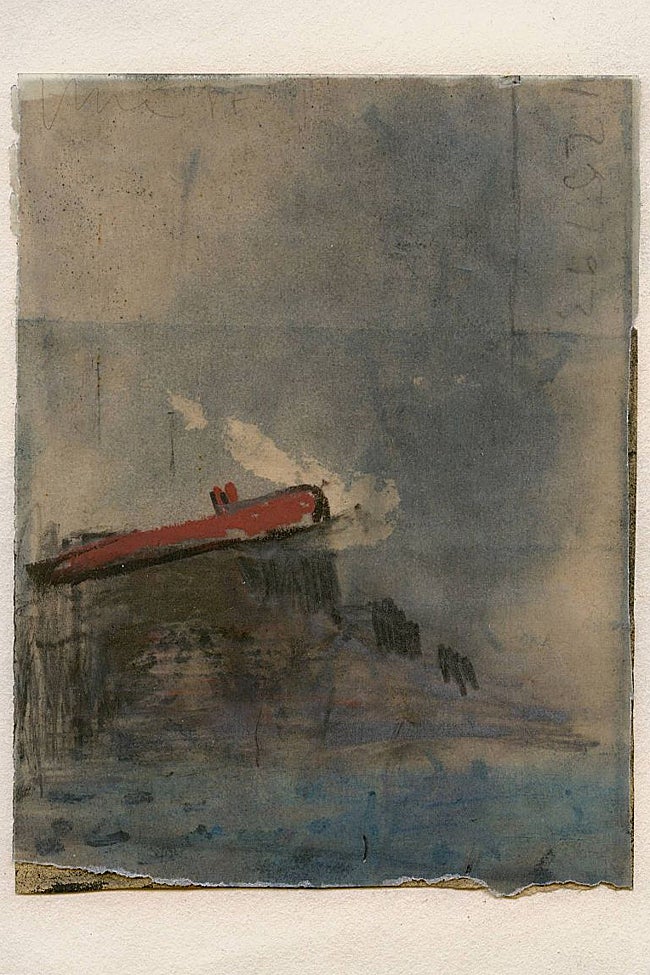
His 'black' period in New York "reflects the situation I was living in then, locked up and isolated and without a penny," he specifies, referring to paintings like '1960. Boat at sea' that inspire the exhibition's title. "I didn't know why I had gone, nor did I feel like a painter, but in New York, I found other 'Juans' who wanted to fly. There was time for struggles, obsessions, dreams, and thoughts," he enumerates. He managed to feel New York as "my home," and since 1987 he has lived between the megacity and the Cantabrian village of Saro.
"Many others inhabit us. There is a Juan Uslé who is never happy with what he does, who thinks everything is a disaster. But there is another one who is content and satisfied with the result," he says, reflecting on the four decades of a double "journey" in which the initial New York greyness transformed into an explosion of colour and geometry.
Not in vain was he awarded the National Prize for Plastic Arts in 2002 "for reconciling geometry and lyricism." The exhibition's curator, Ángel Calvo Ulloa, also places his work in "lyrical abstraction." A concept that Uslé accepts "without understanding it very well." "What others say about me I like, but I don't really know what I do," he admits.
Vital Laboratory
"Painting is my vital laboratory. I seek the rhythm so that light and space move and provide us with an emotion. My own pulse is the background music that moves the brush in a kind of trance that I take very seriously; in a journey, a losing myself," the painter explains about his creative mechanics.
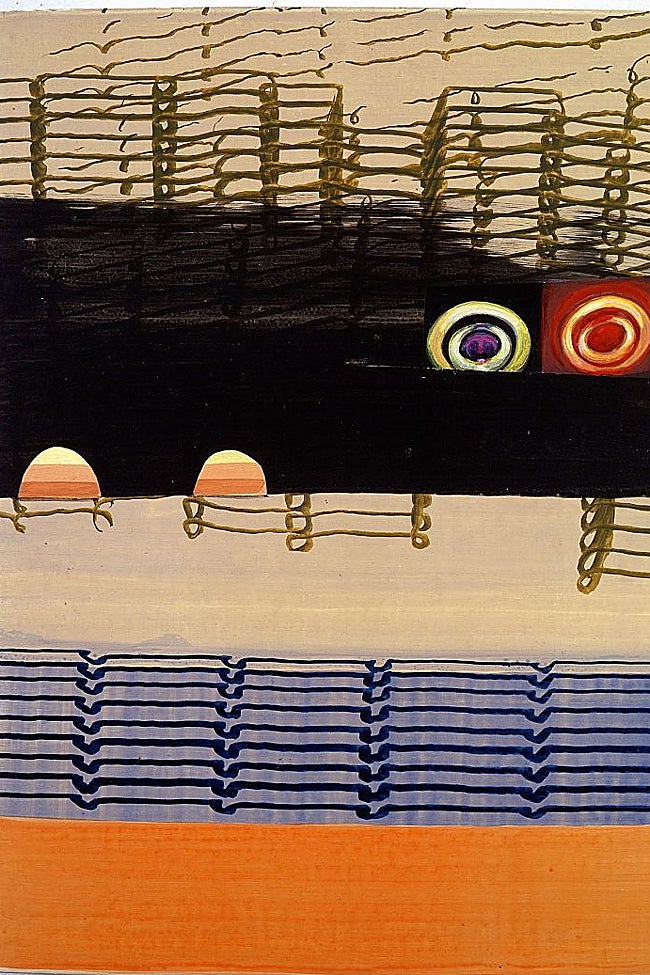
For the curator, Uslé's creative work "articulates a visual language, deeply intimate, oscillating between the gestural and the geometric." Something that turns his painting "into rhythm, breath, and memory." A statement that, this time, convinces the painter.
"It is the desire and need for adventure and travel that moves me. I maintain the hunger, the desire to paint with great doses of demand and commitment," he boasts. "I try never to stay in the comfort zone of style," he clarifies, which allows him to make constant discoveries. He also claims to "explore" different types of beauty, "which do not have to be in the obvious," and highlights "the importance of the spatial and the atmospheric, which often leads to ambiguity and complexity that require a long time of concentration and listening."
Three of the exhibited works already belong to the Reina Sofía's permanent collection. Uslé has permanently deposited them after many years of being on loan.
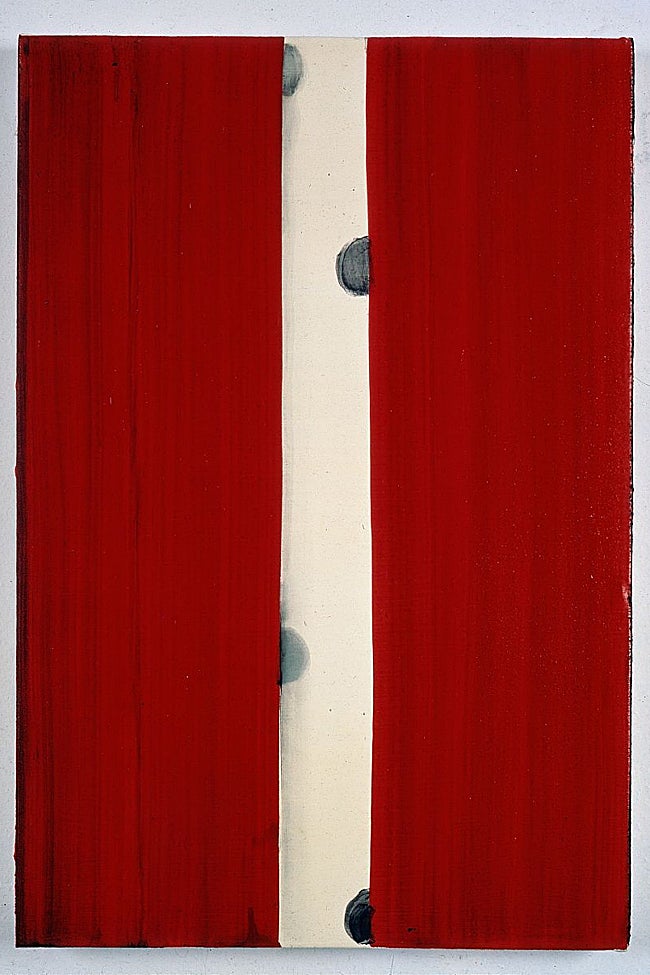
Uslé is one of the most recognized and international contemporary Spanish painters. The Reina Sofía already dedicated 'Open rooms', his first major retrospective, to him in 2003 at the Palacio de Velázquez. He has participated in the Venice Biennale (2005), the Documenta in Kassel (1992), the Istanbul Biennale (1992), and the São Paulo Biennale (1985). He has exhibited in almost all major international museums, and his work is in international public and private collections, such as the MoMA in New York, the Museum of Fine Arts in Boston and Houston, the MACBA in Barcelona, the Pompidou Centre in Paris, the Guggenheim Museum in Bilbao, the Serralves in Porto, or the Tate Modern in London.