Juan Francisco Fuentes Wins National History Award with Essay on the 'Roaring Twenties'
With 'Welcome, Mister Chaplin', a study on the Americanisation of leisure and culture in interwar Spain
Miguel Lorenci
Thursday, 23 October 2025, 15:35
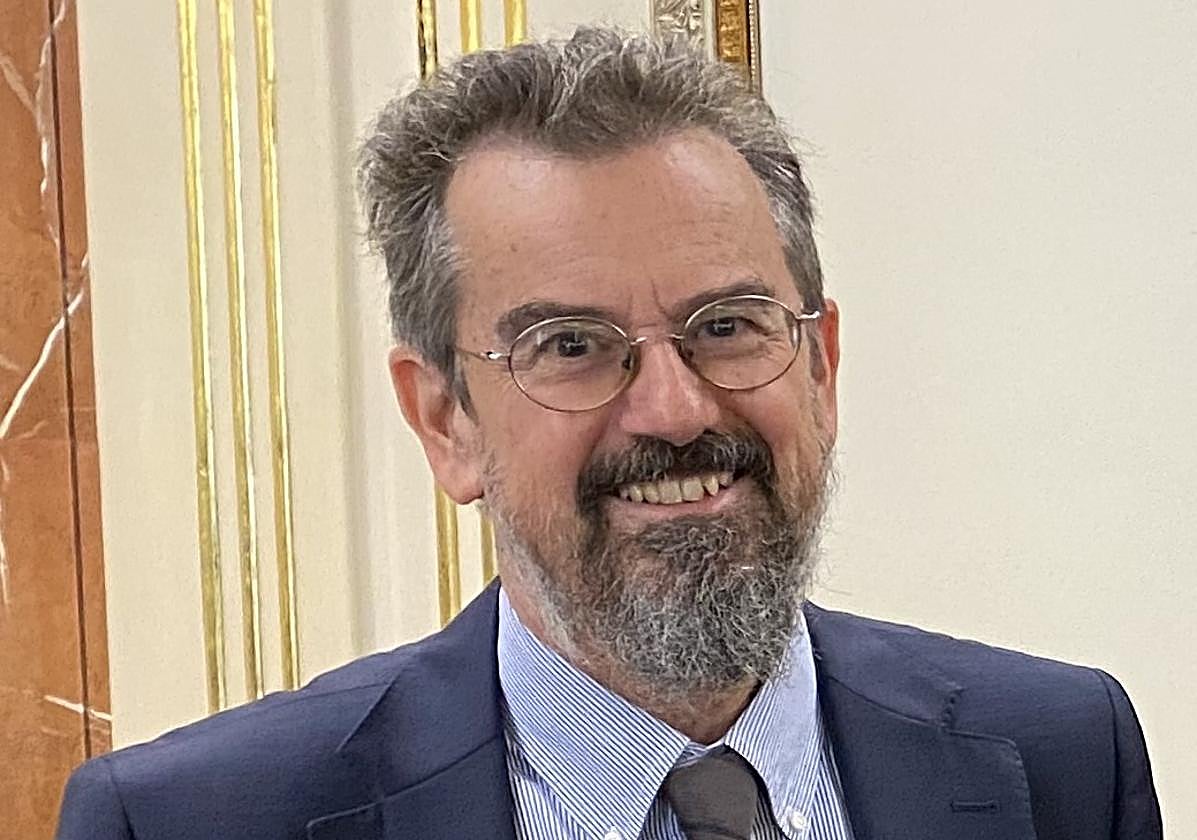
Historian, academic, and professor Juan Francisco Fuentes Aragonés, born in Barcelona, aged 60, has won the 2025 National History Award. He earned this accolade for his essay 'Welcome, Mister Chaplin: The Americanisation of Leisure and Culture in Interwar Spain' (Taurus). Granted by the Ministry of Culture for the best historical work published in the year preceding the decision, it comes with a prize of 30,000 euros. Fuentes, who delves into the leisure activities of Spaniards during the 'Roaring Twenties', follows in the footsteps of Javier Moreno Luzón, the 2024 winner with his work 'The Patriotic King: Alfonso XIII and the Nation'.
The jury highlights the "agile and brilliant narrative" of the winning work, which "effectively presents strong and complex ideas by analysing the penetration of North American mass culture in Spain during the first third of the 20th century".
In Spain, where the foxtrot and charleston were danced, jazz and American brands thrived, and silent film stars like Charles Chaplin and Buster Keaton caused a sensation, serving as inspiration for artistic and literary avant-gardes, especially the Generation of '27.
Cinema, Jazz, and Skyscrapers
According to the decision, Fuentes "provides a modern view of our past, of how new forms of leisure and entertainment were integrated". His award-winning essay analyses "the fascination exerted by everything from cinema to skyscrapers, including jazz, and how it influenced social practices".
The report highlights how the author "intelligently and thoroughly documents the socio-cultural history of our country during the interwar period". He does so "from a novel perspective by showing, and proving, that Spanish society at that time was open to the modernity that arrived especially from the United States".
"He brilliantly describes the spirit of the 'Roaring Twenties', an era marked, despite official nationalism and puritanism, by hedonism, freedom, and fascination with the American way of life," his editors note.
According to his editors, he revisits a moment of intense modernisation of society, when the emergence of North American mass culture sparked a sudden passion. For many Spaniards born with the century, Yanquilandia, as Unamuno called the former enemy of '98, became a model of civilisation and decisively shaped their worldview. Emigrants conveyed in their letters and photographs the image of the United States as a promised land, full of technical and social advances, and architects built skyscrapers—or "little skyscrapers"—that aimed to imitate those of New York and Chicago, they add.
Academic
Born in Barcelona in 1955, Fuentes is a professor of Contemporary History at the Complutense University of Madrid and a full member of the Royal Academy of History, where he succeeded Miguel Artola Gallego. Specialising in contemporary history, his main research topics include Spanish socialism, the democratic transition, and the history of concepts and political symbols in the contemporary world.
He is the author of a hundred articles in specialised journals and around twenty books, including 'Adolfo Suárez: Political Biography' (2011); 'With the King and Against the King: The Socialists and the Monarchy' (2016); 'Totalitarianisms: The Closed Society and its Friends' (2019), and 'The Lost Generation: A Survey on the Youth of 1929' (2022). In collaboration with Javier Fernández Sebastián, he has written 'History of Spanish Journalism' and co-directed the 'Political and Social Dictionary of 20th Century Spain'.
He has been a visiting professor at Harvard, Paris 3, Aix-Marseille, Sciences Po (Paris), and the London School of Economics. He has delivered courses and lectures at Princeton, Oxford, La Sorbonne, Menéndez Pelayo, Lisbon, Harvard, and Wisconsin, and he leads a research project titled 'Dictionary of Political and Social Symbols of Contemporary Europe'.