Hospital and Care Home Vending Machines to Offer 80% Healthy Products
The new government decree will require these facilities to provide accessible and free potable water sources for users.
Alfonso Torices
Madrid
Monday, 1 December 2025, 12:25
The Minister of Social Rights and Consumer Affairs announced today that the upcoming government decree, set to be approved in the coming weeks, will ensure proper nutrition in hospitals and care homes. It will regulate vending machines in these facilities, mandating that at least 80% of the products they offer must be healthy foods.
According to Pablo Bustinduy, the measure will be mandatory in all hospitals and care homes, both public and private, as well as other publicly owned facilities under the Consumer Affairs regulation, such as health centres and day centres.
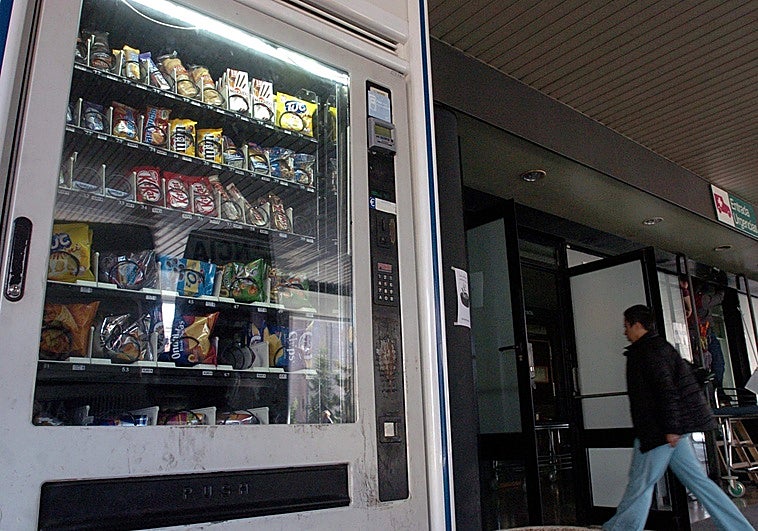
The decree will stipulate that 80% of vending machine offerings must consist of healthy products like water, milk, unsalted nuts, fruit juices, fruits, whole grain breads and sandwiches, or sugar-free yoghurts. Additionally, it will require that ultra-processed or unhealthy products, those high in additives, saturated fats, sugars, or salt, such as certain snacks, industrial pastries, sugary drinks, and industrial cookies, must not be placed in the central rows of vending machines and should be located in less visible areas.
Hot drinks from vending machines will be served without sugar by default, and customers will not be able to add more than five grams.
The same regulation will require that hot drinks offered by these vending machines must be served without sugar by default, allowing users to add a maximum of five grams if they wish.
The decree will facilitate access to water for all users of these establishments by mandating the provision of free potable water fountains, which will be clearly marked for easy location, freeing citizens from having to purchase bottled water from vending machines.
The text will also include the removal of ultra-processed foods from menus offered to children and adolescents admitted to hospitals and will exclude these same industrial foods from the children's menu sections in cafeterias and dining areas open to the public in these healthcare facilities.
The future regulation will continue the path set by the Healthy School Canteens decree approved by the government last April, ensuring that meals in schools and institutes comply with health recommendations from organisations such as the World Health Organization (WHO) or the Spanish Agency for Food Safety and Nutrition (Aesan). Bustinduy stated that this regulation "responds to a social and scientific community outcry," as well as numerous complaints about food in these establishments from both citizens and social entities and professional groups.
An Alarming Trend
A few days ago, the scientific journal The Lancet published a comprehensive analysis based on over a hundred international studies, warning that the consumption of ultra-processed foods has become an increasing threat to public health. The research associates regular consumption with a higher risk of obesity, type 2 diabetes, cardiovascular diseases, and premature mortality, highlighting the accelerated shift among the population from healthy dietary patterns, such as the Mediterranean diet, to models dominated by highly processed products. The consumption of ultra-processed foods in Spain has tripled in just 20 years, rising from 11% to 32% of the diet.
International organisations like the WHO and UNICEF have made urgent calls to governments to curb this trend. They emphasise that the global expansion of ultra-processed foods poses a systemic threat to health, equity, and child welfare, and they call for ambitious policies and stricter regulations to ensure healthy food environments, identifying hospitals and healthcare centres, along with schools, as priority areas for implementation.
The Ministry of Consumer Affairs also hopes that the future healthier offerings in vending machines in these centres will set a standard for nutritional quality for those located elsewhere. In Spain, there are over 390,000 vending machines for food and beverages.