Fraud, Sick Leave, and Detectives: The New Triangle in the Labour Market
Temporary incapacities have surged by 85% since the pandemic, with costs nearing 29 billion. Mutual societies are hiring private investigators to uncover fraud.
José A. González
Monday, 27 October 2025, 08:31
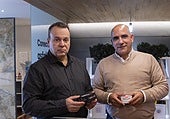
Carlos —a fictitious name— suffered a leg injury a few months ago that prevented him from working. Medical reports recommended rest and the use of a wheelchair, making it impossible for him to fulfil his job duties. However, in the afternoons, he played paddle tennis with ease. Or take Fernando, whose mutual society paid for a taxi to attend medical check-ups. Afterwards, he would return home and drive his car to get around. These are just two cases, though not exceptional. "This is a pandemic, the system is rotten," says Juan Carlos Delgado, CEO of Detectib.
Since COVID-19 disrupted the Spanish labour market, temporary incapacities in Spain have soared by nearly 85%, according to the Ministry of Inclusion, Social Security, and Migration. This year, projections indicate that the number will exceed 9 million for the first time, marking a 6% increase over the 2024 figure. "We have observed a rise in sick leaves, particularly of a psychological nature," detail Luis and R. Durán, detectives at Adchase Detectives. Month by month, temporary incapacities are setting new historical records, along with the associated costs for Social Security and businesses.
The cost of temporary incapacities has skyrocketed to 29 billion euros, a figure that continues to grow annually. Social Security covers nearly half of the expenses, while companies bear the rest in salaries and contributions. Compared to 2015, the expenditure has increased by 125%. "A significant burden for Social Security, companies, and mutual societies," states the Association of Mutual Societies Collaborating with Social Security (AMAT), which calls on the Government for urgent measures. The first: strengthen the monitoring of suspicious sick leaves.
In the past five years, mutual societies collaborating with Social Security have awarded over a hundred contracts for "private investigation services via detectives," according to data from the Public Sector Procurement Platform accessed by this newspaper, with a budget nearing ten million since 2020. "There's a lot of work," notes the manager of Detectib. "We can't handle it all," he adds.
At a time when sick leaves show no signs of slowing, public spending on coverage is reaching historic highs. According to the INE, the number of people absent from work daily increased by 2.3% in the last quarter, reaching 1.56 million. The administration and companies are questioning how many of these incapacities are fraudulent.
To this end, it is increasingly common for mutual societies to turn to these professionals to substantiate inspectors' suspicions with their cameras and documents. "Our report in a judicial process is considered evidence," reiterates Delgado. Their work does not involve assessing whether a worker is fit to return to work or if fraud is being committed. "That is left to inspectors on one hand, or judges on the other," he clarifies.
Their work begins when a mutual society or company commissions them to verify the authenticity of a sick leave or the aftermath of an injury. The information they receive at the office is basic: name, address, and what needs to be monitored. "We do not receive the full diagnosis or ailment due to data protection," they clarify.
Based on the information provided about the investigated person, they develop an action plan aimed at objectively verifying whether there is potential fraud.
To do this, they analyse various scenarios: from activity reflected on social media to direct observation of the subject's daily life, "always within legal limits," they explain. Finally, they check whether the observed behaviour is compatible with the alleged ailment or, conversely, contradicts the incapacity justifying the sick leave.
Overwhelmed
Fraudulent sick leaves, as reflected in court rulings, are becoming increasingly diverse. The Supreme Court has ruled in various cases on the legality of detective evidence for monitoring employees during their sick leave and gathering evidence to justify disciplinary action, including dismissal, for fraudulent behaviour and/or actions that hinder recovery. However, they have also ruled in the opposite direction. "We have to be very careful with our work and be very strict," Delgado clarifies.
In February 2024, the High Court of Justice of Castilla-La Mancha upheld the disciplinary dismissal of a worker for engaging in activities incompatible with the reason for his sick leave. It was proven that the worker, while on temporary incapacity, performed tasks typical of his usual profession as a mechanic-fitter on his own account. Or the ruling of the High Court of Justice of the Region of Murcia in February 2025, which also upheld the disciplinary dismissal of an employee for teaching martial arts classes during his sick leave for anxiety. The result of the investigation carried out by a detective - the judicial text states - clearly indicates the facts that are "sufficiently serious to justify the dismissal."
"Psychological sick leaves are, without a doubt, the most complex to prove or disprove"
Luis and R. Durán
detectives at Adchase Detectives
In these cases - psychological sick leaves - "are, without a doubt, the most complex to prove or disprove," respond Adchase Detectives. "Determining fraud in these cases requires a combination of behavioural, contextual, and medical clues," they add. In the past seven years, this type of temporary incapacity has surged to historic highs. In 2024, the rate was 53.3 workers per 1,000, the highest figure since this statistic has been recorded. This trend has intensified since 2021 to the point that the Bank of Spain has warned that the number of sick leaves in 2024 almost doubles that recorded before the pandemic.
From the investigation offices, they admit that behind fraudulent sick leaves lie very different profiles. "We encounter those who simply do not want to return and prolong their leave as much as possible, to those who use it for other purposes," they comment at Detectib.
Among the former are those who claim ailments difficult to verify and spend weeks with little activity, except for shopping or walking the dog. "In those cases, it is very challenging to prove they are faking an illness," they acknowledge.
Then there are those who take advantage of the incapacity period to perform another job, often without a contract. "It is common in low-skilled jobs - for example, waiters or assemblers - who combine receiving benefits with an under-the-table salary," they point out. "That type of fraud usually leaves a trail and is easier to prove."
There is also a third profile: those who declare themselves on sick leave to study for exams, seek new employment, or even settle scores with the company. "In some cases, the motivation is more personal than economic," admits the manager of Detectib.
The tenders registered on the Public Sector Procurement Platform reflect the search for solutions to curb this labour fraud. "We are overwhelmed and have to say no to many contracts," admits Delgado. But, in his view, there is only one way out: "This will be resolved when someone goes to jail because we are talking about fraud," he concludes.
Credits
-
Graphics Lidia Carvajal