The Eyes Behind 'Big Brother': "The Freshness Remains, Albeit from a Different Place"
Producers share the shareable secrets of the reality show's casting, which will soon premiere on Telecinco.
J. Moreno
Monday, 27 October 2025, 00:05
Twenty-five years after the premiere of its first edition in Spain, 'Big Brother' continues to be a mirror of society, a test of coexistence that evolves with the times. On the brink of its next edition on Telecinco, Zeppelin's general director, Miguel Martín, and casting director, Teresa Colomina, explain how the selection process for contestants has changed, what they are looking for in participants today, and how they tackle the challenges posed by social media, diversity, and freshness in front of the cameras.
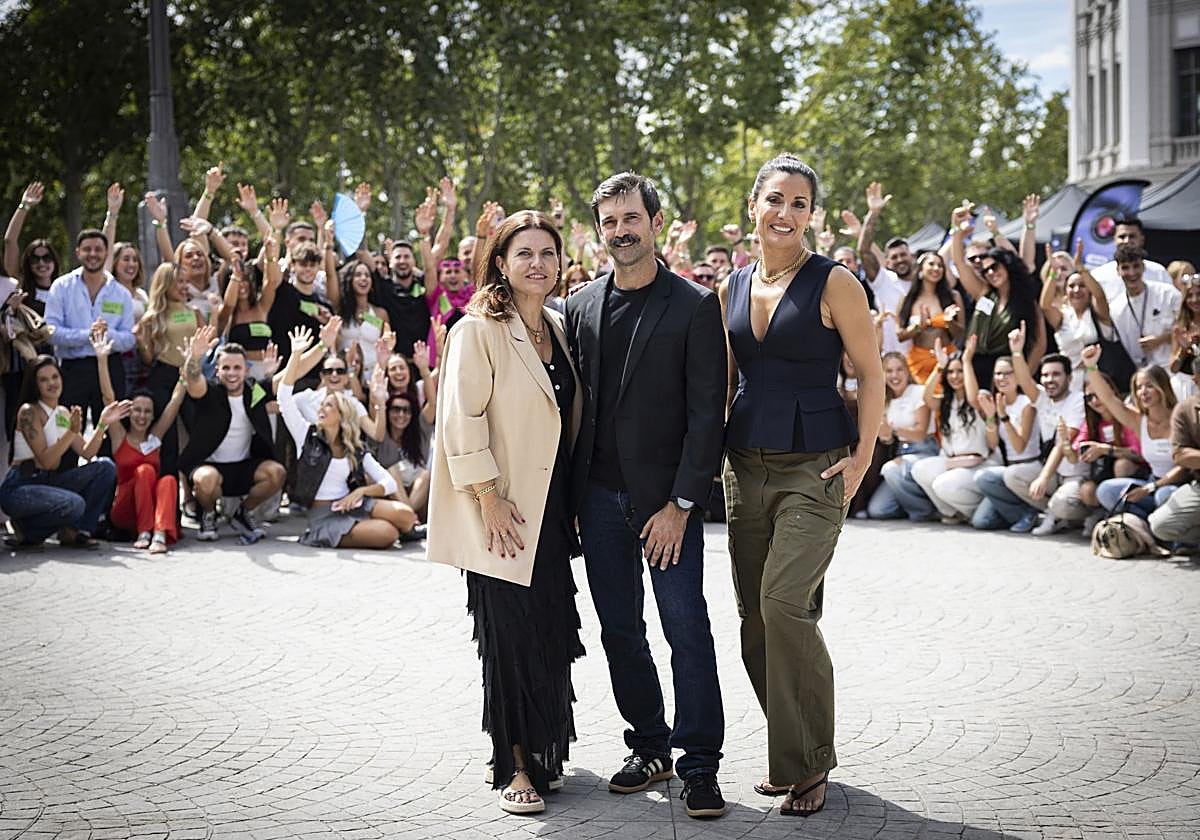
"We have a representation of everything here," says Miguel Martín, describing the selection process that toured the main cities of the country and concluded at the Gran Teatro CaixaBank Príncipe Pío in Madrid, where around 500 people, previously selected through an online form, gathered. In the mass castings, "from young people aged 18 to individuals aged 81" present themselves, and although not all identities and sensitivities fit within the house due to its limitations, "they do represent a good cross-section of society." For him, the program is like "a dish cooked with a series of ingredients," and each contestant adds a different nuance to the final result.
Colomina agrees that the key is for each person to be "good for the program and good for the reality show." She explains that it's not about fulfilling quotas or ticking boxes of representation, but about finding those who manage to connect with the audience, a challenge that seems increasingly difficult but not impossible for those responsible for the iconic format in Spain. "We avoid ticking boxes. We believe that the people who should enter 'Big Brother' are a reflection of society, and if they are good, they will enter, regardless of anything," she explains. "The most important thing is that when you turn on the TV, you want to see that person. Without that, there is no entertainment," adds the general director of the production company.
New Times, New Criteria
Society has changed radically since that distant 2000 when the first 'Big Brother' premiered, and with it, the selection criteria have also changed. Television and audience sensitivity have changed. Everything has evolved. "If we compare the first program that aired with the first of this season, they wouldn't resemble each other in duration or structure. It's another way of narrating, another way of consuming television," says Martín. The casting team itself has also adapted to the times: "We are also part of the change. We go out, we come in, we live in the same society as the contestants, and our tastes and criteria are also current." His team, he says, is as diverse as the casting they seek. "In mine, there are very young people who joined last year, as well as professionals who were in the first edition of 'Big Brother,'" he points out.
Among the thousands of applicants, there are many familiar faces. Anonymous people who have been attending castings all these years but were rejected. "There are people there who seemed like a reunion of old classmates," jokes Martín. "If we don't choose you one year, it doesn't mean you're not fit to enter. Sometimes the final dish just doesn't include you, but you can come back and still be interesting," he justifies.
Freshness in the Age of Social Media
The latest editions of Telecinco's reality show face social media; an element considered by the program's producers but not decisive. "They are a reality, a part of each of us," explains Martín. However, he clarifies that there is no direct search for contestants as in other similar formats: "We might look at them a bit, but we rely more on our own selection system," he argues. "Stalking is very useful for boyfriends and candidates," jokes Colomina.
One of the classic concerns of the public is whether today's contestants, more knowledgeable about the format, have lost the spontaneity of the early years because they already know the 'tricks' of the format. "The freshness remains, albeit from a different place. There are people who know the format inside out and still remain unpredictable," notes Zeppelin's top executive, something the casting director agrees with: "You can enter with a strategy or with everything learned, but you quickly forget that there are cameras." Entering a house to live with people you don't know, they insist, breaks all the schemes you might bring from outside.
The selection process for 'Big Brother' is long and meticulous. Thousands of applications are filtered through various phases, and among them, psychological and medical tests occupy a central place. "The mental health of the contestants, just like the physical, is an absolute priority," says Martín. The program's team includes psychologists and doctors who evaluate the applicants and veteran professionals in casting "who have a lot of intuition and practice." Even so, he admits that "someone might slip through, but it's not normal." "And when in doubt, we move on to another candidate. We have many," he states.
And surely there is no magic formula for casting the most well-known reality show on the small screen, where anything can happen. "We have to be the first ones surprised. When Teresa and her team come running to tell us: 'You have to see this, because it's a fantasy,' and you see the video and indeed it is, that's where it all begins," says Martín. Twenty-five years later, 'Big Brother' continues to be a reflection of society, but also a snapshot of its changes. For the next edition, there will also be a very significant change: the house is moving from the Madrid town of Guadalix de la Sierra to Tres Cantos. An aesthetic renovation that will give a new boost to reality television.