Carpooling Gains Ground in Spain with New Mobility Law
Patxi Fernández
Friday, 7 November 2025, 10:06
Carpooling, also known as ride-sharing, has reached a milestone in Spain by being integrated into the Ministry for Ecological Transition's Energy Savings Certificates (CAEs) system, officially recognising the energy savings generated by vehicle optimisation.
This decision, implemented through specific formulas measuring the savings of passengers who avoid using their own cars, has had a notable impact on the BlaBlaCar platform, which has redistributed over 850,000 "BlaBlaBonos Energéticos" this year, incentivising drivers and passengers.
This economic advancement is complemented by a new legal framework, as the Sustainable Mobility Law defines carpooling as private transport at a national level for the first time.
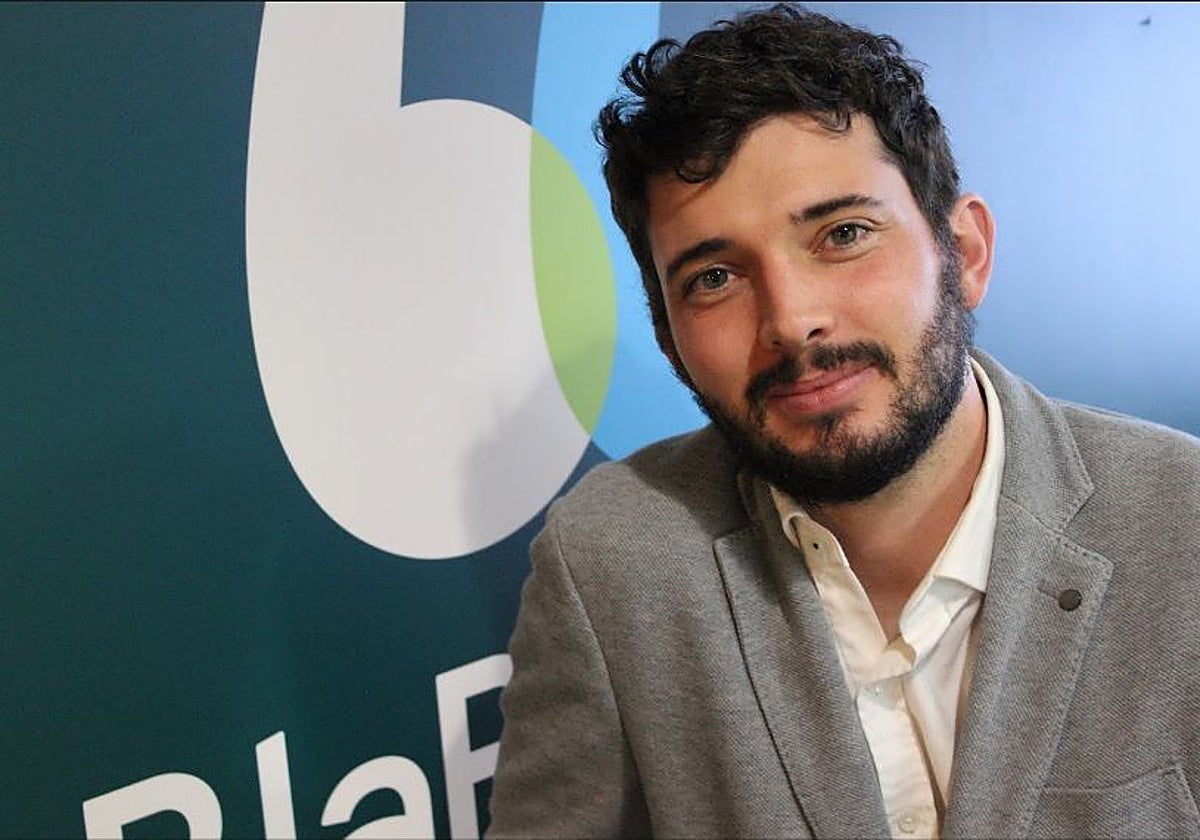
Florent Bannwarth, Director of BlaBlaCar for Spain and Portugal, explains this and other issues related to this platform, which connects drivers offering seats with passengers needing to make the same journey.
Could you detail the process by which the energy savings generated by users are recognised and what real impact do you expect this integration to have on the volume of shared trips in Spain?
Carpooling was incorporated into the CAE system in January 2023, recognising ride-sharing as a modal alternative that, beyond its positive social and economic externalities, also generates energy savings by optimising the occupancy of vehicles already on the road. The energy savings certificate system operates with a catalogue of records that recognise and calculate energy savings for each type of action (industrial, mobility, etc.). Specifically, the formula published in the CAE catalogue on carpooling measures the energy savings that result when carpool users stop using private vehicles for journeys already being made by other drivers, calculating the energy savings for a passenger travelling with a driver who had empty seats instead of taking their own car, renting a car, asking a family member to drive them, or any other option that would have added a vehicle to the road.
So far this year, more than 850,000 incentives derived from the CAE system, known as BlaBlaBonos Energéticos, have been redistributed among platform users. This has had a positive impact on platform activity, with drivers posting more trips than usual and passengers making more bookings than the average per active user in recent years. For example, over the recent October holiday, we recorded more than 80,000 passengers, a 27% increase compared to the same period last year.
How exactly does the bonus mechanism for drivers work, and what metrics are being used to quantify the total economic savings these aids represent?
To meet the CAE system criteria and monetise users' energy savings, they must integrate a series of processes into their trips that we previously did not have implemented on the platform, such as confirming pick-up and arrival through GPS verification by all travellers or responding to a brief survey on the modal alternative of travel, only in the case of passengers. Additionally, to ensure eligibility, users must confirm their full name and identity document, and in the case of drivers, also the license plate number. In this way, all eligible users travelling with BlaBlaCar within Spain systematically receive a 10% bonus on their trip, in the case of drivers, and a 10% discount on subsequent trips for passengers. During the summer, these discounts increased to 50% for passengers with the Summer BlaBlaBono, for trips made between June 16 and August 31.
This temporary offer responds to BlaBlaCar's commitment to redistribute unused credits by users who are no longer active on the platform and ensure that these incentives are redistributed to eligible active users. As a result, drivers were able to save an average of 32 euros per published trip this summer, and passengers received discounts averaging 9 euros for a future booking.
The Congress has approved the Sustainable Mobility Bill, which defines carpooling for the first time as private transport. What is BlaBlaCar's assessment of this new legal framework?
At BlaBlaCar, we positively value the Sustainable Mobility Bill as it includes the definition of carpooling and various promotion frameworks for the first time at a national level. Our activity was already defined in different regional regulations on mobility, energy, and depopulation, as well as in the Ministry for Ecological Transition and Demographic Challenge's Energy Savings Certificates system, but a definition was missing, and above all, the enabling of promotion frameworks for carpooling activity in a national mobility law. This represents progress for the carpooling model in Spain, as already occurs in other European countries, by being considered a complementary way of travelling to public transport, efficient, sustainable, and connecting the territory.
How do you position carpooling against other modes of transport in the new law?
This is the first time that ride-sharing is formally recognised in national mobility legislation, a milestone that enhances its visibility within the sustainable transport agenda and positions carpooling as a complementary way of travelling to other forms of transport. Shared mobility, and specifically carpooling, has a clear social and economic impact for its users, without requiring significant investments from public authorities, and allows for the promotion of sustainable and efficient mobility that helps connect territories, with the power to reach any municipality thanks to the road network. The inclusion of the ride-sharing definition in the Sustainable Mobility Bill provides legal certainty for ride-sharing services in Spain, which means legal certainty for the more than ten million users who have already used BlaBlaCar in the fifteen years we have been sharing rides through our platform in Spain.
Do you consider that the current framework promotes carpooling as a complementary option to public transport or as a substitute on less-served routes?
The Sustainable Mobility Bill positions ride-sharing as a complementary way of travelling to other forms of transport. In the end, ride-sharing is another modal alternative, like a bus, train, or plane, whether public or private, and helps reduce the number of cars with only one person on board. This new Bill promotes and encourages carpooling through various promotion frameworks, such as the possibility of receiving public subsidies as other forms of transport have been receiving for years. With this new legislation, shared mobility is encouraged, which will benefit, above all, rural areas where cars represent more than 90% of journeys made, with an average occupancy of less than 1.2 people per car. Platforms like ours can help dynamise the territory, providing connections to smaller or isolated towns that have few alternatives to private car use. Any town has a road nearby, and there are thousands of empty seats in cars passing by every day. BlaBlaCar has connected 87% of Spanish localities, including nearly 4,000 with fewer than a thousand inhabitants.
What does this capillarity mean for the company's strategy in Spain, and what measures are being taken to ensure carpooling remains an essential mobility solution in depopulated Spain?
We have been working for years to optimise mobility in places that do not have efficient and accessible transport solutions. As a result of this work, we have managed to connect 87% of Spanish municipalities in the last year, a figure that has increased by 12 points in just the last three years. This increase means that more than 1,000 new localities have had a mobility option thanks to our user community. We have also achieved this thanks to our Boost technology, which allows drivers to find new passengers at different points along their route, as they can send booking requests at intermediate stops with minimal deviation. We work daily to continue promoting the connection of all places in Spain, filling the hundreds of thousands of empty seats that travel our roads every day with the goal of achieving 100% connected localities. Since the implementation of train ticket sales, BlaBlaCar has strengthened its role as a shared travel marketplace.
How has this integration impacted activity data, and how does this diversification contribute to the platform's sustainable mobility mission?
Over these fifteen years in the Spanish market, BlaBlaCar has evolved considering the needs of its users. For this reason, a clear commitment has been made to a business strategy that embraces multimodality. We are already seeing the first results that mobility alternatives such as trains, buses, or ride-sharing coexist not only without cannibalising each other but making all of them grow, thus offering a broader and more diverse travel booking experience to our users. With ride-sharing as a pillar, our goal is to offer an increasingly broad, efficient, and sustainable mobility offer. The easier we make it for users to compare and choose different forms of collective mobility, the more their various forms of transport will grow compared to the solitary use of private cars. Currently, 15% of the 2025 trips on the platform correspond to multimodal trips (bus and train), 5 points more than last year at the same time, where they represented 10%.
Looking ahead to the next five years, what do you consider to be the main challenges or barriers that shared mobility in Spain must overcome to reach its full potential, beyond the legal framework and economic incentives?
Our long-term strategy is to be a multimodal and intermodal platform that connects different types of transport, meaning that from BlaBlaCar, a door-to-door trip can be booked that is a combination of train, bus, and ride-sharing. To achieve this, it is important that all agents in the transport and mobility sector commit to collaboration and put the needs of users and new ways of travelling at the centre. The future for us is this. Last year we started selling train tickets, from Renfe and Iryo, and we want to continue expanding the offer of trains and especially buses. In France, we have buses with the BlaBlaCar brand that also operate in Spain with international lines from Madrid, Barcelona, or San Sebastián, mainly to France or Portugal.
For the national market, BlaBlaCar is committed to distributing the current domestic operators of the Spanish concession system, thus contributing to its digitalisation and expanding its accessibility to new audiences, such as international tourists, to grow collective mobility in Spain.