Business Leaders in Alicante Call for Addressing Rising Workplace Absenteeism
AVE and Étnor Foundation Advocate for a More Human and Collaborative Business Culture to Reduce Absenteeism and Enhance Commitment
H.M.
Alicante
Monday, 27 October 2025, 17:55
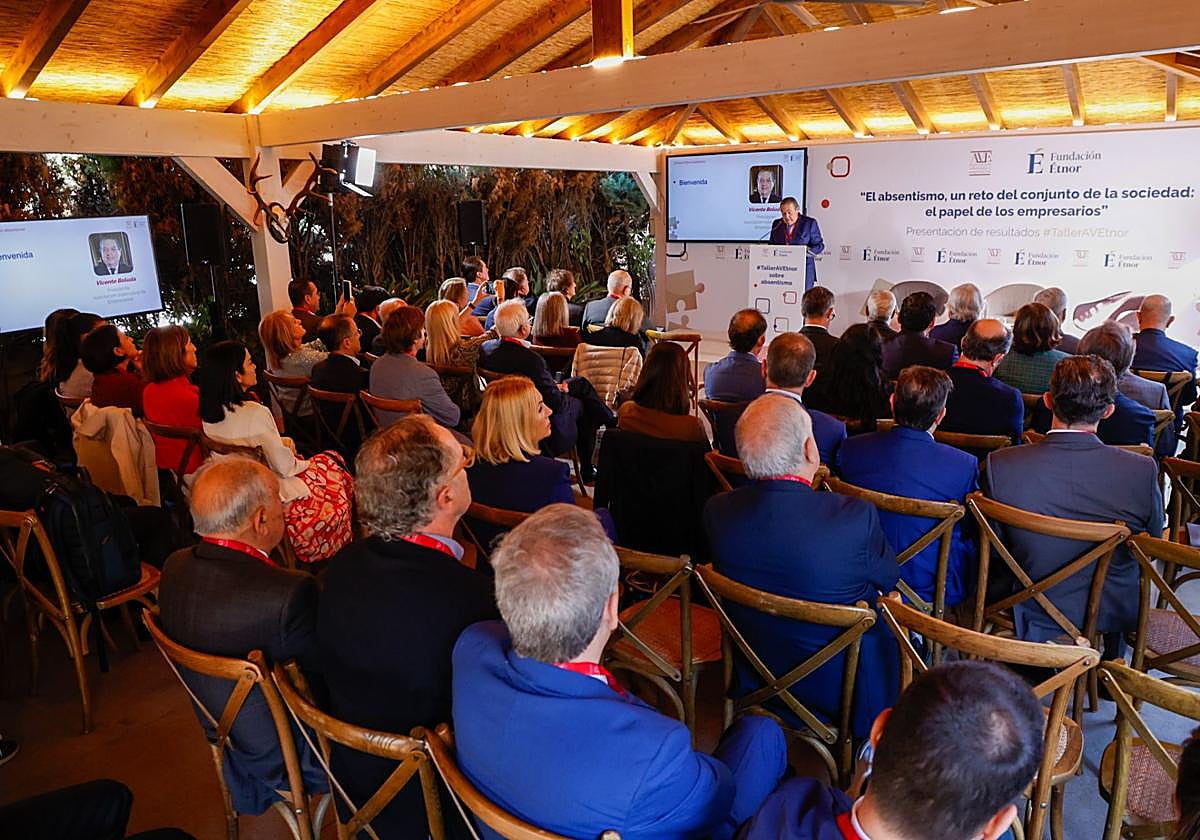
Business leaders from the Valencian Business Association (AVE) and the Étnor Foundation convened on Monday, October 27, in Alicante to present the results of the #TallerAVEtnor workshop, titled 'Absenteeism, a Challenge for Society: The Role of Business Leaders'.
The meeting aimed to examine the role of business leaders in reducing absenteeism through a comprehensive approach, combining quantitative data with ethical and social reflection. The report presented includes contributions from business leaders and executives, identifies causes, and proposes applicable solutions, emphasizing that absenteeism is a challenge affecting society as a whole, not just businesses.
The session, held at El Maestral restaurant, gathered business leaders, executives, and experts to discuss the causes and impacts of workplace absenteeism, as well as potential solutions from a comprehensive perspective.
The report was developed from the working sessions of the #TallerAVEtnor. It reflects the participants' views and proposes concrete strategies and best practices to reduce unjustified absences in the workplace. Beyond the numbers, the study shows that absenteeism reflects how employees relate to their work, their commitment, and the organizational culture.
AVE President Vicente Boluda opened the event by highlighting the importance of addressing workplace absenteeism as a challenge that transcends the business realm and affects society as a whole.
He also emphasized some conclusions drawn from the workshop, noting that workplace absenteeism is not just a challenge for businesses but for society as a whole, with various groups and agents able to contribute to improving absenteeism.
"Business leaders have the responsibility to do things very well"
Vicente Boluda
President of AVE
"Business leaders have the responsibility to do things very well, to take great care of our workers and create conditions for their personal and professional development," Boluda stated. He also stressed that workers and civil society must eradicate abuses and report fraud, as it affects everyone as a society. Regarding the role of public administrations, the AVE president stressed that they must believe in business leaders and facilitate their work without hindrance, stopping "putting spokes in the wheels" and ensuring the proper functioning of the health system to achieve an effective reduction in workplace absenteeism.
Subsequently, Héctor Blasco, General Director of Umivale Activa, presented the study 'Evolution of Temporary Incapacity and Accident Rates in Spain', developed with the Valencian Institute of Economic Research (Ivie). The report reveals that Spain ranks among the European countries with the highest rate of absenteeism due to temporary incapacity (TI) and the fastest growth rate. Between 2018 and 2023, working days lost due to TI in the General Regime increased from 242 million to 368.7 million, a 52% rise, representing a total cost of 81.574 billion euros in GDP, 5.4% of the national total.
Later, Jesús Conill, Professor of Moral and Political Philosophy at the University of Valencia, presented the conclusions of the report prepared within the framework of the #TallerAVEtnor, which gathered contributions, proposals, and reflections from business leaders and executives throughout the year's working sessions.
The event continued with the round table "In the Face of Absenteeism, How Do Companies Respond?", moderated by Pedro Coca, President of the Étnor Foundation, with the participation of Consuelo Vaquer, CEO of Nivel Cosmetics, and Javier García, President of Magic Costa Blanca. The debate analyzed best practices, leadership, and the role of business leaders in promoting commitment and shared responsibility. "Reducing absenteeism is not just about improving figures, but strengthening the values that make a fairer, more efficient, and more humane society possible," Coca emphasized.
Participants in the debate shared experiences on best practices and responsible leadership. Consuelo Vaquer stated: "Absenteeism forces us to look beyond indicators: it is a profound signal about how people connect with their work and the organization's culture," adding that investing in well-being, trust, and shared meaning "is not just a management strategy, it's a way to build more humane, sustainable, and socially responsible companies."
Absenteeism in the Hotel Sector
Javier García addressed the growing absenteeism in the hotel sector, noting that it has risen from 1-2% pre-COVID to figures as high as 10% during peak season, posing an organizational and economic challenge. He highlighted that the problem is global and requires collaboration with unions and agreements, as well as a shift in leadership towards a more transformational and inspiring style.
He also proposed strengthening internal communication, recognizing best practices, linking compensation to performance, and promoting social impact projects to align values and motivate the team. "Today, leadership must be more transformational and inspiring; internal communication and valuing best practices are fundamental," he pointed out.
The meeting reaffirmed the commitment of AVE and the Étnor Foundation to continue promoting spaces for reflection and shared action between ethics and business, convinced that reducing absenteeism involves rebuilding the sense of work, strengthening commitment, and consolidating a business culture that contributes to a more cohesive and responsible society.