All About the V16 Beacon: Which Vehicles Must Carry It and the Resulting Fines
N. S.
Tuesday, 21 October 2025, 08:05
From January 1, 2026, emergency triangles will no longer be the valid roadside signalling system for immobilised vehicles. Instead, the connected V16 beacon will be introduced, a device that combines physical light with digital connectivity, which the DGT considers essential for reducing accidents and improving road safety. But, must every vehicle carry it? What technical requirements must it meet? What will the penalties be if you don't install it?
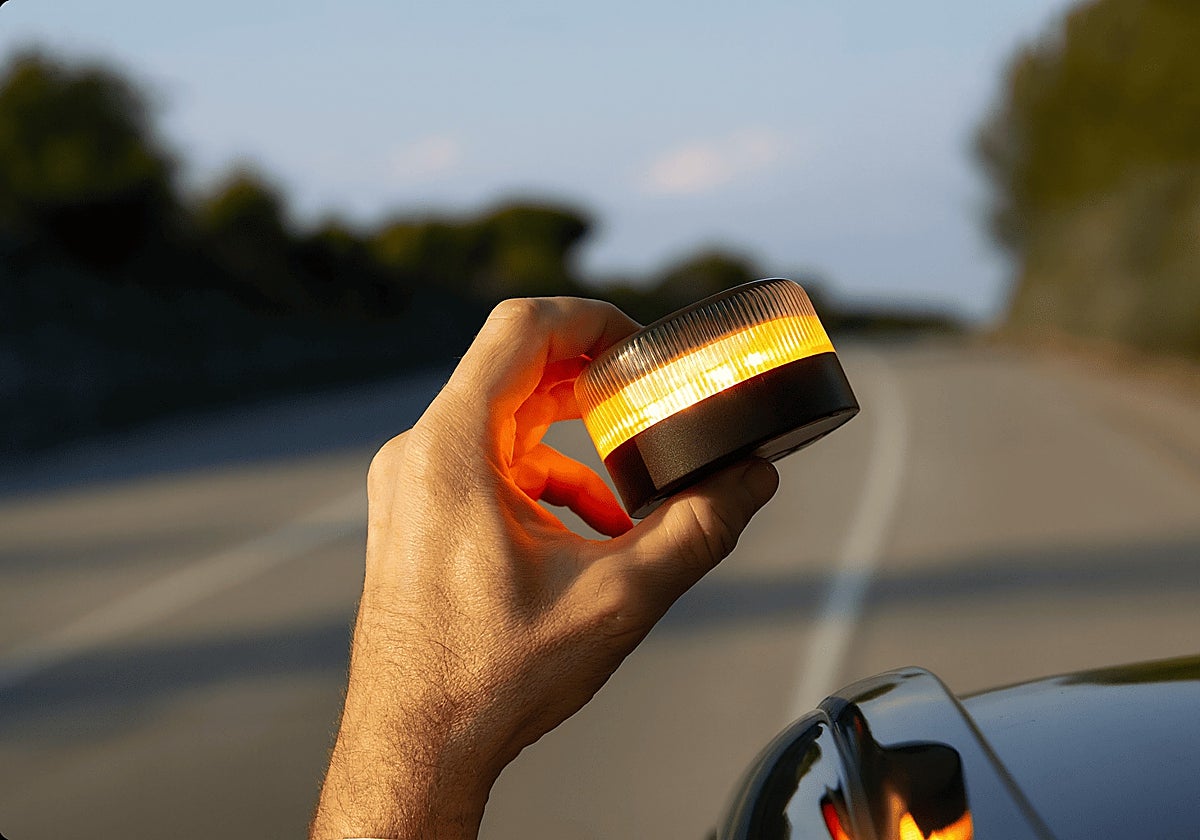
The connected V16 beacon is a small amber flashing light placed on the vehicle's roof when it is immobilised due to a breakdown or accident. Its main advantage over triangles is that it allows signalling without leaving the car, thus preventing the driver from walking on the road, one of the most dangerous moments for being hit.
Each approved beacon incorporates a geolocation system (GPS) and an integrated SIM card that, when activated, sends the vehicle's exact position to the DGT 3.0 platform. Thanks to this connection, road panels and navigators can warn in real-time of the presence of a stopped vehicle, increasing other drivers' anticipation. According to the DGT, and as noted by Pyramid Consulting, this evolution aims to combine "physical visibility and digital visibility." The device must have a minimum autonomy of 30 minutes and a battery lasting at least 18 months. Connectivity will also be guaranteed for a period of 12 years at no cost to the user.
The regulation states that all cars, vans, trucks, buses, and non-special trailers registered in Spain must incorporate an approved connected V16 beacon. Company vehicles and professional fleets must also carry it. However, motorcycles, mopeds, and special vehicles, such as agricultural or construction machinery, are exempt from the obligation. Their structure or size does not allow for a safe installation of the device, so they will continue using other adapted signalling systems.
The DGT also clarifies that foreign vehicles driving in Spain may continue to use emergency triangles while there is no harmonised European regulation. Nevertheless, it recommends incorporating the new beacon for safety reasons and compatibility with connected warning systems, especially for drivers who frequently travel on Spanish roads.
How to use the V16 beacon
In the event of a breakdown or accident, the driver must stop the vehicle in a safe place, activate the hazard lights, and place the beacon on the roof using its magnetic base, without leaving the cabin. If it is not possible to place it on the roof, it can be placed on the side of the vehicle, always on the driver's side. Once lit, the beacon emits a flashing light visible from over a kilometre away and simultaneously transmits its location to the DGT 3.0 system. It is important to remember that the device does not share personal data of the driver or the vehicle, and its function is limited to emitting the light signal and geolocating the incident point.
Driving without an approved V16 beacon once it becomes mandatory may be considered a serious offence, with financial penalties that could reach 200 euros, according to estimates from the specialised legal sector. Furthermore, if a vehicle does not correctly signal its position and a subsequent accident occurs, the driver's liability could be increased.
As explained by Marga Bernardo, a lawyer at Pyramid Consulting, "the non-use or lack of a V16 beacon may be subject to sanction, but like any traffic violation, it can be appealed if it is proven that there were justified causes, notification defects, or errors in the evidence." At Pyramid Consulting, where traffic sanction files are analysed daily, they emphasise that each case must be reviewed individually, as sometimes the complaints may contain formal or substantive errors that allow for their annulment.