98% of Teachers Believe Social Media Harms Students' Mental Health
They attribute it to increased anxiety, the most common disorder in classrooms, low self-esteem, outbreaks of violence, and bullying.
Alfonso Torices
Madrid
Tuesday, 28 October 2025, 11:41
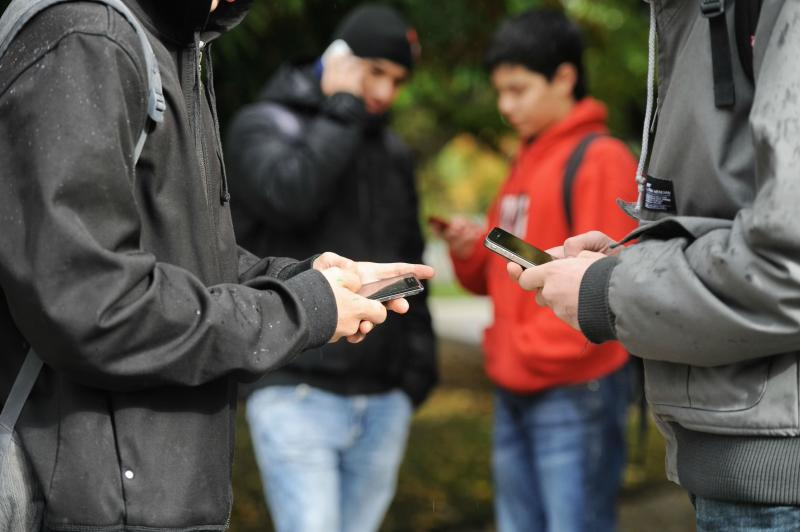
Spanish teachers are very clear about it. Social media is a danger to the emotional well-being of their students. Early access, often from childhood, to inappropriate content, excessive connection times, and often thoughtless or irresponsible handling of chats, forums, profiles, and platforms harm their students' mental health.
This is confirmed by no less than 98% of teachers interviewed by the Mapfre Foundation and Siena Education in research that has mapped emotional well-being in Spanish classrooms, with questionnaires and discussion groups involving nearly a thousand teachers from across the country, from preschool to high school.
They have no doubts. Social media is the determining risk factor, along with a more traditional one, such as family problems, leading 56% of teachers to indicate that their students' mental health is "average" and up to 13% to consider it "poor or very poor." Only 31% perceive a good or very good emotional state among students.
Teachers warn that more than half of students have "average" mental health and that 13% have "poor or very poor" mental health.
Teachers support with their daily observation the psychological damage to children and adolescents that numerous studies already attribute to social media. They consider them directly responsible for the increase in anxiety among students (the most common disorder in classrooms), but also for the rise in low self-esteem, complexes, and insecurities.
They point out that they are bombarded with content that distorts their self-image and reinforces dynamics of violence and exclusion, resulting in bullying, low self-esteem, and hypersexualization, while also undermining students' ability to manage their emotions. The content they consume, which they believe to be most harmful, in this order, are unrealistic beauty standards, violent and aggressive content, pornography, content that fuels cyberbullying and exclusion, and online gambling.
Two out of three teachers, in fact, consider that the most relevant strategy to reduce the risk of psychological harm in class is to promote a critical use of social media among students, accompanied by an increase in physical and in-person activities and limiting the use of electronic devices during school hours.
The Three Major Evils
Teachers are very clear about what the main mental health problem in the classroom is: anxiety. Nine out of ten cite it among the top three, and for 44%, it is the most frequent by far. The second most observed psychological disorder is stress, highlighted by 23%, and the third is aggressive attitudes linked to bullying, noted by one in five teachers. To a lesser extent, addictions (11%), self-harm (7%), and depression (6%) are cited.
The risk factors they believe trigger this emotional distress are led by social media and family problems, with conflicts between peers and academic pressure on a second level, and fear of the future or lack of emotional support at school on a third level, with a lesser influence.
Teachers are quite clear about what signals should raise alerts about which students have psychological problems. 80% point to changes in behavior, 75% to a decline in academic performance, and 71% to situations of social isolation, three facts they particularly link to cyberbullying situations. 50% also highlight aggressive attitudes and 39% sleep problems.
Critical of Parents
Teachers are quite critical of parents' attitudes towards their children's emotional problems. More than half believe they detect them only in some cases, 35% that they rarely do, and only 6% think they notice them in most cases. Similarly, only 14% think families actively collaborate with the school and teachers on these issues, while 16% believe they do not give importance to what happens or resist any intervention.
What they are clear about is what family factors or situations cause emotional distress in students. For 86%, it is inadequate parenting styles (either too permissive or too authoritarian), for 77% separations and divorces, for 71% lack of academic follow-up, for 30% severe economic problems, and for 20% violence or abuse at home.
Stressed and Unmotivated Teachers
Teachers think they have much better mental health than their students, but even so, a third confess to being stressed, a quarter lack motivation, and a fifth are irritable, which explains an increase in absences. Emotional exhaustion is linked to work overload, excessive bureaucracy, and relationships with families.
Half of them acknowledge that this emotional burden reduces their ability to identify students' mental health problems, although the main obstacles they highlight to better perform this task are lack of time and training (between 60% and 80% of cases), followed to a lesser extent by lack of support from the family or the school.