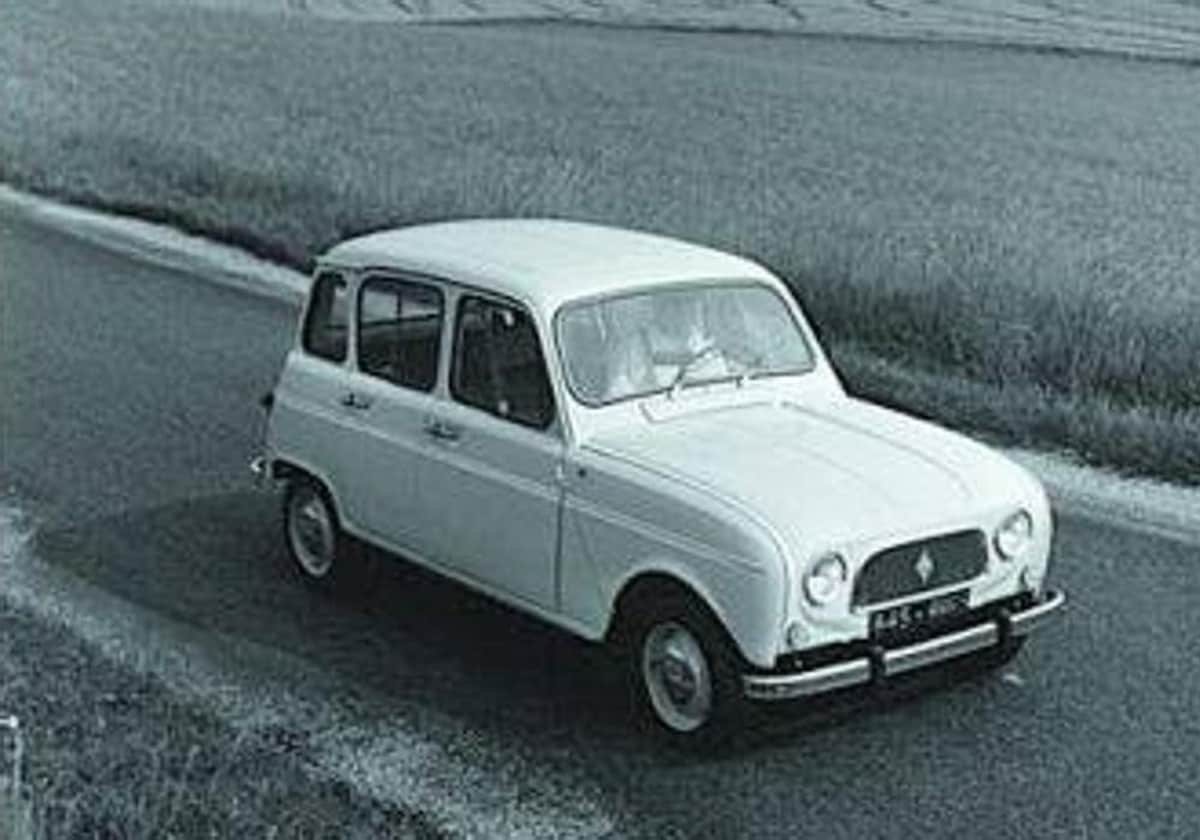
This was the original "Cuatro Latas": a true family all-terrain vehicle
Renault revives the model, now transformed into a 100% electric car
Patxi Fernández
Wednesday, 16 October 2024, 10:35
Renault 4, an authentic icon, was born in the 1960s to meet the needs of a rapidly evolving society, amidst rural exodus, the birth of the middle class, and the new role of women. It aimed to be the car for everyone, for all uses, and a symbol of freedom.
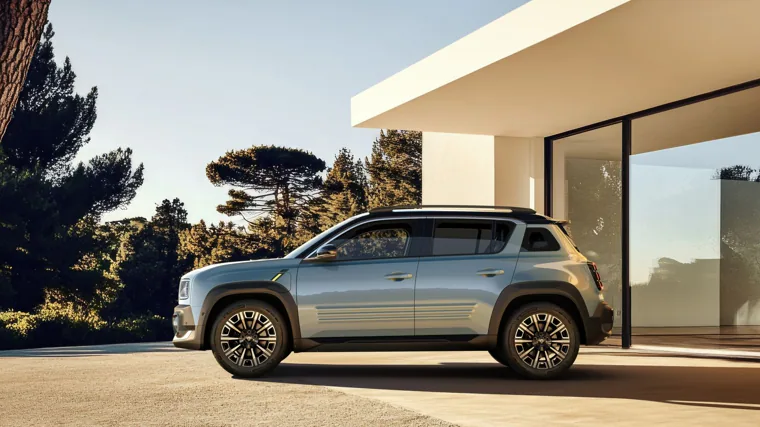
The diamond brand has decided to revive this model, but adapted to the new society, with all current technological advances. Announced at the 2022 Paris Motor Show as a show-car (4EVER Trophy), Renault 4 E-Tech 100% electric draws inspiration from the original model's DNA to reinvent itself as a versatile compact of today. 100% electric and connected, it is more than ever a "car full of life" and even more, an everyday adventurer.
With Renault 4 E-Tech 100% electric, Renault once again confirms its commitment to accelerating the energy transition on a European scale, democratizing the electric vehicle. The brand offers a range of 100% electric vehicles that cover all needs and uses. Renault 4 E-Tech 100% electric finds its place in the B segment, just above Renault 5 E-Tech 100% electric.
Slightly larger and more spacious than the latter, it positions itself like Captur with respect to Clio. While Renault 5 E-Tech 100% electric targets an urban clientele, Renault 4 E-Tech 100% electric has a broader vision and aims to bring young families closer to electric driving.
There are still numerous units in circulation in Spain, as 800,000 units were produced in Renault's factories in our country, and especially in Portugal, where its commercialization continued for a few more years than in Spain. In total, more than 8,000,000 units were manufactured over three decades, destined for more than 100 countries. This makes it the best-selling Renault model in the world.
The history of the Renault 4 begins, after 5 years of development and thousands of kilometers of testing in extreme climates, with its presentation to the French press on August 28, 1961.
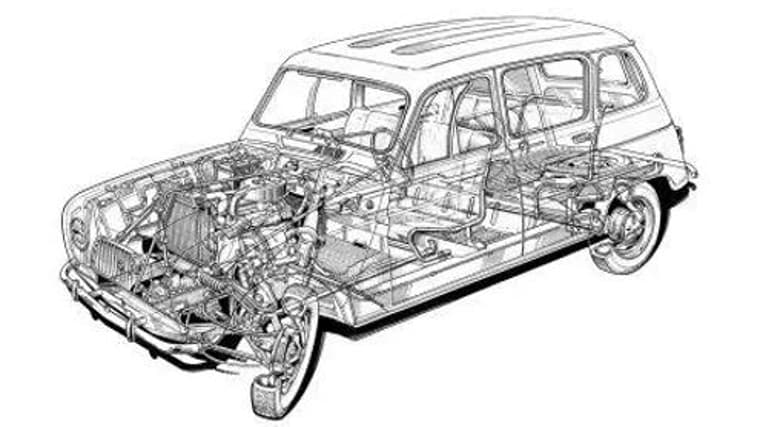
The R4 grouped a compendium of innovative technological solutions, both in terms of design, modularity, mechanical technology, and dynamic versatility. Firstly, it was a Break body mounted on a platform-type chassis, very innovative conceptually, based on the excellence of simplicity.
Its architecture, with 3.6m in length and 1.5m in height, provided a large space for passengers and the trunk. This allowed it to offer a spacious 5-seat cabin and at the same time transport a large cargo volume of up to 480 liters. Additionally, the rear seat was foldable very quickly and easily, offering up to 1.45 m3 of available space. Thanks to the incorporation of a 5th door type hatchback, with a large opening angle, it offered exceptional rear accessibility, practically unprecedented in its time, reinforcing its eminently practical, modular, and versatile character.
Secondly, it was the first compact model, since the end of World War II, to propose front engine and traction, to which was added independent suspension on the front axle, with all the advantages in terms of maneuverability and steering precision that this entails, paving the way for future Renault models.
The R4 proposed other very useful mechanical advances. For example, it was equipped with sealed joints, free of lubrication, which resulted in lower maintenance costs for the car. Another solution, pioneering in its segment, was the closed and hermetic cooling circuit, which incorporated a special liquid capable of withstanding the lowest temperatures. This meant that it was no longer necessary to replenish antifreeze in the circuit liquid, a frequently inconvenient operation with an associated cost. The only real maintenance of the car was the oil change.
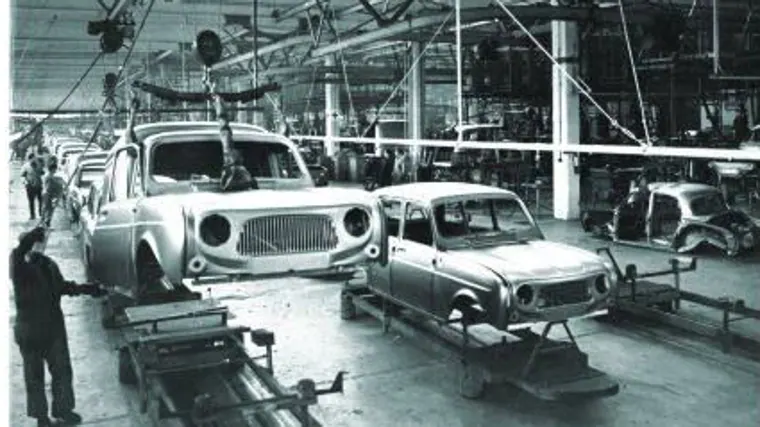
After its launch in France in 1961, it was time for its introduction in Spain through the start of its production at the Valladolid Assembly Plant from 1963, beginning a fruitful industrial stage that would last until 1989, in the case of the R4 car, and until 1991 in the case of its van version. Between the two, 800,000 units of this legendary model have been produced in Spain, close to 10% of its worldwide production.
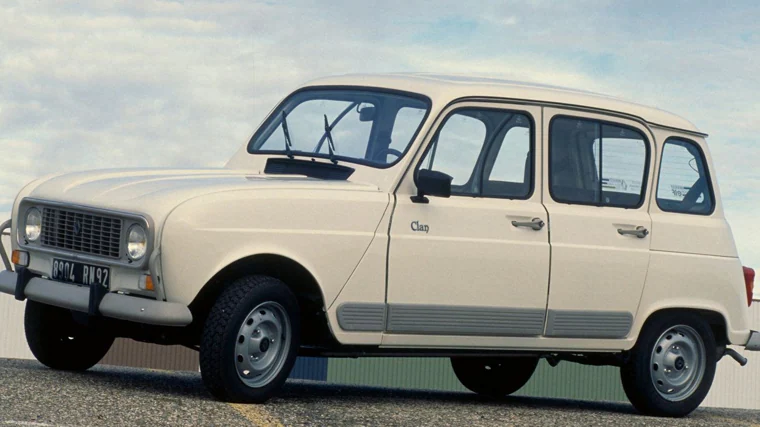
The presentation in Spain of the Renault 4, in its "L" version, took place, generating great expectations, on February 25, 1964, in the midst of the tourism boom and development that characterized the society and economy of 1960s Spain. The press of the time unanimously highlighted its versatile and economical nature, and the virtues of its "all-road" suspension, as well as its innovative concept in terms of ease of access to the cabin.
Another highlighted aspect was its cheerful personality and, especially, the price, which, at 84,000 pts. of the time, was clearly below the segment threshold, which was around 100,000 pesetas (about 600 euros today).
The model marketed in Spain had specific characteristics: an 845cc engine, which developed 30 hp and a 12-volt electrical installation, and exceeded 100 km/h offering very tight consumption.
The media presented it as an object of desire for those who wanted a practical, versatile, and affordable car.
The affectionate nickname "cuatro latas" quickly became popular, referring to the rear label that reflected the initials "4L". Its commercial development in the Spanish market grew rapidly, alongside Spanish society, for almost three decades, until it became the mythical model it is today.
Throughout its history in Spain, the 4L was modernized and accompanied the technological evolutions that emerged, without losing its original personality and conceptual virtues. In this way, it incorporated more modern and efficient engines, such as the "sierra" C engine of 852cc and the 4-speed gearbox, in 1968, or later, the 1,108cc engine of 38hp, disc brakes, etc... It also introduced elements such as the panoramic sunroof, which contributed to reinforcing the playful character of the model.
The introduction of more demanding international environmental regulations, from January 1993, led to its industrial end, as happened with other models from other brands, as it was technically unfeasible to introduce the new mandatory elements, such as the catalyst. The last unit produced of the 4L left the line on December 3, 1992, although in Spain it stopped being produced in 1989.
Its long and recognized history in our country has left as a legacy numerous Renault 4 fan clubs, and it is common to find, even today, units of this legendary model at historic vehicle gatherings throughout the Spanish geography, showcasing its cheerful and innovative personality.
The 4L has been a reference for an entire generation of Spaniards who found, thanks to it, the possibility of accessing car mobility at an affordable price and with extraordinary versatility, allowing it to be the ideal vehicle for city, road, and also off-road driving.
Its habitability and modularity advanced for its time, its mythical mechanical reliability, and its low cost of use make the 4L an unforgettable car.