"Horror and Hatred Also Nest in Democracy"
"The world needs more women in government," claims the winner of the one-million-euro Planeta Prize with 'Victoria'
Miguel Lorenci
Barcelona
Wednesday, 16 October 2024, 12:40
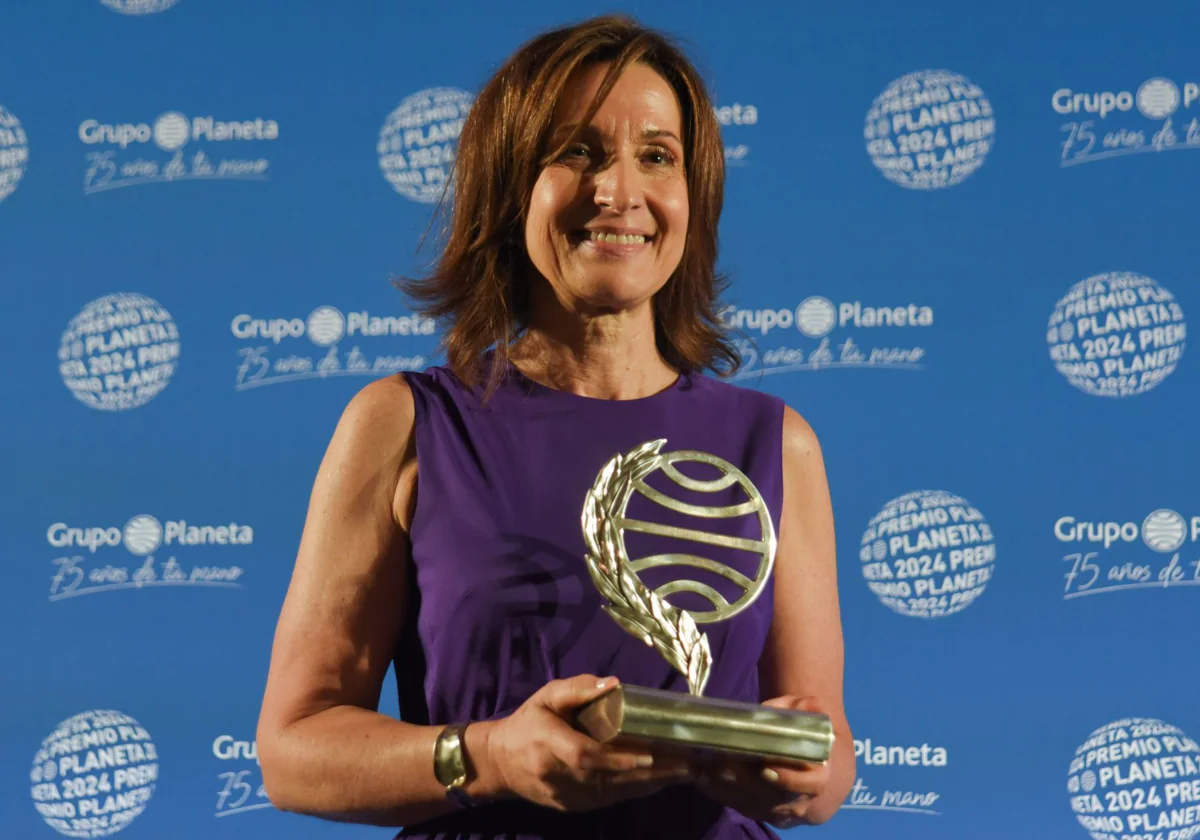
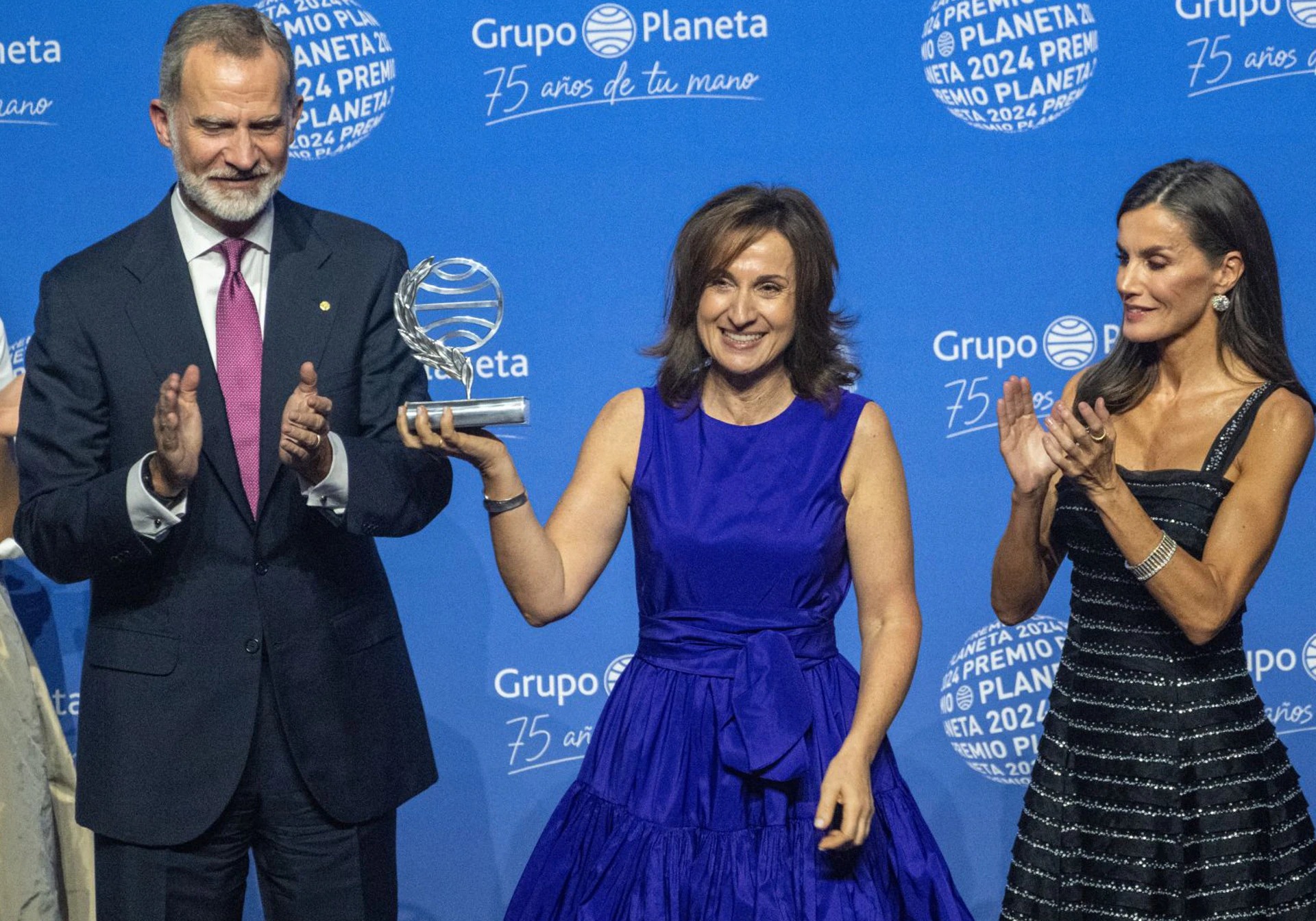
It is a story of love and redemption and a tribute to those who are silenced. This is how Paloma Sánchez-Garnica (Madrid, 1962) refers to 'Verónica', her ninth novel, which has earned her the Planeta Prize and its one million euros three years after being a finalist. She returns to Berlin, which fascinates her, with a story that jumps from Germany to the United States and shows the many faces of horror and hatred, the cracks in democracy, and the need for free journalism.
-Never give up. I have been in this for twenty years, after another twenty years searching for my place in the world of writing. I started from scratch. I have built myself novel by novel, reader by reader. This is a goal, and I will continue. The reader is wise and does not buy everything always. One must be prepared for failure.
-What does she tell in 'Victoria'?
-It is a novel of love, overcoming, survival, and redemption. It is about the search for truth and justice, even if it brings terrible consequences. It asks what we are willing to do for those we love, even when ingratitude and betrayal threaten to destroy everything.
-Through female voices?
-Yes. Those of two sisters, Victoria and Rebeca, and the daughter of one of them, who try to survive in a ruined, hungry, and occupied Berlin after the war. They cross paths with two men who will change their destiny. One will end up in the gulag of Russia, and the other will discover serious cracks in the cradle of freedom and rights, in the segregated southern United States and New York, where McCarthyism's witch hunt and its delusional anti-communist persecution condemned hundreds of thousands of innocents.
-Does horror know no borders or times?
-No. Horror and hatred disguise themselves and often nest in democracy. The seed of hatred was not only in the Nazis and the Holocaust. It also took root in the United States. In Tuskegee, Alabama, the city of Rosa Parks, the lives of hundreds of poor black sharecroppers were ruined by a cruel medical experiment on the effects of untreated syphilis. Clinton apologized to them forty years later.
-Does that hateful seed now germinate in Ukraine, Gaza, or Lebanon?
-Yes. We do not learn. I believe in humanity, but I often despair. In the West, we have become complacent. We believe that no one will take away what we have, and we are wrong. It can disappear in seconds. We must defend the rule of law and protect press freedom. It is crucial to know the truth of things. Citizens have the right to information and the obligation to sift through and analyze it to form our opinion. It is not enough to listen to the song we like. There are journalists who tell truths and those who spread falsehoods and cause terrible harm. The novel is not about journalists, but it shows the importance of journalism as the guardian of the fundamental right to truthful and verified information.
-She presented herself with the pseudonym Anna Akhmatova, the Russian poet, and the title 'Good Night, and Good Luck'
-I am fascinated by Akhmatova's fortitude. She was forbidden to write and publish, but she continued to think and feel free to survive. She wanted to stay in the USSR, her homeland, despite Stalin's harassment. Her son died in the gulag, as did her second husband. It is a tribute to all those who are silenced and remain silent: they continue to write poetry, narrative, or journalism. 'Good Night, and Good Luck' is the motto with which Edward R. Murrow ended his radio and television broadcasts. He taught us that a country of sheep breeds a government of wolves.
-Returns to Berlin for the third time
-It is inexhaustible. Everything has happened there throughout the 20th century. Every corner has a story, and from each novel, another arises. After finishing 'Last Days in Berlin', I needed to understand and explain the early years of the Cold War from the perspective of the losers and the winners. The novel goes from October 16, 1946, the day the Nazi high command was executed, to August 13, 1961, when the wall began to be built and the borders of the GDR were closed.
-The far right is growing in that Germany and in Europe. Is it worrying?
-I am alarmed by the extremes, which destabilize and touch each other. Hitler and Stalin admired each other. In the center, in moderation and common sense, is the ideal government. Democracy always has flaws, and dictatorships, unfortunately, seem perfect. In Spain, we are not letting ourselves be carried away by that wave.
-With Trump surfing it again
-From the outside, we see Trump as a clown, a histrion. But the average American does not care that he is judged and condemned in I do not know how many trials. They want to hear him say that the American dream exists and that America comes first. With Kamala Harris, change seems feasible.
-Does the world need more women in government?
-Without a doubt. Women seek solutions. There have been women in history with power who have had their flaws, but we need more women in charge.
-She thanked her husband for the award with enthusiasm.
-I have been with him for forty-three years. He has lit many lights in my life. He exudes optimism, generosity, and confidence. Without him, I would have been a different person. He has made me an unstoppable woman. If I had been told a few years ago that I would be here with this award, I would not have believed it. And he always believed in me.