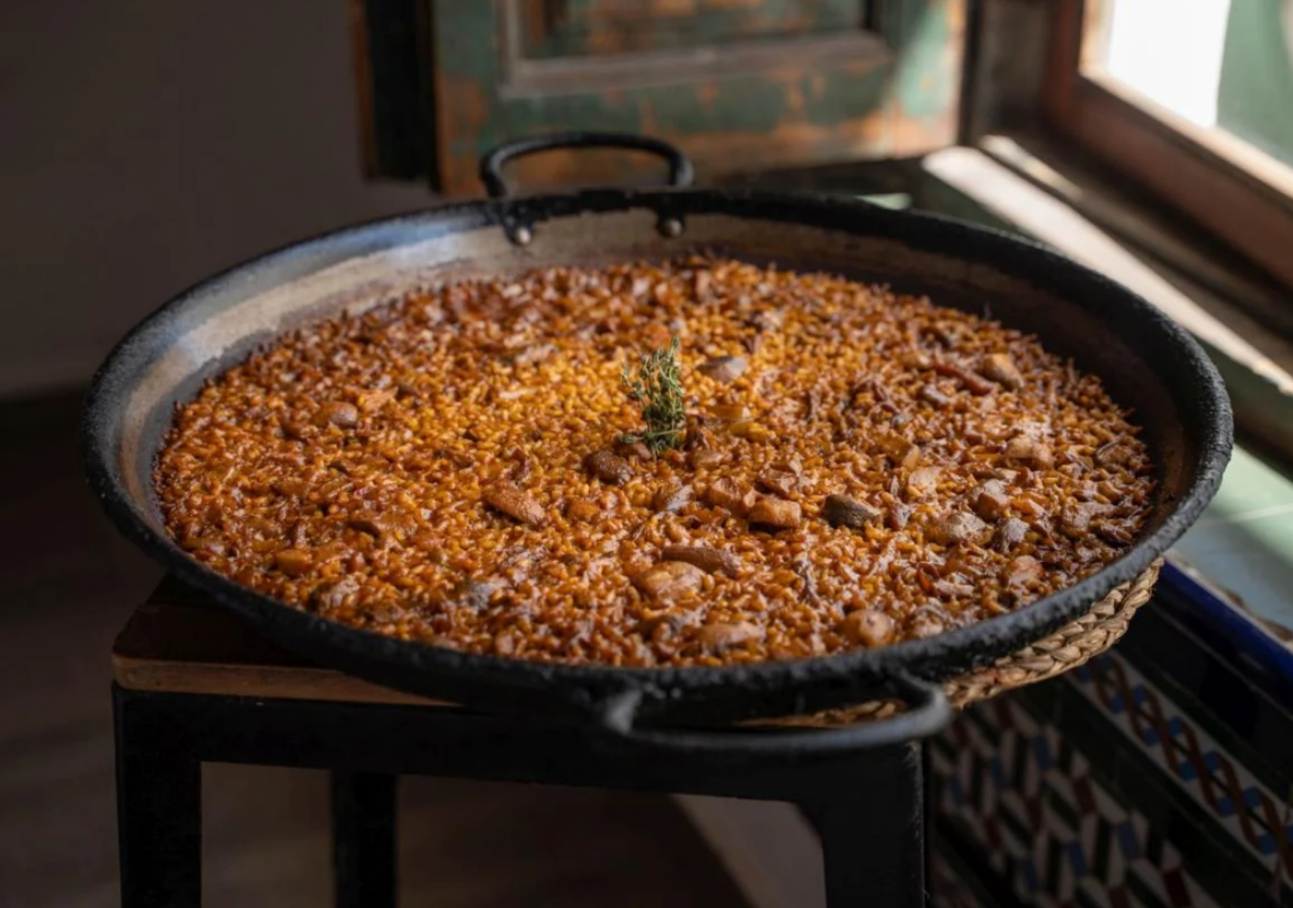
Guide to Finding the Best Rice Restaurant in Alicante
Master rice chef Juan Carlos Galbis shares key tips for choosing a restaurant with good rice dishes
Luis Urios Ibáñez
Valencia
Thursday, 16 October 2025, 07:31
Rice cooking could be considered an art. It is subject to countless nuances that make it as diverse as it is complex. The city of Alicante is full of great rice restaurants, from the traditional Nou Manolín to the daring Populi Bistro. Choosing the right place to eat when visiting the city is essential, especially considering that Alicante holds the title of Spanish Capital of Gastronomy this year, an accolade awarded precisely for the rice culture that has spread across the region for twelve centuries.
For all these reasons, we have created a guide to choosing the best rice restaurant in Alicante. We have done so with the advice of
Juan Carlos Galbis, one of the most important rice masters in all of Spain, who is, in fact, in the Guinness Book of Records for having cooked the world's largest paella in 1992, serving no less than one hundred thousand diners.
First tip: rice lovers
The kitchen staff of the rice restaurant you choose to visit in Alicante should be rice lovers. For Juan Carlos Galbis, this makes all the difference, and it is evident in details such as the containers where it is prepared, or the paellas, which must be of quality. The greatest rice lovers, those of the highest category for Galbis, are those who prepare paellas over a fire, with orange wood. And also those who, when cooking the rice, do it as if they were going to eat it themselves, not for business. This results in better care of the raw materials and the use of good extra virgin olive oil. There are many rice restaurants that are a business success but, paradoxically, cannot make you happy every day. On the other hand, there are simpler, less voluminous rice restaurants where the person cooking puts their soul into the rice.
Second tip: waiting time
In general dining, the shorter the waiting time, the better. With rice, this is not always the case. A rice dish without prior order served ten minutes after ordering will never be of great quality. This is what Galbis says. A canonical paella needs at least an hour to be ready. If it is served in half an hour, it means everything was half-prepared before your arrival. A very good sign is when rice restaurants operate by order. They avoid long waiting times and it is assumed that they will start preparing the paella shortly before the customers arrive at the restaurant, calculating the times.
Third tip: the correct thickness
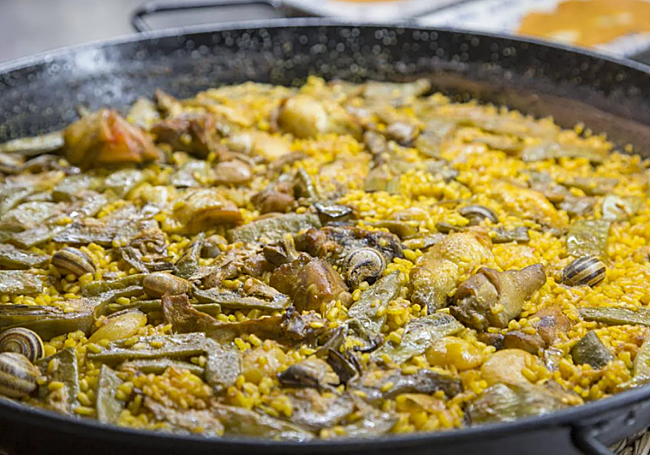
We have all eaten a rice dish that seems never-ending, paellas with excessive thickness that are tasteless. Or those paellas with the thickness of half a little finger. Personal tastes are each person's property, but Galbis recommends the standard of assured quality. For him, a rice cooked in a paella should have a thickness of between 2.5 and 3 centimetres at the edge. Behind this assertion lies science and history. Traditionally, the thickness of the paella was measured by the rivets of its handles. The rice should be slightly below the rivet, without touching it. Excessively thin rice, says Galbis, has a deviation in its homogeneity, with a higher concentration of broth and a clustering of oil and salt.
Fourth tip: the grain, cooked but not overdone, loose but not raw
According to Galbis, the rice grain should be cooked, but not overdone, whole and loose, but not raw. One of the most widespread mistakes today in rice cooking is, according to him, that in trying not to overcook it, they leave it hard. He clarifies this: when you press it with your molars, you should be able to appreciate its juiciness and firmness when reaching the heart of the grain. And the grain in question, at that moment, does not break, but flattens.
Fifth tip: the setting
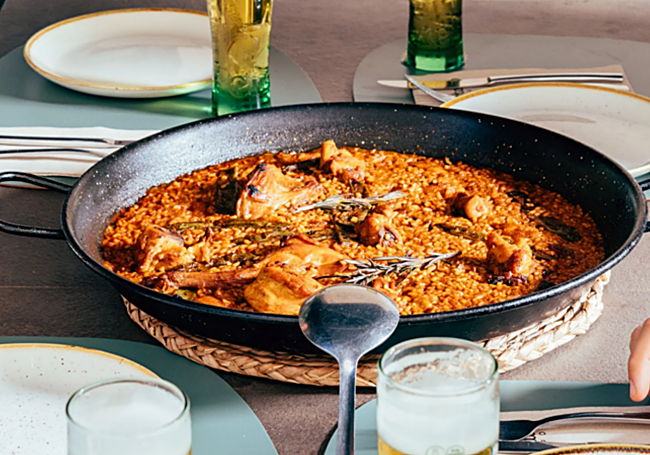
It is true that this tip is not entirely definitive, but it is not the same to eat rice with views of the motorway as it is with views of the sea or the port of Alicante. It is proven that sight, smell, and taste buds are interconnected, so the environment, to some extent, also affects the flavour. However, there can also be delicious rice dishes in places that are not aesthetically pleasing. The setting is just an additional factor.