The Water Lily Effect: Blurring the World to See Beyond Chaos
An exhibition celebrates and explores the blurred vision of great artists who followed the path opened by Monet / CaixaForum brings together 72 works by 55 creators captivated by the illuminating poetics of the blurred
Miguel Lorenci
Madrid
Monday, 6 October 2025, 00:15
Blurring the perspective to look beyond and reflect the world through art is revealed as a magical, poetic, and luminous approach. This is demonstrated by the exhibition 'Blurred. Another Vision of Art', hosted by CaixaForum in its Madrid halls. Taking Monet's 'Water Lilies' as a starting point, the exhibition proposes a seductive and illuminating exploration "of the poetry of blurring as an aesthetic choice and key to interpreting modern and contemporary art and the world," according to its curators Claire Bernardi and Emilia Philippot.
The result of collaboration between the Parisian Musée de l'Orangerie and the Fundación La Caixa, the exhibition brings together 72 works by 55 artists—mostly contemporary—in a thematic and non-chronological journey through paintings, sculptures, photos, and videos, until April 12.
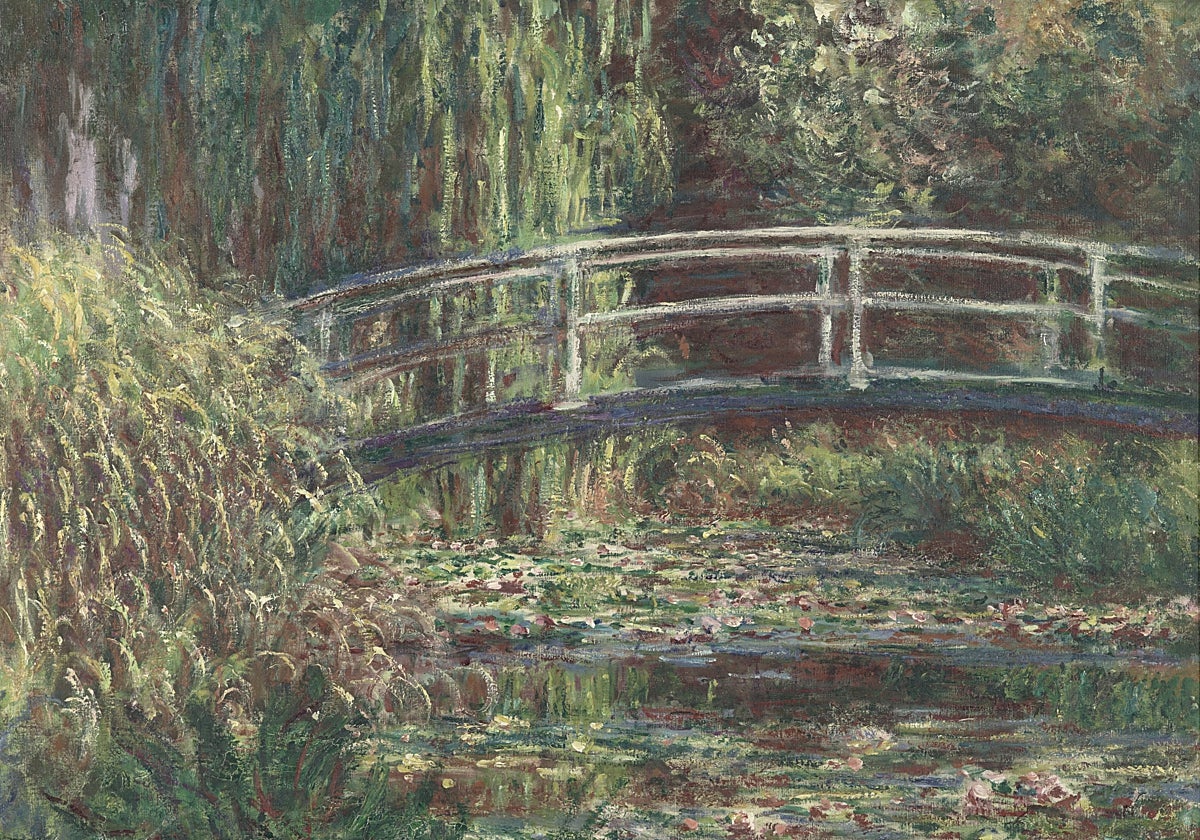
Claude Monet's series of water lilies opened a universe of blurring for modern art, beyond the 'sfumato' with which Leonardo da Vinci and the Renaissance accentuated dreaminess, using the blurred and imprecise as a powerful expressive element. Long considered a paradigm of abstract painting, Monet's work, a precursor and creator of Impressionism, captures the fleetingness of light, the color of nature, and the ephemeral nature of movement. It also anticipates current immersive installations that exploit 3D technology and virtual reality.
New Vision
The blurred and unfocused effect of the vast expanses of water in Monet's canvases—initially attributed to an ocular deficiency—had never been thoroughly analyzed. Today it is considered a conscious aesthetic choice and is the guiding thread of an exhibition that explores how this phenomenon "represented a new way of representing and understanding the world for later artists, especially from 1945 to the present day."
The exhibition features a dialogue between artists as diverse as Alberto Giacometti, Gerhard Richter, Mark Rothko, Eva Nielsen, Thomas Ruff, Alfredo Jaar, Soledad Sevilla, Christian Boltanski, Hans Haacke, Julia Margaret Cameron, Mame-Diarra Niang, Nan Goldin, Bill Viola, and Pipilotti Rist, whose common thread is the desire to blur the world to interpret it.

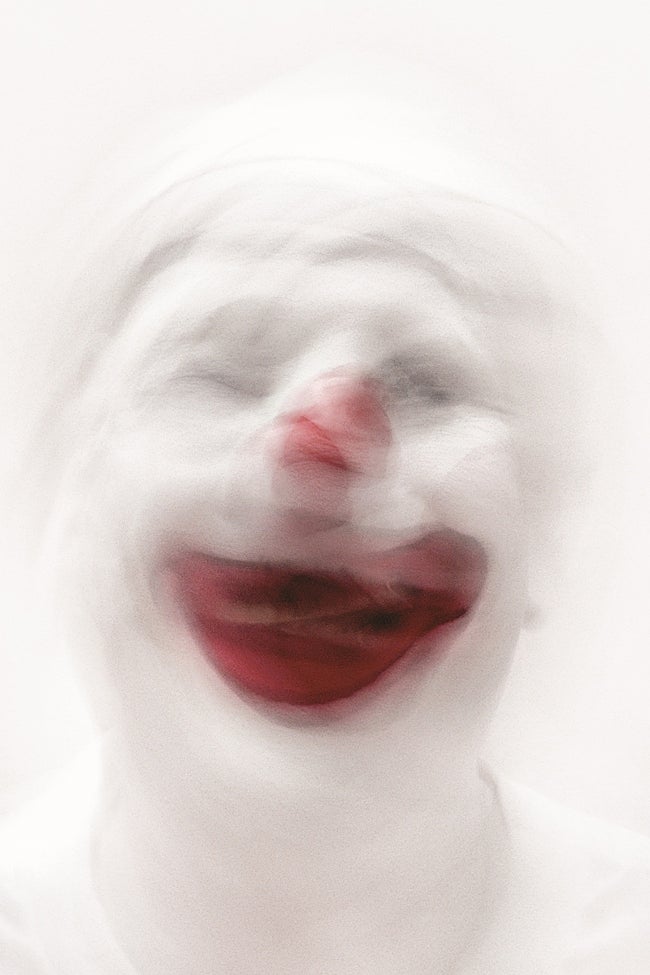
The exhibition traces the aesthetic roots of blurring in the 19th and early 20th centuries to follow the intellectual, scientific, social, and artistic upheavals with which Impressionism grew. It speaks of the blurred, "initially defined as a loss of sharpness, but turned into a privileged means to capture a world where instability reigns and visibility is clouded."
Tending towards the nebulous and diffuse was consolidated in art as an effective tool to enhance the sensation of instability, chaos, impotence, or uncertainty that dominates our lives today. "If we talk about artistic blurring, it is always seen as something negative," laments Claire Bernardi, director of the Musée de l'Orangerie and curator of the exhibition alongside Emilia Philippot, conservator of the Institut National du Patrimoine de France, who proposes "changing the mindset."
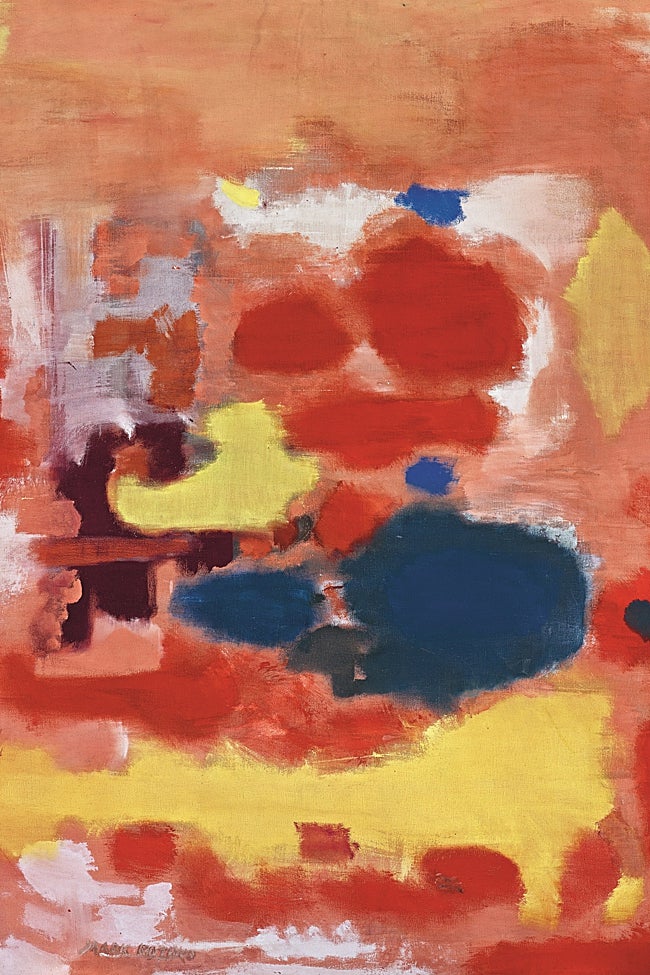
"With Monet's cycle of water lilies, we see that this blurring is omnipresent in his work, and it is an aesthetic decision that opens a key for contemporary art," adds Bernardi, inviting the viewer to change historical perspective and the way of looking at art. "Blurring is in resonance with the current world, it feeds it," she asserts.
The exhibition is divided into five areas: a 'Preamble', with Impressionism as a turning point towards the dissolution of the figure; 'At the Borders of the Visible', where blurring is addressed as a means to challenge perception; 'The Erosion of Certainties', which defines the blurred and the loss of sharpness as a privileged way to capture an unstable world, and 'Praise of Indefinition' and 'Uncertain Futures', which close the journey with pieces in which artists of yesterday and today "reflect the disorder of a current world confronted, faced, and with an uncertain future."
"In a present where we need certainties and boundaries, this exhibition offers a broader perspective," assures Bernardi, "moving away from that race towards precision, so intense that sometimes it does not allow us to distinguish good information from bad."

The exhibition draws from 49 lenders, including museums, galleries, foundations, and private collections, in addition to a dozen works from the Contemporary Art Collection of Fundación La Caixa.