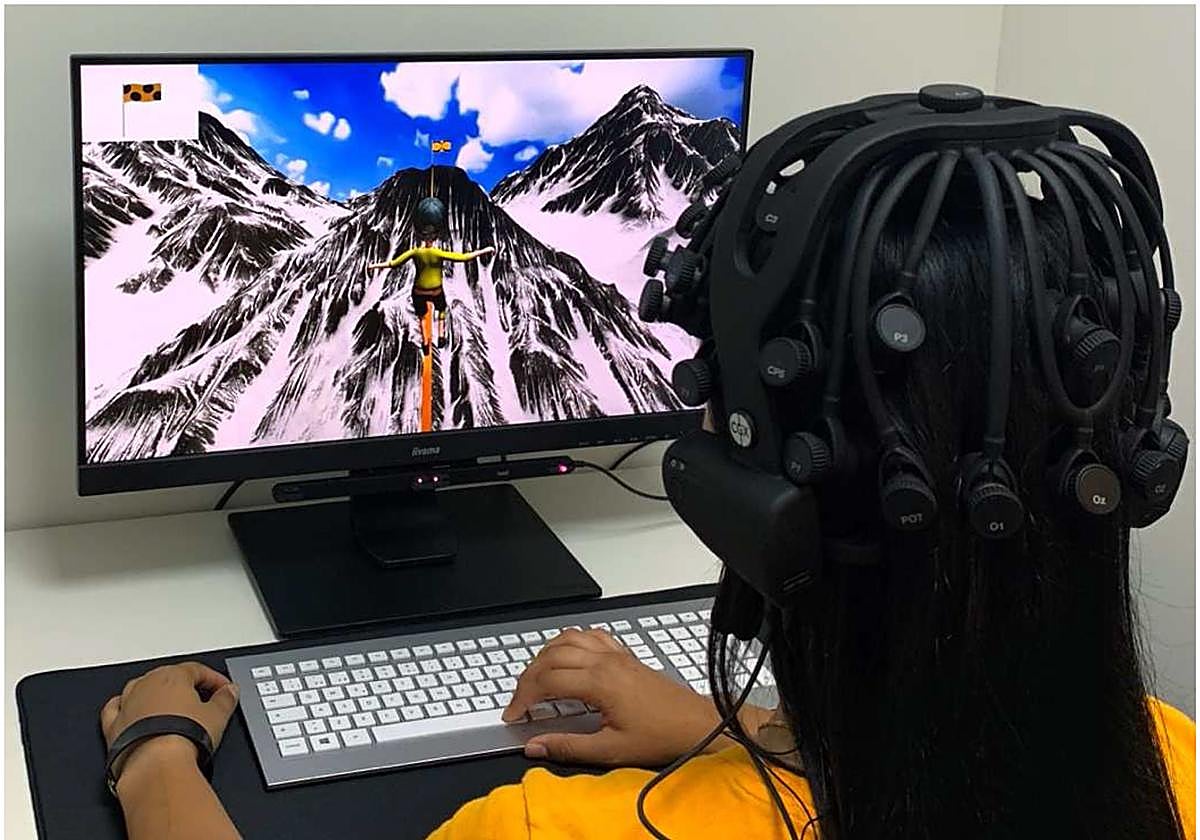
The University of Alicante launches a project to improve differential diagnosis of ADHD and autism in children
The project combines artificial intelligence, biometrics, and immersive technologies to more accurately detect both neurodevelopmental disorders
A.H.
Alicante
Friday, 10 October 2025, 12:10
Researchers at the University of Alicante (UA) are leading a project to tackle one of the major challenges in child neuropsychology: the differential diagnosis between Attention Deficit Hyperactivity Disorder (ADHD) and Autism Spectrum Disorder (ASD).
These are two of the most prevalent neurodevelopmental disorders that can share symptoms and often present high comorbidity, meaning they can coexist in the same patient, according to the centre.
In this context, the BALIDA-AA project (A Big Data analytical platform for the differential Diagnosis of ADHD and Autism Spectrum Disorder) was born, which will develop innovative technological tools for earlier and more precise detection. "The ultimate goal is to improve the quality of life for affected children and their families," explains Professor Rosario Isabel Ferrer Cascales, the principal investigator of the project and coordinator of the Applied Psychology to Health and Human Behaviour Group (PSYBHE) at UA.
"We are facing a pioneering proposal that combines immersive technologies, biometrics, big data, and artificial intelligence to facilitate decision-making in clinical practice and advance research on mental health and neurodevelopment," explains Juan Carlos Trujillo Mondéjar, also a principal investigator of BALIDA-AA, professor and coordinator of the Lucentia research group at UA.
ADHD affects approximately 5-7% of the paediatric population and 2-5% of the adult population.
Globally, ADHD is estimated to affect approximately 5-7% of the paediatric population and 2-5% of the adult population. In Spain, studies suggest a prevalence of 6.8% among school-aged children. For ASD, current estimates place its incidence at about 1 in every 100 children. In Spain, it is estimated that around 1.5% of children are diagnosed within the autism spectrum.
According to UA researchers, although both disorders can overlap in symptoms such as distraction, behavioural problems, or social interaction issues, their origins and manifestations are different. Therefore, "differential diagnosis is very important, and projects like this can help identify complex patterns that distinguish both disorders more early and accurately."
Technology for a more accurate diagnosis
Based on a multidisciplinary approach, UA researchers aim to generate accessible, scalable, and high-impact tools in clinical practice. To this end, they will develop a comprehensive system based on three technological pillars.
The first is extended reality (XR), a concept that encompasses virtual, augmented, and mixed reality, to create immersive and interactive environments that help evaluate participants' behaviour in scenarios close to reality, reducing the bias of traditional tests.
The second, thanks to biometric data capture, during the previous experiences, physiological parameters such as electrodermal activity, heart rate, and eye movements will be recorded to obtain a multimodal database that reflects the attentional, cognitive, and emotional responses of each participant.
Finally, through artificial intelligence (AI), the collected data will be integrated into machine learning models capable of identifying characteristic patterns of ADHD and ASD.
"These tools will not only facilitate differential clinical diagnosis but also allow monitoring the individual evolution of each case, providing professionals with objective and personalised information," add the UA professors.
With a duration of four years, until 2029, the BALIDA-AA project has received funding of nearly 600,000 euros granted under the Prometeo 2025 programme for excellence research groups of the Generalitat Valenciana.