Reservoirs Surge Again, Reaching 50% Capacity with a Gain of 863 hm3 in a Week
Levels rise by 1.5 points with increases of two points in the Guadalquivir Basin (32% of its capacity) and decreases in the Segura Basin, which falls below 15%
José Antonio Guerrero
Madrid
Tuesday, 22 October 2024, 13:40
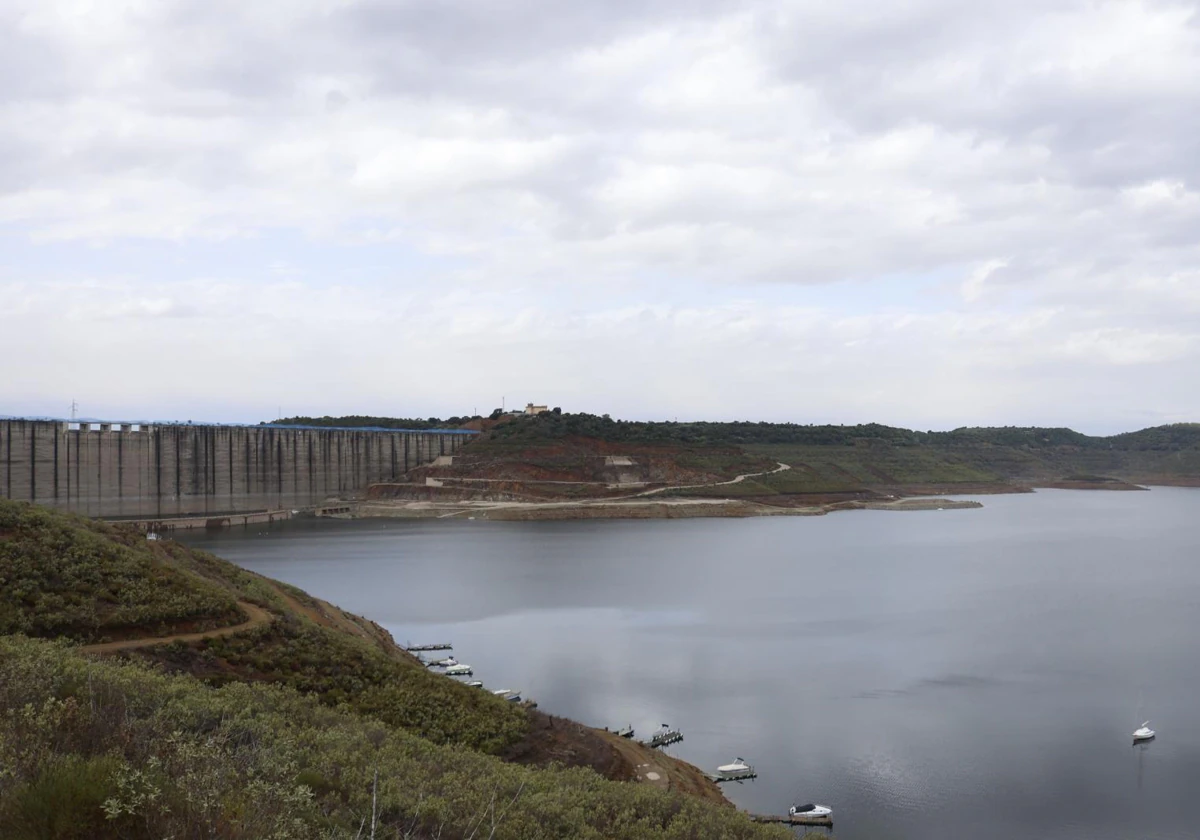
Second consecutive surge in Spanish reservoirs, which in the last seven days have gained 863 cubic hectometers (hm3), adding to the 569 from the previous week. With this latest contribution, the water reserve rises to 50% of its capacity, one and a half points more than last week, according to information provided every Tuesday by the Ministry for Ecological Transition and Demographic Challenge (Miteco) and also published by the specialized portal Embalses.net.
Currently, the water reserve reaches 28,040 cubic hectometers, a volume much higher than last year, when they stored 19,900 hm3 and hovered around 36% of their capacity (14 points less than now). They also remain above the average of the last ten years, which stands at about 45% and 25,209 hm3.
The contributions to the reservoirs, resulting from the rains of recent days (the maximum was recorded in Navacerrada with 136 liters per square meter), have been unevenly distributed throughout the peninsula. The most benefited river basins have been the Ebro (which has risen 4.4 points, gaining 345 cubic hectometers in a week), as well as Galicia Costa, Duero, and Guadalquivir, with two more points. The rise in the latter basin, the largest in Andalusia and one of the most in need of water, gaining 163 hm3 in a week, has been especially celebrated.
On the other hand, the Segura basin, currently the most 'thirsty' in Spain, continues its decline and is now below 15%. Compared to last year, according to Embalses.net, the Segura has lost seven points and 88 hm3, which rises to 15 points and 185 hm3 when compared to the average of the last decade. This situation has led the Permanent Drought Commission to propose to the presidency of that Hydrographic Confederation to increase restrictions on irrigation on the right bank of the basin.
In general, the reserve by areas is as follows: the Eastern Cantabrian is at 90%; the Western Cantabrian at 75.9%; the Miño-Sil at 67.4%; Galicia Costa at 73.7%; the internal Basque Country Basins at 90.4%; the Duero at 65.3%; the Tagus at 56%; the Tinto, Odiel, and Piedras at 71.2%; and the Ebro at 66.5%.
Below 50% are the Guadiana, which is at 40.2%; Guadalete-Barbate at 21.2%; Guadalquivir at 32.3%; the Andalusian Mediterranean Basin at 21.9%; the Júcar at 40.1%; the internal Catalonia Basins at 27.9%; and finally the Segura at 14.6%.
Water Reuse
Precisely to try to combat the drought, the Council of Ministers, at the proposal of Miteco, has given the green light this Tuesday to the Royal Decree approving the Regulation on the reuse of water after being subjected to a regeneration treatment. This will allow other higher quality water resources to be freed up and allocated to more demanding uses—such as supplying drinking water to the population—and increase the available resources, especially in coastal areas, "ensuring greater reliability and regularity of supply," Miteco states in a statement.
The new Royal Decree repeals the previous one, which was a milestone in promoting the reuse of wastewater in Spain and has allowed the reuse of about 400 hm3 per year. This regulation needed to be updated after the publication of Regulation 2020/741 of the European Parliament and of the Council of May 25, 2020, concerning the minimum requirements for the reuse of water for agricultural use, which came into force in June 2023, and establishes a new legal regime for the use of these regenerated waters.
The regulation approved today sets the legal regime that establishes the intervention of the competent authority with a dual enabling function: firstly, the activity of regenerating urban wastewater to reach the required quality depending on the uses to which it will be destined; and secondly, the private use that can be made of the regenerated water.
The regulation guarantees the safety in the use of regenerated water and promotes the reuse of water with the idea that in the coming years, Spain can double the use of this type of water resource.