Miguel Ángel Russo, Boca Juniors Coach, Passes Away from Prostate Cancer
Aged 69, he managed over 1,000 matches across eight countries and was unable to return to the Boca Juniors bench since September 21 due to his declining health.
Ignacio Tylko
Madrid
Thursday, 9 October 2025, 12:45
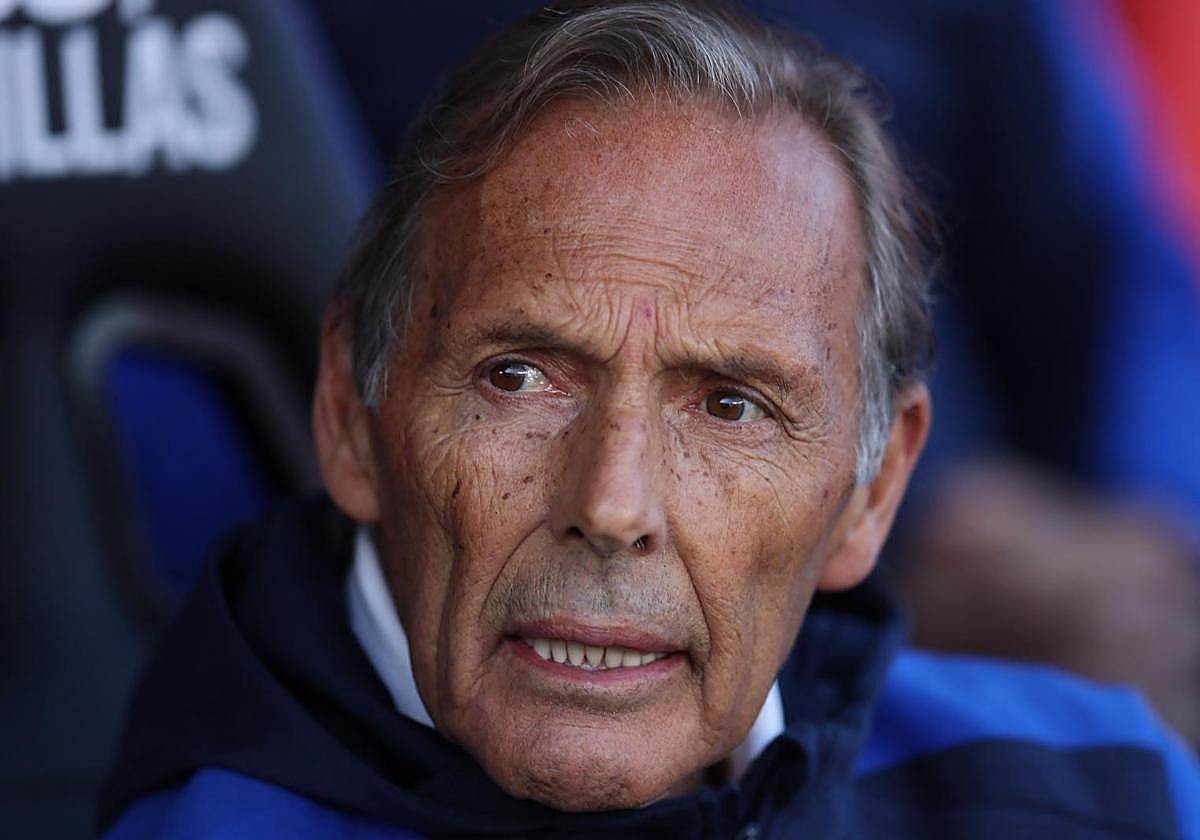
Veteran and charismatic Miguel Ángel Russo, known as 'Pincha', who recently coached Boca Juniors, succumbed to prostate cancer at the age of 69 in Buenos Aires, as confirmed by the popular xeneize club early this morning. The Argentine coach's health had deteriorated in recent weeks, preventing him from taking his place on the blue and gold bench since September 21. In his recent public appearances, which were interspersed with several hospital admissions, Russo appeared very thin, with a weakened voice and walking with difficulty.
The famous Buenos Aires club never commented on their coach's health, although it was revealed that he suffered a urinary infection in recent hours and was diagnosed with the malignant tumor in 2017, which ultimately claimed his life. On October 7, Boca merely stated that he was confined to his home with a "reserved prognosis." This Wednesday, they announced his passing. "Miguel leaves an indelible mark on our institution and will always be an example of joy, warmth, and effort (...) Farewell, dear Miguel!" Boca expressed on their social media.
Following the tragic news, numerous Argentine and South American clubs mourned his death, including Boca's arch-rival River Plate, which highlighted his "distinguished career in football as a player and coach." On Wednesday night, local time, the Argentine league postponed the match between Barracas Central and Boca, scheduled for Saturday, to a yet-to-be-determined date, corresponding to the 12th round of the Clausura tournament.
A man of few words and very direct phrases, Russo coached for more than half of his life. He spent 36 seasons on the benches, with his most significant moments at Boca, Rosario Central, and Estudiantes de La Plata, and was even close to managing the Argentine national team. He favored organized and balanced teams but was noted for his versatility in adapting to the players he had.
As a footballer, his life was marked at Estudiantes, the club where he spent his entire career from 1975 to 1988. He played as a defensive midfielder and also as a central defender, celebrating two titles: the Metropolitan Championship in 1982 and the National Tournament in 1983. The club from La Plata honored him on their social media as a "prodigal son and footballing glory" of the institution.
The legendary Carlos Bilardo, one of Russo's idols, gave him his debut in the first division. His performances led him to the Albiceleste national team, but Bilardo himself did not call him up for the final phase of the 1986 Mexico World Cup, won by Diego Maradona's Argentina. That was Russo's greatest disappointment.
He coached Salamanca
After retiring, he embarked on a prolific coaching career, leading over a thousand matches in Argentina, Chile, Spain—where he only coached Salamanca—Mexico, Colombia, Peru, Paraguay, and also Saudi Arabia. He did not leave a prolific trophy cabinet but achieved notable successes, such as a promotion with his beloved Estudiantes, leading a squad featuring emerging talents like Brujita Verón and Martín Palermo.
His first top-flight title was the Clausura won with Vélez Sarsfield in 2005. Later, at Maradona's request, he was chosen to manage Boca Juniors, where he lifted the Copa Libertadores in 2007, his greatest achievement as a coach. In Colombia, he made Millonarios champions a day after undergoing a chemotherapy session. Obituaries from Argentina recount that in Bogotá, he left an unforgettable phrase: "Everything is cured with love." He also forged an eternal bond with Rosario Central by saving them from relegation twice and winning the League Cup in 2023.
His final adventure began last June, after accepting Juan Román Riquelme's proposal to lead Boca for the third time. It started poorly with elimination in the Club World Cup and weak results in the Clausura, but he had begun to steer the course when his health deteriorated further, and he could no longer continue. RIP.