"We Do Not Learn from History Due to Sheer Ignorance"
"With leaders like Julius Caesar, we would fare better than with Trump, Putin, or Xi Jinping," believes the author of 'The Three Worlds' / "Conquering Gaul forged the idea of the West. He was very violent in war, but not a genocidal," he adds.
Miguel Lorenci
Tréveris (Alemania)
Sunday, 19 October 2025, 00:35
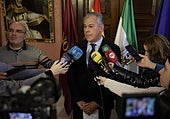
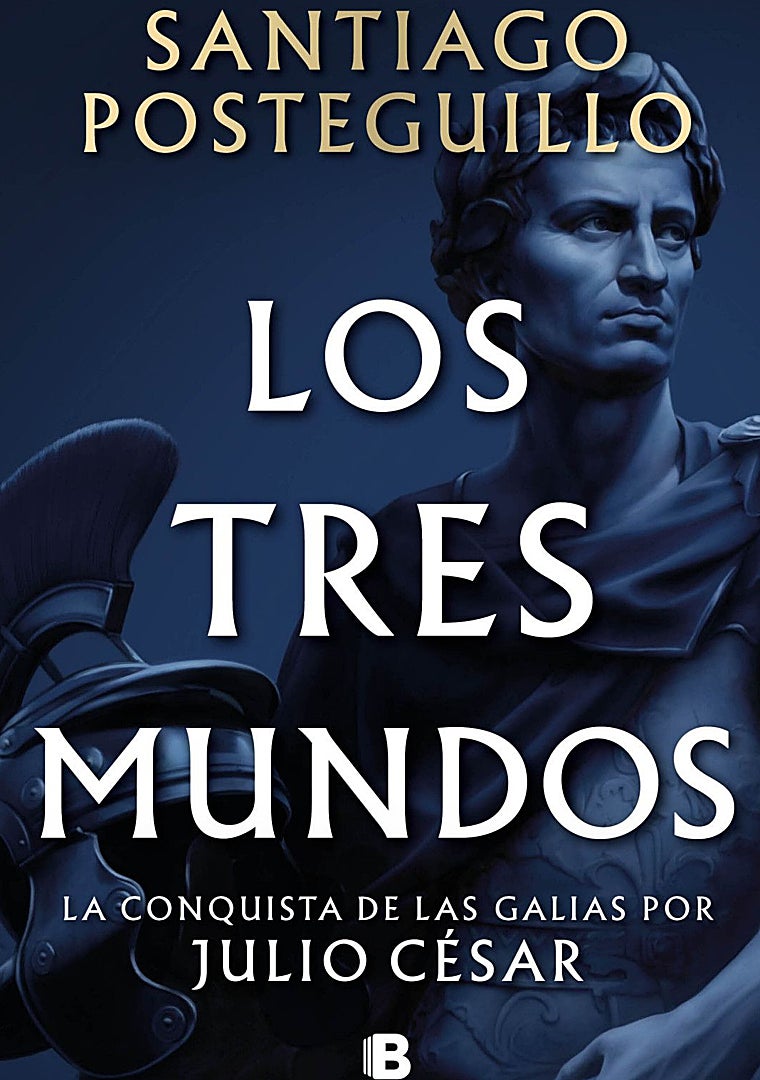
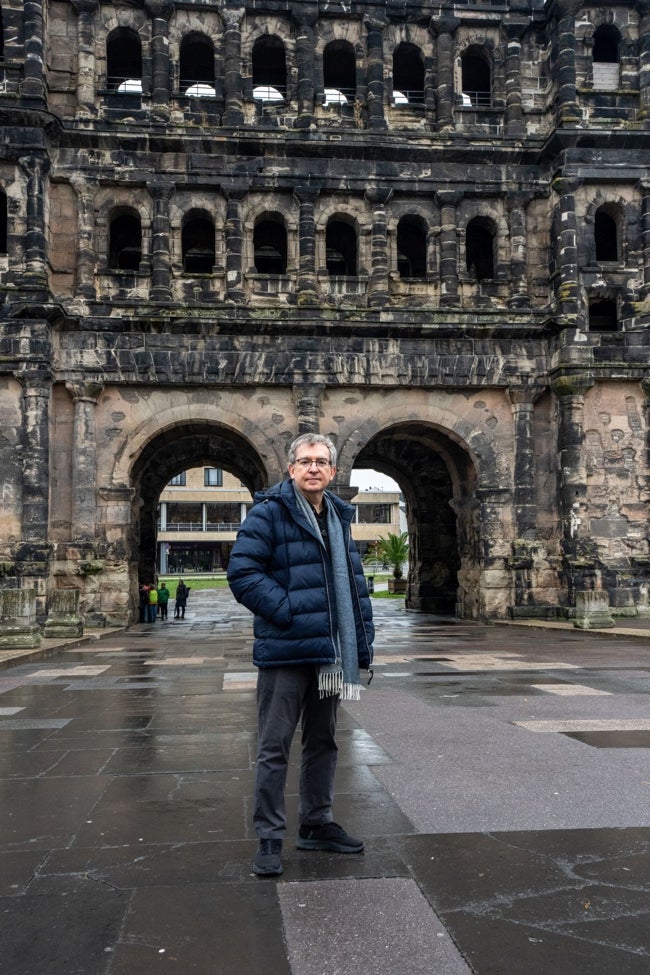
"With leaders like Julius Caesar, the world would be better today," says Santiago Posteguillo (Valencia, 1967) with a mischievous smile in front of the Porta Nigra in Trier, Germany's oldest Roman city. The writer, a true Midas of historical novels, has travelled to the heart of Germanic Gaul – Koblenz and Trier – to present 'The Three Worlds' (Ediciones B), the third monumental instalment of the six he will dedicate to Julius Caesar. "In this episode, I show how a new world begins to take shape," he explains.
"This was also Gaul," clarifies the author, "the territory of the Treveri, a Gallic tribe that inhabited the Moselle valley, up to the Rhine." There, Caesar ordered Vitrubius to construct a legendary wooden bridge in just ten days, allowing him to cross the mighty Rhine with his legions, extend the Empire, and change history.
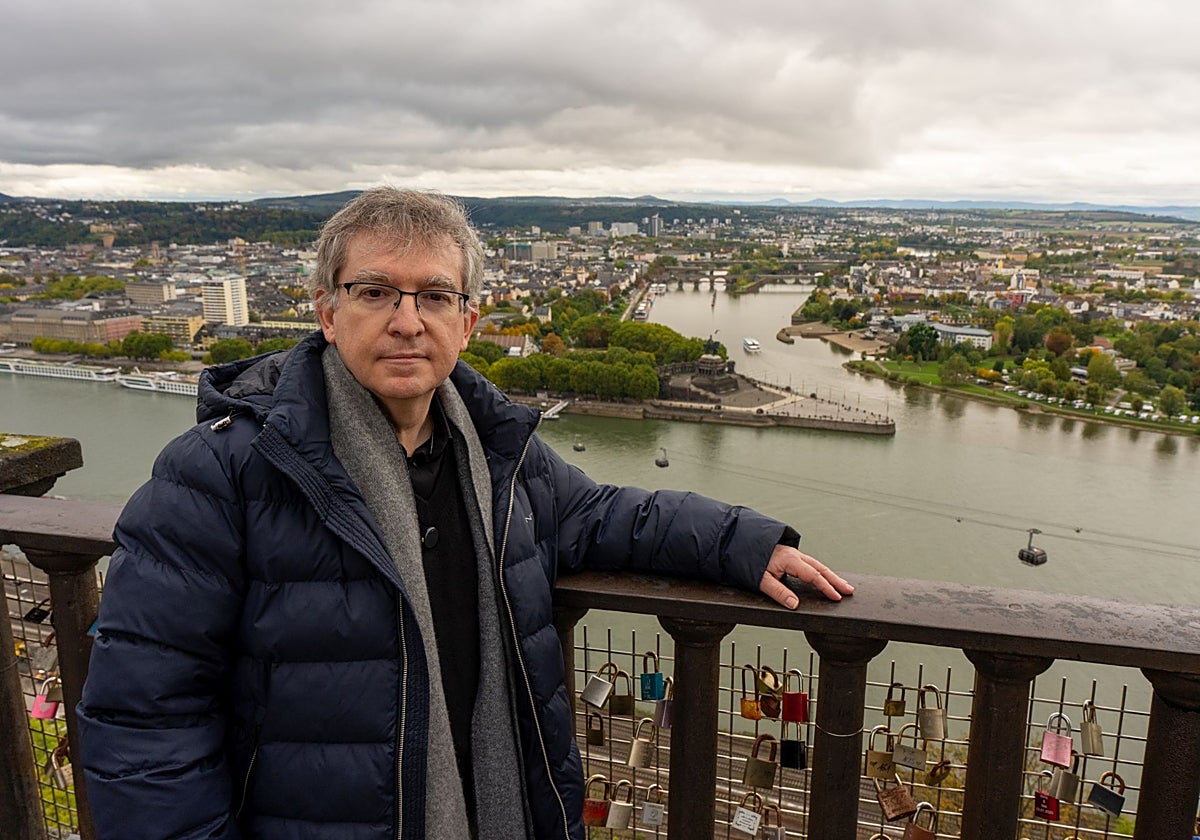
We are faced with a Caesar who is "expansionist, imperialist, and conqueror," says Posteguillo. An emperor "darker, due to his private life and the pressure from his political enemies in Rome, which force him to make decisions in a war he would have preferred to resolve differently." Posteguillo explains this in front of the model of the mythical bridge at the Ehrenbreitstein fortress in Koblenz, which controlled the Rhine crossing for centuries.
Was Caesar a genocidal? "If we understand genocide as the systematic destruction of a people due to ethnic or religious hatred, Caesar was not, despite the countless victims of the Gallic War," he asserts. "Those who seek to expand a state do not wish to annihilate what can enrich it. The intelligent approach is to expand causing the least possible harm. Within his violence, there was great magnanimity: he defeated his enemies and spared their lives. And they killed him on March 15. If he had been cruel without limits, he would not have been assassinated."
"Like Netanyahu today, Caesar used war as a political tool, something constant in history. In Mesopotamia, Egypt, Greece, or China, it was done the same way. Leaders who transform history know when to use war, but also when to stop it," says Posteguillo, connecting past and present.
He laments the drift of global leadership. "If we had leaders today of the calibre of Julius Caesar, the world would function better than with Trump, Putin, Xi Jinping, and a few others," he says. "Radicalism only leads to violence. When politicians take everything to the extreme, there is no possible way out," he adds. "Churchill said that a politician thinks about the next elections and a statesman about the next generation. But, unfortunately, today there are no statesmen," he laments.
Posteguillo is highly critical of educational mediocrity and cultural manipulation. "Dumbing down the population is the easiest way to govern without effort. If you replace citizens with uneducated, manipulable, and uncritical subjects, no one will hold you accountable. This dumbing down is a deliberate political objective, and our leaders are very clear about it," he says.
This ignorance, he warns, prevents learning from history. "If we all had enough education and training, we would understand that the 21st century is nothing more than an acceleration of the 20th, in which terrible things happened. We do not learn from history due to sheer ignorance. Because they strive to make us unaware of it."
He confesses that he considered titling the novel 'The Forging of the West', "because that is what Caesar did: forge the idea of the West and transform the world." The book combines Posteguillo's usual historical rigour and epic narrative in over a thousand pages with battle maps, glossaries, and an extensive 'dramatis personae' featuring Vercingetorix and Cleopatra VII.
Bridge to the Future
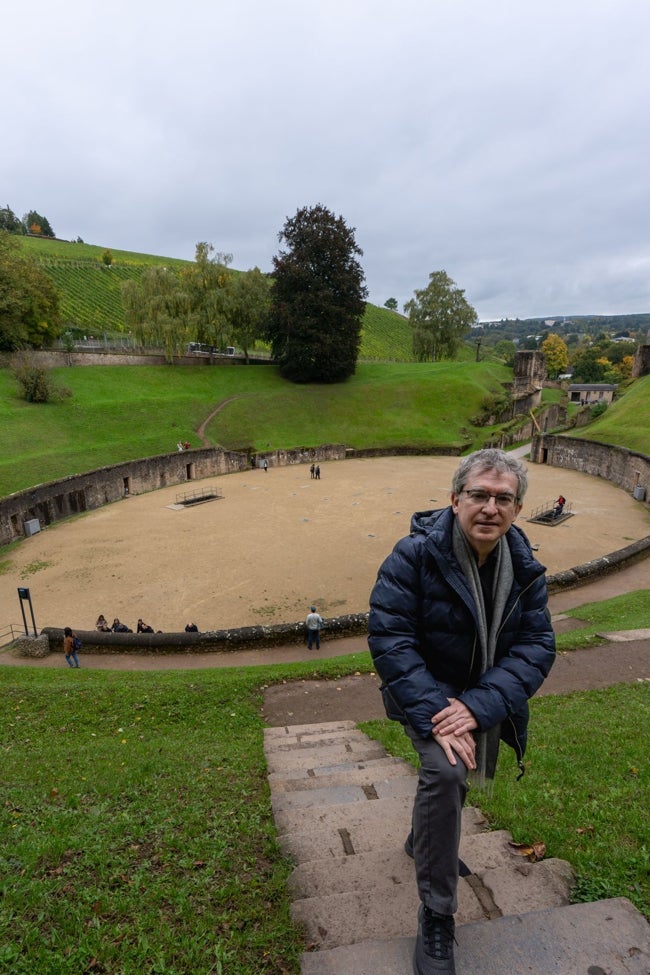
Posteguillo specifies that Gaul "was not just present-day France: it also included Luxembourg, Belgium, the Netherlands, Switzerland, northern Italy, and southern Britain." "Gaul and Celt were synonymous: everything south of the Rhine was Gaul. One of its main enclaves was Augusta Treverorum, present-day Trier." The Treveri, great horsemen, were allies of Caesar in several campaigns. "He decides to demonstrate that he can cross the Rhine and attack north by building a wooden bridge in ten days, right in Koblenz, where the Rhine and Moselle converge."
In 'The Three Worlds', Posteguillo reconstructs this "forging of the West" through three scenarios: Gaul, Rome, and Egypt. "The first world is Gaul, where the fate of Europe is decided. The second is Rome, with its political enemies: Cicero, Pompey, and Crassus, who conspire against Caesar. And the third is Egypt, seemingly remote, but with Pharaoh Ptolemy XII living in exile in Rome accompanied by his daughter Cleopatra VII." "Three worlds unknowingly walking towards the same destiny," he says.
"The private lives of the protagonists are as important as the public ones, and I wanted to show this dual profile of Caesar," notes the novelist. He had as models 'A Tale of Two Cities' by Dickens and 'Middlemarch' by George Eliot (the male pseudonym of Mary Anne Evans): novels that portray everyday life in times of great revolutions."