Jorge Ilegal Passes Away, Leaving Spanish Rock Orphaned
The leader of Ilegales was a magnificent lyricist, a formidable guitarist, and a sharp mind with no room for political correctness or convention.
M. F. Antuña
Gijón
Tuesday, 9 December 2025, 11:55
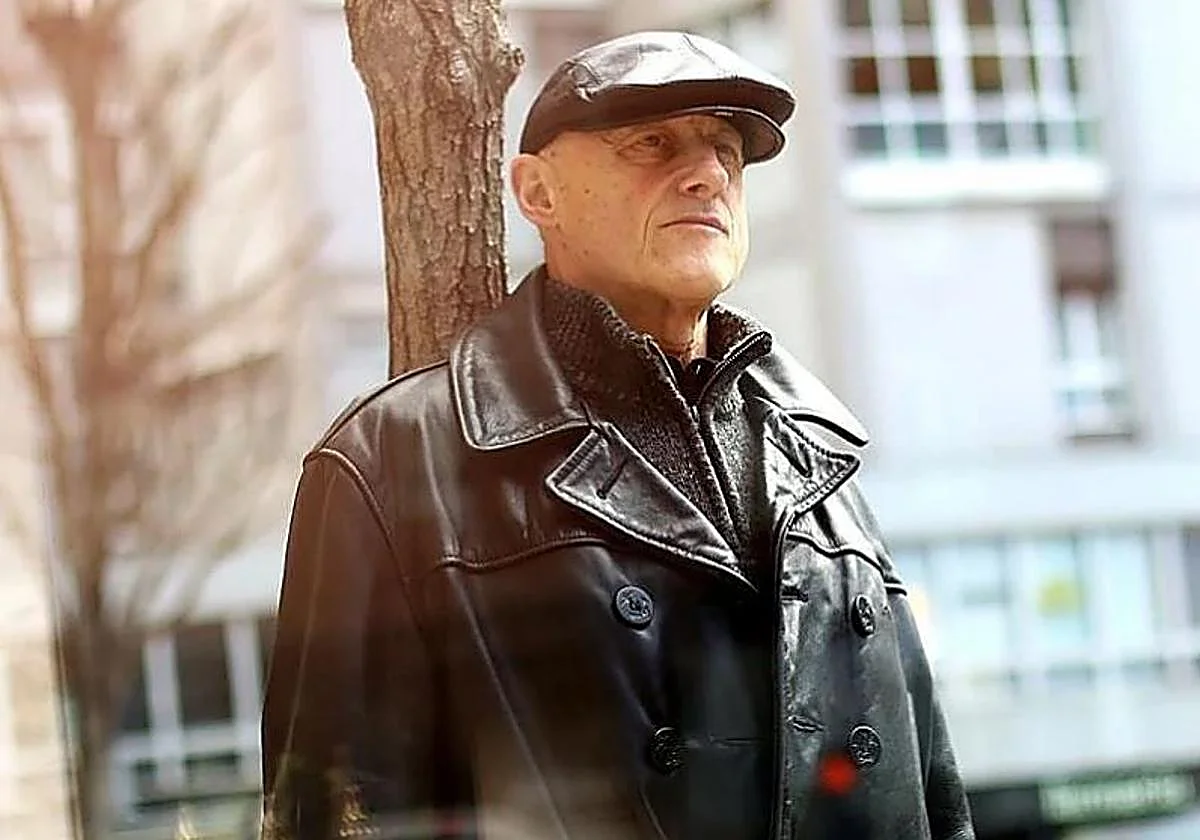
Behind the tough-guy facade capable of taking on the toughest in the room, there lay an overwhelming artistic sensitivity, as superb as his always-shaved and well-furnished head, born for political incorrectness, insolence, provocation, verbal battles, musical intensity, partying, and chaos. To live life and sing it with bass, drums, and guitar. He needed nothing more. One of the greatest in Spanish music has left us. Jorge Martínez, Jorge Ilegal, Jorjón, that lanky and rugged figure who spent over four decades filling stages in Spain and around the world with great rock and roll, has departed, leaving a void as immeasurable as his legacy.
He was the classic-style frontman, he was Ilegales, a formidable guitarist and a brilliant lyricist. "I am not afraid of the whims of fate/ The certainty of death or what I might lose/ And I am not scared of the fickleness of fame/ My life among the ants does me neither good nor harm." So he sang in 2017 in 'My Life Among the Ants', a song that perfectly captured him and gave title to a documentary about his life and work that left many in awe.
In that song, he confessed to being a rare happy person. Jorge Martínez was free in every way, born in Avilés in 1955, he grew into music in Gijón where he roamed the San Lorenzo of his youth with his famous hockey stick and settled in Oviedo to wander and populate its nightlife. He was anything but conventional, this highly cultured musician who counted among his hobbies the collection of lead soldiers, perhaps because among his ancestors was Pedro Menéndez de Avilés. But the aristocratic and military origin of his family did not lead him down the paths of order and law but quite the opposite. With his brother Juan (Los Ruidos), he founded his first band, Madson. Then came Los Metálicos and in 1983, Ilegales, with Íñigo Ayestarán on bass and David Alonso on drums, which landed like a bombshell in those iconic and volcanic Spanish eighties to dazzle with hits that are history like 'New Times, Wild Times' or 'I Am the One Who Spies on Children's Games'. With a coloured photo by Ouka Leele of a man shooting himself in the temple, the album stands as a national rock emblem and includes a song sung in a thousand bars and fairs like 'Hello Mamoncete'. Whoever doesn't know it, raise your hand.
'Tired of Waiting for the End', 'Everyone is Dead', 'Pale Boys for the Machine', 'Return to Chemically Induced Sex', 'The Heart is a Strange Animal', 'If Death Looks Me in the Face, I Turn Sideways', 'The Apostle of Lust', 'My Life Among the Ants', 'Youth, Egolatry' composed a discography as Ilegales that also had its pause for the eclectic musician, an enemy of reggaeton, to give free rein to other musical flavours and knowledge with Jorge Ilegal and the Magnificents, which recovered the essence of the orchestras of the forties and fifties to the rhythm of guarachas, tangos, and cha-cha-cha. That was back in 2011.
But the rocker never left. With different formations and with the loss of Jandro Blanco, who was his bassist, as a huge blow back in 2016, he kept alive a solid and forceful band that until the last moment filled venues and earned the applause of the Spanish and Latin American public.
And one fine day he blew out forty candles on stage and instead of covering himself or marking a 'greatest hits', he reinvented himself in 'The Struggle for Life', an album of new songs with artists like Loquillo, Josele Santiago, Andrés Calamaro, Luz Casal, Dani Martín, Enrique Bunbury, or Iván Ferreiro. Because if there was anyone Jorge had the utmost respect and absolute reverence for, it was his music colleagues.
In 2021, when that album hit the market, it summed up the reason for his success: "Rock doesn't age because it appeals to human nature itself." For him, it was something tribal, communicative, cathartic, healing. It was also an art in which one must take a stand: "We live in a money-driven culture, but we are artists, and what matters is art. We haven't taken the risks of all these years to now do what everyone else does. We are the good ones. And you have to be very tough to be one of the good ones," proclaimed a man capable of quoting Schopenhauer and Nietzsche and speaking with devilish vehemence and without a single hair on his tongue about music, life, politics. And the songs, which attacked him by surprise: "They are little bastards, the songs come at any hour. At four in the morning, when you're asleep at your best, I get up and grab the guitar. And other times they call me when I'm at the best of the party and I have to leave. You have to do it like that because the songs, if they leave, they never come back," the musician recounted.
"I've done everything I wanted and I've had a lot of success in life," he said in that same interview, in which he recalled the beginnings, the middle times, and the endings. In all of them, he lived large. He had a blast. And that is always the great victory of any human being. He left another phrase for history when celebrating those four decades: "I would ask for extra time, I would start again. With this, it's like with concerts: you go out with so much energy that you want to go back to the beginning." There is no extra time, but we will always have the records.