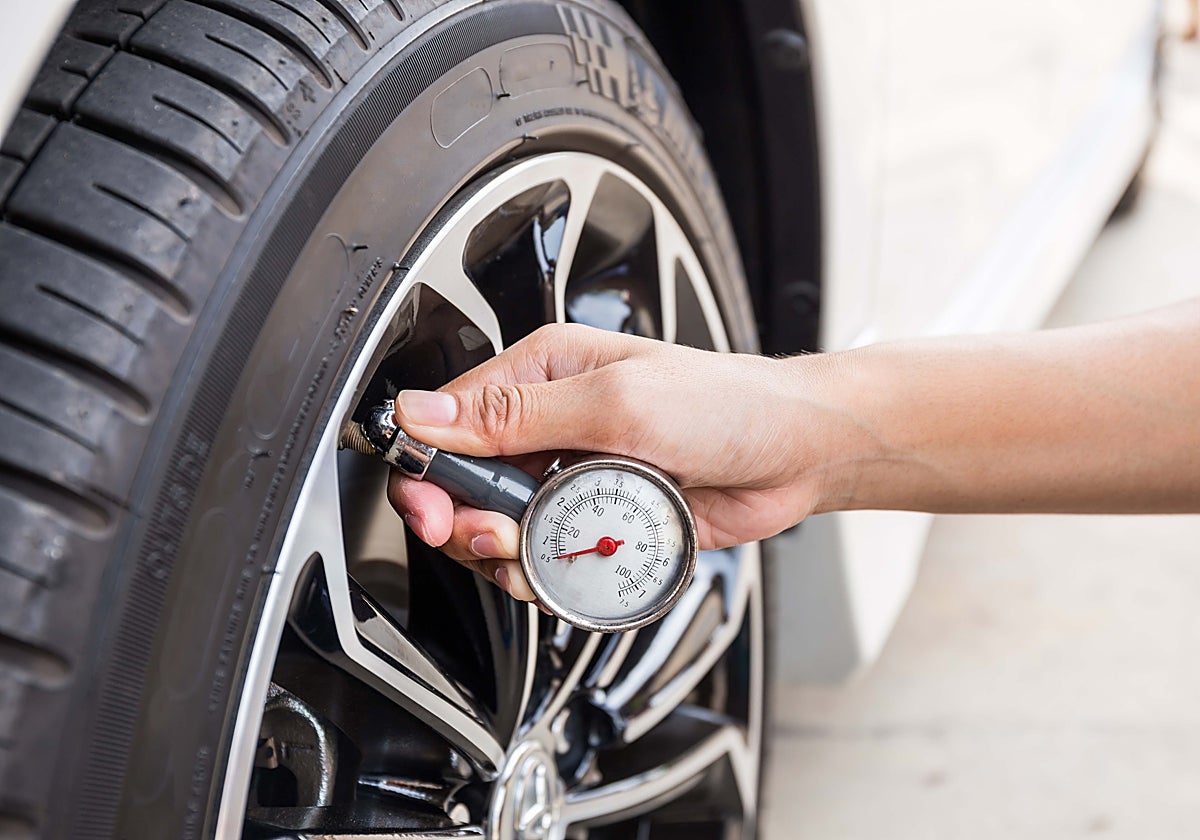
Increased Consumption and Risk of Blowouts: The Importance of Maintaining Proper Tire Pressure
N.S.
Friday, 10 October 2025, 10:06
In Europe, it is estimated that more than half of drivers are on the road with incorrect tire pressures. This practice increases rolling resistance, forces the engine to work harder, and results in higher fuel consumption and CO₂ emissions. Under this assumption (≥50%), the aggregate impact is around 5.8 billion litres of fuel and 13 million tonnes of CO₂ annually due to low pressure.
Maintaining the correct tire pressure is not only a basic road safety measure; it is also one of the most effective ways to reduce fuel consumption and pollutant emissions. According to AECA-ITV data, in 2024, nearly 20% of serious defects detected in vehicle technical inspections in Spain were related to tires and suspension.
Moreover, low tire pressure can increase the risk of blowouts and associated accidents. The NHTSA estimates that underinflation is present in about 20% of blowouts that result in accidents, and driving with severe underinflation (>25%) triples the likelihood of being involved in a tire-related crash. Additionally, the risk of a blowout can occur from 0.5 bar below the recommended pressure.
In Spain, more than 25 million cars are on the road, with an average age of over 15 years. Maintaining the recommended pressure could reduce consumption by between 5% and 10%, which means an average saving of 45 litres per vehicle per year. Furthermore, driving with 0.5 bar less than indicated reduces the tire's lifespan by around 20%, and with 1 bar less, up to 30%. If extrapolated to the entire vehicle fleet, driving with low pressure would generate an estimated additional consumption of 271 million litres of fuel per year, equivalent to 680,000 avoidable tonnes of CO₂.
The problem is not only economic or environmental: insufficient pressure compromises road safety, as it decreases grip and increases braking distance. Therefore, in addition to maintaining the correct pressure indicated by the manufacturer, there are three key practices that directly contribute to prolonging the tire's lifespan, optimizing consumption, and maintaining safety performance.
Firstly, proper tire balancing reduces vibrations while driving, prevents uneven wear, and improves comfort and steering precision. Secondly, correct vehicle steering alignment. A geometry out of tolerance causes lateral and uneven wear; maintaining alignment within specified values prevents premature wear and helps the vehicle drive straight. Also, driving style, for example, avoiding sudden braking and acceleration, anticipating manoeuvres, and maintaining a stable speed decreases the temperature and abrasion of the tread, extending its lifespan and reducing consumption.
Therefore, checking tire pressure once a month and before each trip is a simple action that helps reduce consumption and emissions, prolongs the tire's lifespan, and improves road safety. Sustainability begins with responsible maintenance at every stage of its use.