The Forgotten Elegance of Raimundo de Madrazo Shines Again
Mapfre gathers a hundred works by the cosmopolitan and refined painter, a member of a family saga of great artists / The exhibition repositions the great portraitist of indolence and luxury of the European and American high society in history
Miguel Lorenci
Madrid
Saturday, 11 October 2025, 07:10
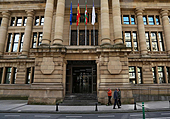
Raimundo de Madrazo (Rome, 1841-Versailles, 1920) died wealthy and famous, celebrated as one of the great painters of his time. However, history has been unjust to him. A member of a family of great painters, he portrayed the elite of Parisian aristocracy and American oligarchy. As a painter of bourgeois elegance and indolence, he lived detached from the avant-garde, without altering or modifying tradition. The Mapfre Foundation rescues him from undeserved oblivion, offering the largest exhibition of this great artist until January 18.
'Raimundo de Madrazo' is the first major retrospective on one of the "most cosmopolitan and refined technique painters of his time," according to curator Amaya Alzaga Ruiz. It gathers more than a hundred works by the Spanish master, many of them unpublished and brought to light thanks to research conducted for the exhibition. Alzaga highlights him "as a key figure in genre painting and 19th-century portraiture."

Grandson, son, brother, and brother-in-law of painters, his grandfather was José de Madrazo Agudo, director of the Prado Museum. Raimundo was the fourth of seven children of another great painter, Federico de Madrazo Kuntz. He felt the pressure to emulate his father's genius, but at 25, he deviated from the path prepared for him as a painter of monumental historical canvases like 'The Transfer of the Apostle Santiago' or 'The Daughters of the Cid'. "He did not want to be 'the son of' and put his enormous talent, the best of the San Fernando Academy, at the service of commercial painting," explains Alzaga.
His work was considered in his time as the pinnacle of elegance, the emulation of the past, and respect for tradition, positioning him as a key figure in the artistic scene and the most distinguished and international social circles of the late 19th and early 20th centuries.

He arrived in Paris at the age of 20, on the eve of the emergence of Impressionism and the avant-garde. There, Madrazo developed the bulk of his career, although he traveled to the United States from 1897, when his prominence in the French art scene was waning, where collectors and aristocrats competed for his works.
His refined taste, his meticulous representation of interiors, and his technical skill in reproducing textures and materials—luxurious dresses of wealthy Parisian and New York ladies and their sumptuous salons—relegated his production to the attic of history. "The exhibition aims to rectify the ignorance of this brilliant artist and restore his legacy to its rightful place in art history," says the curator.
It is remembered that "no one like him reflected the indolent pleasures of bourgeois life, the eroticism of indifference, and superficial and inconsequential elegance." A genre that made him a millionaire, while Manet, Matisse, Picasso, and company burst the seams of art.
Kill the Father
He was one of the preferred portraitists of the European and American high society. He painted Queen Maria Christina of Habsburg-Lorraine, the Duchess of Alba, the actress María Guerrero characterized as Doña Inés—the painting belongs to the Prado Museum—politicians of the time, and members of millionaire dynasties like the Vanderbilts.
He did not follow in his father's footsteps but portrayed him, as his father did him, in 1875. Both canvases are in the exhibition that traces the artist's career from his beginnings linked to academic teachings to his international consecration. Organized by the Mapfre Foundation and the Meadows Museum in Dallas, the exhibition is divided into eight sections that address his genre scenes and worldly portraits to his role as a key figure in 'juste milieu' painting, a trend between academia and the avant-garde. "Art history is always cruel to painters who do not represent progress," acknowledges Amaya Alzaga.
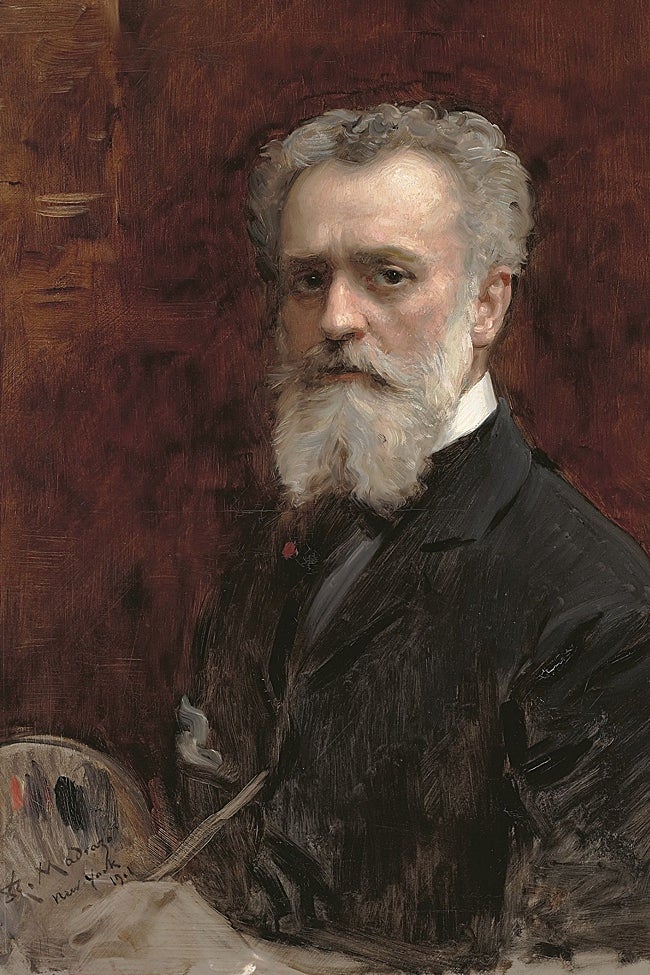
After several tours in the USA to portray tycoons and millionaires, Madrazo spent the last years of his life in Versailles, "where he painted its gardens as Velázquez painted the Villa Medici gardens in Rome." Very ill, he tried in vain to finish the large canvas of 'The Reception of Columbus by the Catholic Monarchs'.