Driving Posture: The DGT Reveals Common Mistakes That Jeopardise Your Safety
J. Bacorelle
Tuesday, 7 October 2025, 10:45
Although there is a "classic rule" for driving posture, most drivers and passengers do not position their seats correctly, increasing the risk of injury or delayed reaction to unexpected events. The key is not absolute comfort, but an ergonomics that ensures safety and immediate access to the vehicle's controls.
The Directorate-General for Traffic (DGT), through the National Confederation of Driving Schools (CNAE), emphasises that a correct seating position in the car is as fundamental as the seatbelt.
An incorrect posture can prematurely fatigue the driver, but more seriously, it prevents quick and effective reactions in an emergency, as the body may not reach the pedals properly or turn the steering wheel smoothly.
To establish a safe and ergonomic position, it is essential to follow an adjustment order that optimises the body's interaction with the vehicle. The first step is to ensure that the legs remain slightly bent even when pressing the clutch or brake fully, thus guaranteeing reaction capability.
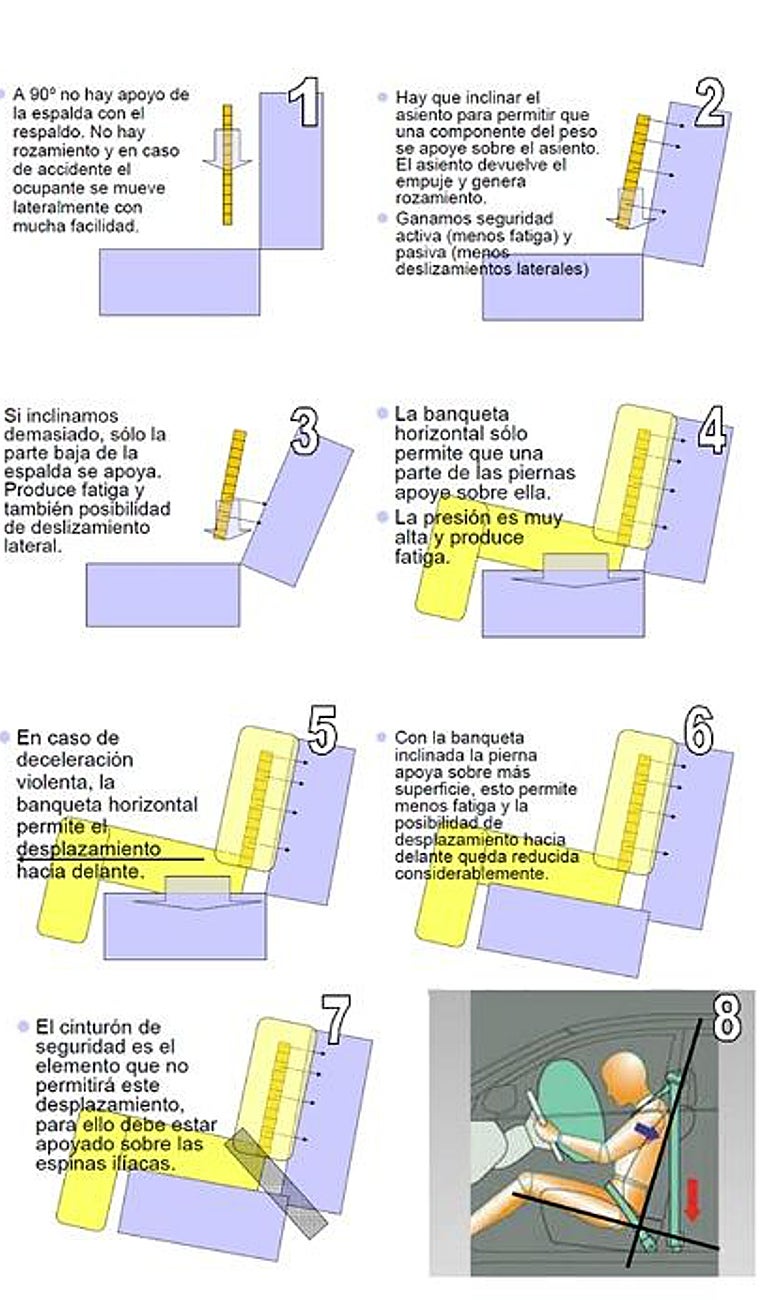
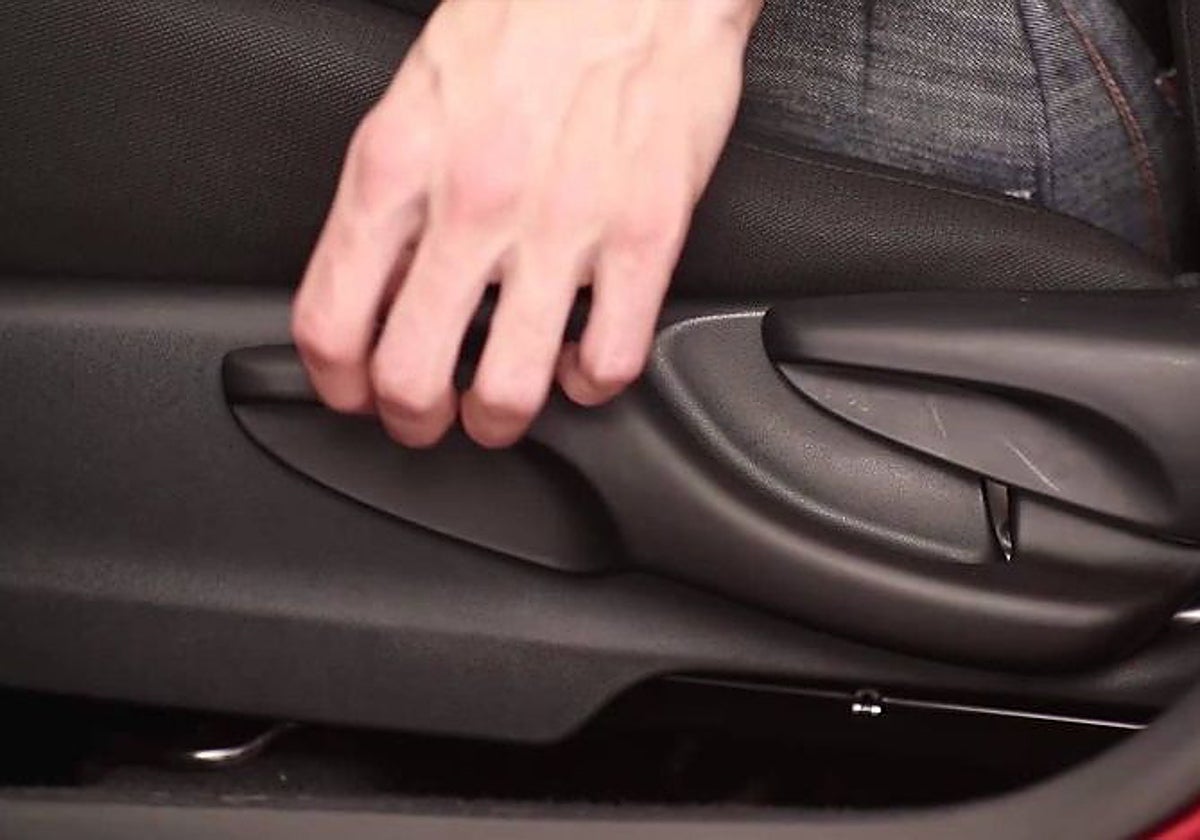
Additionally, it is recommended to slightly tilt the lower seat cushion upwards. This simple gesture facilitates foot movements and fundamentally helps prevent the lower body from sliding forward in the event of a collision.
The classic position of resting the wrists on the top of the steering wheel without lifting the back remains the golden rule for distance. Once established, the backrest inclination should be approximately 25º relative to the body's vertical.
It is a common mistake to place it at a right angle (90º), as this eliminates full back support and allows the occupant to move laterally easily in an impact.
At the wheel, the correct hand position, imagining a clock, is at "ten past ten." The arms should be sufficiently bent to drive comfortably and manoeuvre without crossing them.
The seatbelt must be precisely adjusted: the lap belt should be snug against the hips (iliac spines), and the shoulder belt should touch the shoulder but be away from the neck area to avoid possible strangulation in a collision.
The headrest is not a comfort element but a crucial active safety feature to prevent whiplash. It should be adjusted so that the resistant part aligns with the head's centre of gravity (at eye level). Placing it lower can worsen injuries in rear-end collisions.
Finally, before setting off, all mirrors should be adjusted on level ground. The interior mirror should be centred with the rear window without forcing the driver to move their head, while the side mirrors should allow a complete view of adjacent lanes.