Domenico Chiappe: "Shame and Guilt are Feelings Shared by Almost All Victims"
Journalist Domenico Chiappe releases a book with over fifty interviews spanning seven years: a comprehensive overview of violence
Carlos G. Fernández
Monday, 13 October 2025, 00:10
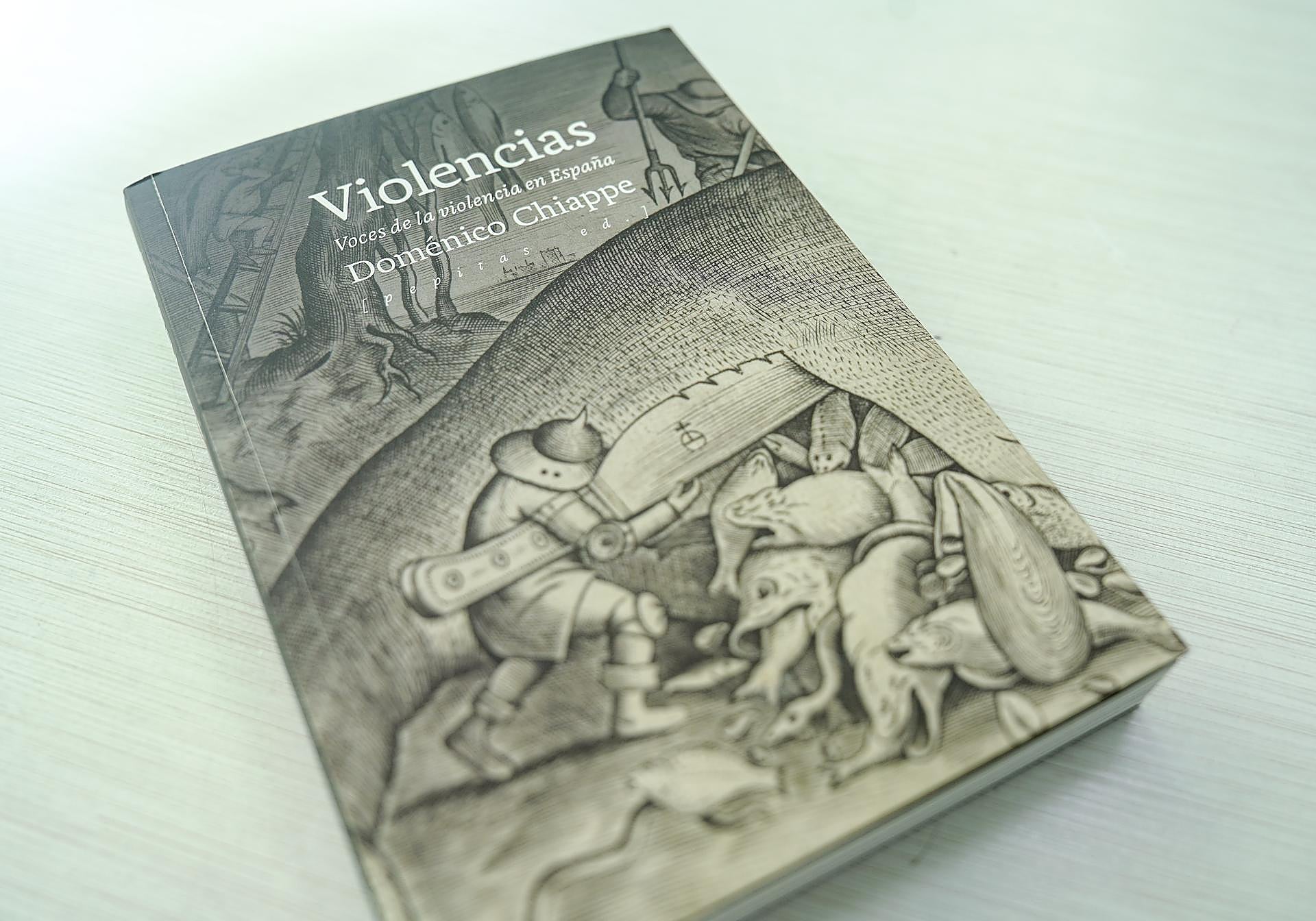
Journalist Domenico Chiappe (Lima, 1970) embarks on a daily quest for stories, many of which are directly related to the content of his new book. In Violencias. Voces de la violencia en España (published by Pepitas de Calabaza), more than fifty victims recount their experiences, providing a harsh yet necessary overview. There are cases of physical violence near death, but also instances of workplace, digital, obstetric, economic, xenophobic, or institutional violence that Chiappe aims to highlight.
–Before reading the testimonies, the book begins by discussing the difficulty of defining violence.
–I was surprised that the Penal Code lacks a definition. It seems to be implicitly understood, and I believe people feel the same. The challenge was defining its boundaries. Society's consensus makes some forms of violence objective, but others are subjective. This book includes many invisible forms of violence.
–Many cases in the book originate from reports published over the years, but here the victims narrate their stories extensively and in the first person, without a narrator's aid. Why?
–I have always been interested in uncovering the human side behind the numbers, behind the news. A report focuses on context, data, experts, and has limited space. Even if you use the person's experience, even if you talk for hours, little remains in the report. Here, the first person provides great strength and credibility. I spoke again with everyone and asked for permission to retell their stories. It was important because their personal context might have changed, and publishing now could inadvertently cause more harm.
–The cases do not follow a specific order. How did you decide?
–Initially, I divided them by theme: institutional, gender, sexual, workplace violence, etc. Then I realized I didn't want to theorize about violence, not even in that way. I just wanted to present real testimonies of what happens around us. These are interviews from the past seven years, and we've spent one and a half to two years giving them their final form: a cadence of voices that blend in a way I perceive as very musical. The choir had to sound harmonious.
–Do all these forms of violence have something in common, or is it impossible to predict how they might manifest?
–What all forms of violence share is that they are exerted by those who can. It always comes from a position of power: someone wanting to subdue someone they perceive as weaker. It succeeds when the person subjected to violence is indeed weaker or when everything meant to protect them fails, which in a democratic society are usually institutions, but also the surrounding environment.
–Having covered so many cases, have you identified recurring patterns?
–Yes, depending on the type of violence, patterns emerge. Gender violence and sexual violence against children have been extensively covered in the newspaper over the years. Each year, you write several stories on these topics and confirm the existence of a pattern. Moreover, it is not only happening now but has been occurring for decades. In the book, for instance, there are three stories, each separated by 30 years, yet they follow the same pattern. Society reacted more or less the same way.
–Do all victims share something?
–I believe that people who suffer these types of violence create a parallel world where they sometimes enter and sometimes exit, a bubble they carry with them that distorts reality. Those who have experienced it, who carry that bubble, recognize and understand each other.
–What does a victim deserve from society?
–First and foremost, they deserve to be heard. Secondly, they deserve to be believed. Of course, not naively: everything they say can be verified, and I do verify it. I always ask for data, consult archives, the judiciary for sentences, health issues... After being heard and believed, they deserve a social response that sometimes can come from governments or sometimes from their family, their neighbours. In any case, I have not reflected on solutions. I show what exists, and I believe solutions should be proposed by experts, not commentators.
–Is Spain a violent country?
–There is a lot of hidden violence, much violence that people don't want to see. It seems distant, affecting few people, but that's not the case. However, it all depends on what you compare it to. In a country with 30,000 homicides a year, in a country where bombs fall or one taken over by drug trafficking and criminal gangs, who will care about domestic violence or kidnapping? That all-encompassing violence doesn't exist in Spain. We can start addressing more intimate issues.
–Representations of violence and crime are hugely popular on television, in literature, podcasts... Do we have a twisted relationship with the image of violence?
–I believe violence is trivialized through the simplification entertainment provides. 'True crime', for example, follows a very simplified structure, not showing the full extent.
–It doesn't show how long the trauma lasts: decades, or a lifetime...
–Yes, because the terrible thing is that most victims of any type of violence share two feelings: shame and guilt. It's very difficult to escape that because shame prevents them from speaking, and guilt lingers because there's always that thought: if I hadn't done this, or my behaviour led to this happening... it's often a matter of manipulation by the aggressor, but also by society, the courts, the experts, the neighbours. Many don't come forward because they lack the strength and believe it won't be worth it, that seeking reparation will disrupt their lives.