Benidorm Desalination Plant to be Tendered Before End of 2026
The Marina Baixa Water Consortium plans to initiate the process after resolving objections and advances in its plan to ensure regional supply
Nicolás Van Looy
Benidorm
Friday, 17 October 2025, 16:55
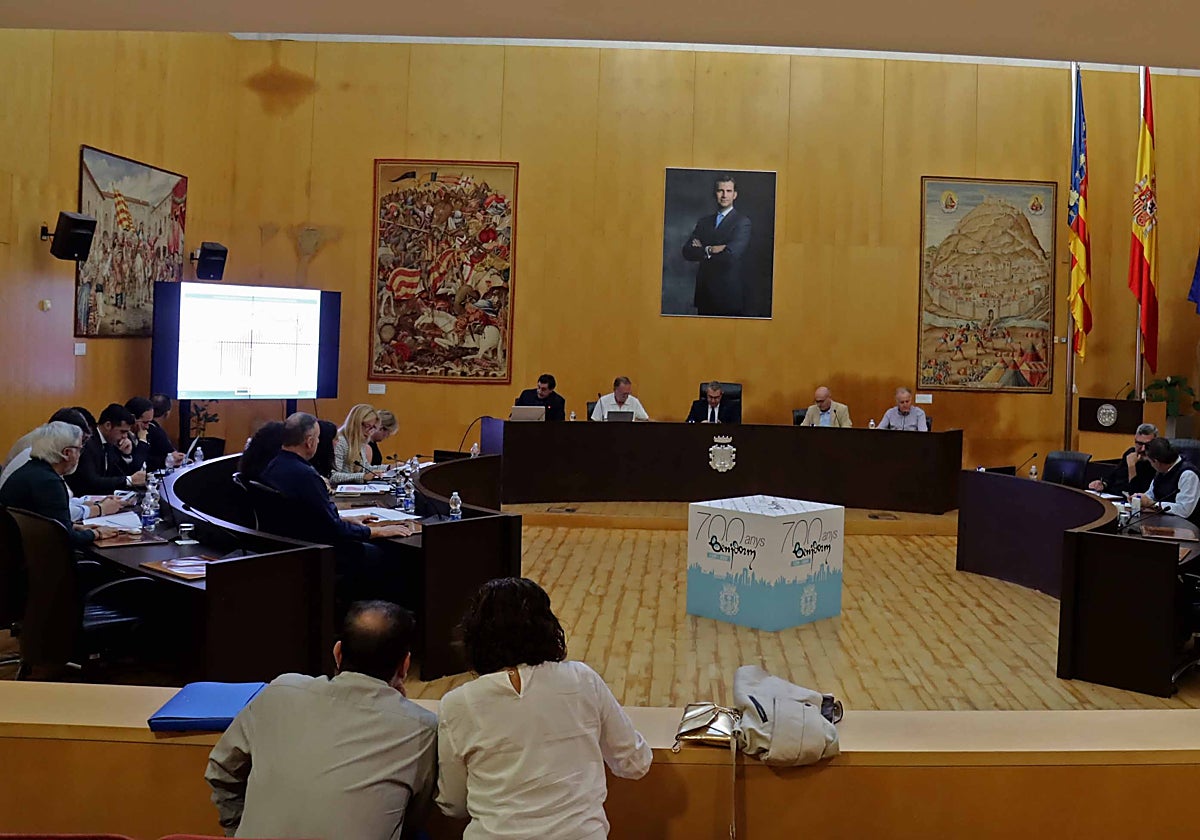
The Marina Baixa Water Consortium has confirmed its intention to initiate the tender for the Benidorm desalination plant before the end of 2026, as highlighted during the extraordinary session of its General Board, held this Tuesday in the city.
The meeting addressed the status of the new infrastructure's processing, which is crucial for the future of water supply in the region. One of the main points was the annulment and reactivation of the tender process for drafting the plant's technical project.
The Consortium's technical director, Jaime Berenguer, explained that the tender (initiated on September 9 with a budget of 594,385.48 euros) had to be temporarily halted following an objection by a company regarding one of the award criteria. To avoid a delay of up to six months, the Consortium decided to remove the contentious criterion and reactivate the tender just a few days later.
"It has already been re-uploaded to the State Contracting Platform after removing the problematic point, and now only professional experience will be evaluated," detailed Berenguer. The Mayor of Benidorm and President of the Consortium, Toni Pérez, supported the decision, calling it "correct from a technical standpoint."
The Consortium plans to have the technical project ready by 2025 to launch the work tender before the end of 2026. The total estimated investment will be around 25 million euros, although the final document will determine the final budget.
The financing model is already defined: the Conselleria will cover 50% of the cost, the Alicante Provincial Council 25%, and the Water Consortium the remaining 25%. The future desalination plant will have a planned capacity of six cubic hectometres, a figure that will strengthen the supply of the entire Marina Baixa and ensure supply during drought periods.
During the session, Berenguer also presented the regional supply status report, highlighting that the Marina Baixa is currently in a drought alert situation. He detailed that the reduction in water resources is due to climate change, the reserves imposed by the Ministry, and the ecological flows set by the Júcar Hydrographic Confederation (CHJ).
The reserves, he explained, limit the maximum volumes of water stored in reservoirs based on the probability of rainfall, reducing their useful capacity. He also criticised that the CHJ has established mandatory ecological flows in the Guadalest and Amadorio rivers, "despite them being dry riverbeds."
In response to this situation, the Consortium has filed an appeal with the Supreme Court to overturn this requirement, as it "represents the loss of almost three cubic hectometres of water," Berenguer pointed out.
The technical manager recalled that, while the desalination plant is being developed, the Marina Baixa will continue to rely on the Rabasa-Fenollar-Amadorio pipeline in 2026, a system that has maintained supply stability in recent years.
The future Benidorm plant is thus configured as a strategic infrastructure for the territory's water future, not only for its production capacity but also for its role in the autonomy and sustainability of the regional supply system.