Affordable Electric Cars: A Reality Below 15,000 Euros?
A. Noguerol
Friday, 17 October 2025, 11:05
Zero-emission mobility in Spain is undergoing a significant paradigm shift, driven by both growing demand and the evolution of market offerings.
While finding electric cars under 15,000 euros was once a dream, the industry's reality is beginning to reflect a small gap where manufacturers are betting on low-cost urban and compact models.
This trend, coupled with promotional campaigns and current aid plans, brings electric vehicles closer to that psychological price barrier, democratizing access to a crucial technology for decarbonization.
The impact of this transition is evident in sales figures, which continue to record significant growth. In September, 22,205 electrified vehicles (including pure electric and plug-in hybrids across all categories) were registered, marking a 102.7% increase for the month and representing 21.31% of the total market.
In the year-to-date, up to the third quarter, 172,376 electrified units have been sold, with a 98.4% increase compared to the same period last year, reaching a 16.91% share of the total market.
Focusing solely on pure electric vehicles, the figures and percentages are slightly lower. Nevertheless, sales increased by 64.6% in September, totaling 81,539 units for the year, with an annual growth of 85.7%.
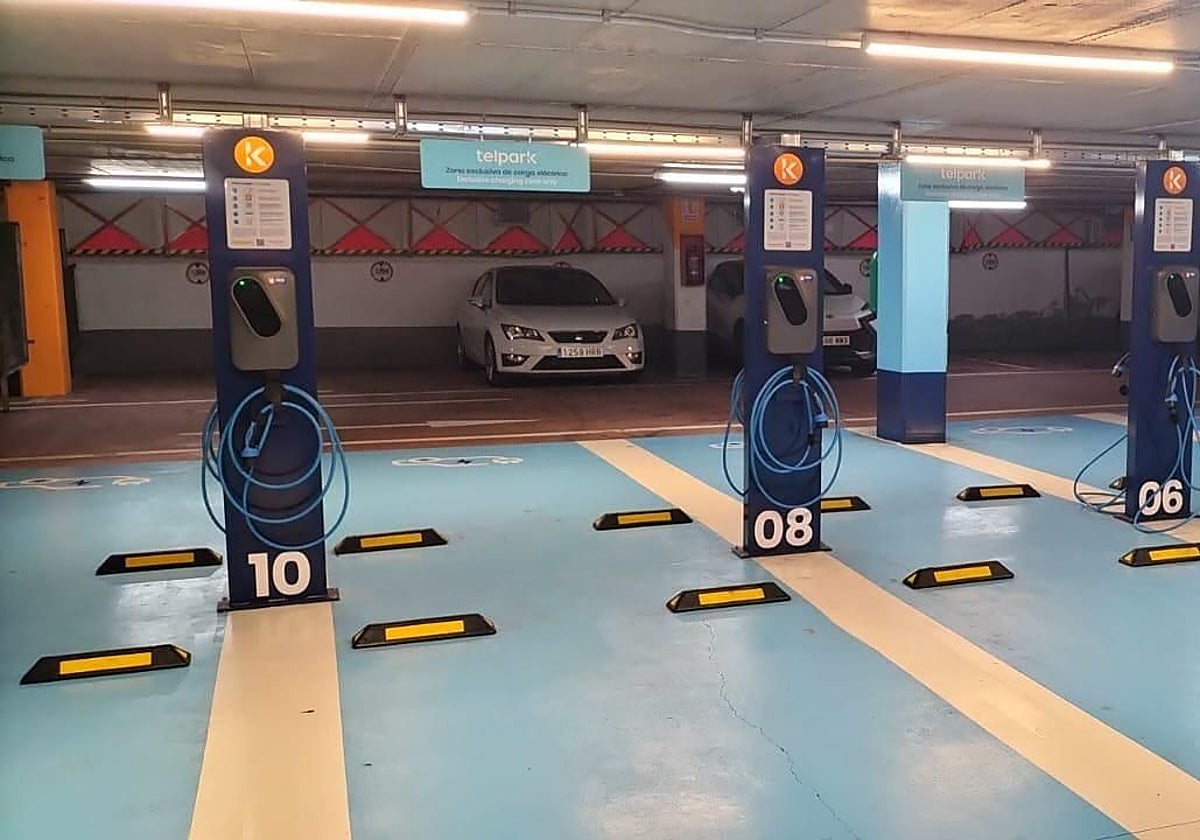
Alongside the growing demand, the public charging infrastructure is also expanding. As of October 1, Spain already has 48,594 operational charging points, a 7.08% increase so far this year, according to AEDIVE figures.
However, price remains a crucial factor in swaying the public towards a 100% electric car in their purchasing decision. The catalogue of electric cars under 15,000 euros remains limited, but these models anticipate a scenario where zero-emission mobility will become increasingly accessible. Public subsidies, launch promotions, and financing strategies are allowing some urban vehicles to fall below that once-unattainable figure.
Among the current alternatives, the Hyundai Inster stands out for combining one of the best ranges in the segment with notable charging power and a final price that, with the right campaigns, makes it one of the most recommended options. The Leapmotor T03 and the BYD Dolphin Surf are positioned as very economical options for those seeking something purely urban, while the Dacia Spring remains a model to consider.
The advance of Asian brands and the adaptation of established brands like Hyundai suggest that this price range will grow in the coming months, especially if aids like the MOVES Plan are maintained or additional regional incentives emerge.

Hyundai Inster
From approximately 13,980 euros
The Hyundai Inster is one of the latest urban electric vehicles to hit the market and also one of the few that, with applied aids and promotions, can be priced below 15,000 euros. It is a small urban SUV designed to move smoothly in the city and surroundings, with a recognizable design and habitability that make it a reference in its segment.
It boasts up to 327 km of range, a notable figure within its category and clearly above the average for the urban segment. The battery has a gross capacity of 42 kWh and allows fast charging from 10 to 80% in about 30 minutes thanks to a charging power of up to 73 kW. This facilitates daily use without the need for long stops.
With an estimated price starting from approximately 13,980 euros (in current campaigns and with aids like the MOVES Plan, financing, and trade-in of used vehicles), the Inster positions itself as one of the most balanced options in terms of range, equipment, and price.
BYD Dolphin Surf
Its price starts from around 11,780 euros
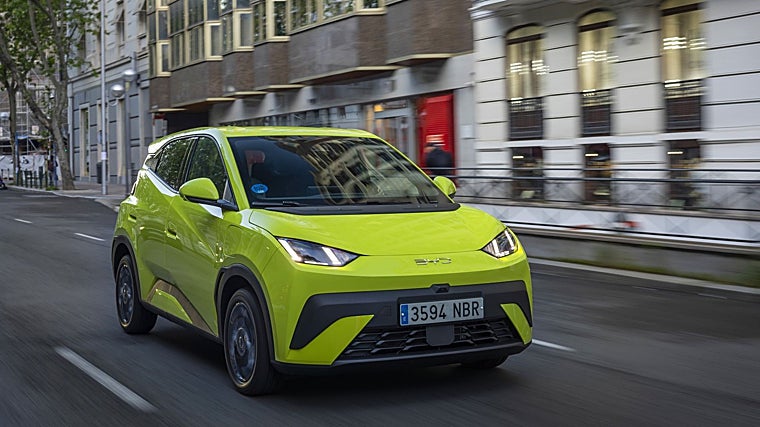
BYD has strengthened its electric range in Europe with models designed for different usage profiles, and the Dolphin Surf (Active) positions itself as a clearly urban and affordable alternative. As the younger sibling of the BYD Dolphin, its larger sibling, the Dolphin Surf plays in a lower category in size and price, designed for those seeking a practical and economical electric vehicle for daily use.
This model claims around 220 km of range, powered by a 30 kWh battery. Fast charging from 10 to 80% is completed in about 30 minutes, with a charging power of up to 65 kW, making it quite competitive in its category in terms of waiting times.
Its price starts from around 11,780 euros according to available promotions and discounts, making it one of the most economical models in the current electric market. It is clearly oriented towards urban use and surroundings, where its compact size and reduced cost of use make it a very attractive alternative for those making the leap to a 100% electric vehicle for the first time.
Leapmotor T03
Starts from around 10,700 euros
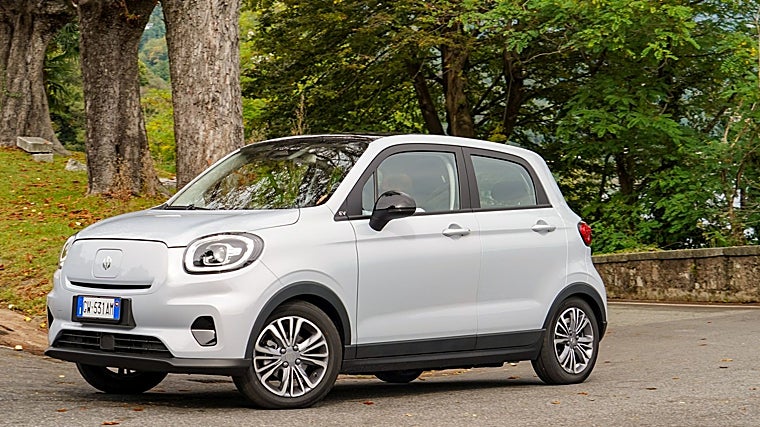
The Chinese brand Leapmotor has landed in Europe with Stellantis, bringing one of the cheapest urban electric vehicles available: the T03. It is a compact city car, with dimensions designed for the city and an eminently functional approach. Although less known than other Asian brands, it is beginning to gain visibility thanks to its pricing strategy and simplicity.
The T03 offers about 265 km of certified range and is equipped with a 37.3 kWh battery. In fast charging, it can recover from 10 to 80% in approximately 36 minutes, with a maximum power of around 48 kW. It is not the fastest in charging, but it meets the needs for daily journeys.
Its main argument is the price, which starts from around 10,700 euros with current aids and promotions. It is, in fact, one of the most economical entry points to new electric mobility in Spain, although with a very city-oriented focus and less suited for frequent travel.
Dacia Spring
Starts from 17,636 euros, but with aids, the price falls to the 15,000-euro limit
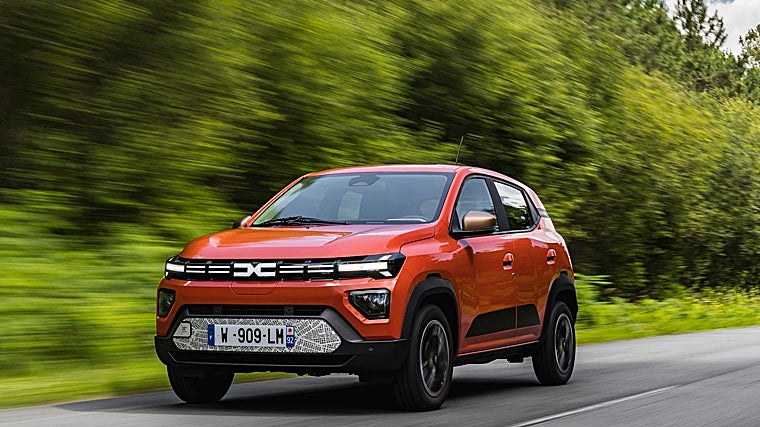
Although its price starts from 15,990 euros, the Dacia Spring has become one of the most popular urban electric vehicles thanks to its simplicity and reduced cost of use. Its approach is very basic and functional: a small urban crossover, with low consumption and minimal maintenance.
It claims about 228 km of range, with a 27.4 kWh battery. Charging from 10 to 80% can take up to 56 minutes in direct current, as its charging power is around 30 kW, clearly below other rivals.
Its position slightly above the 15,000-euro threshold means it does not strictly fit the limit, but its popularity in the market makes it one of the most veteran models in this segment.
For now, the psychological barrier of 15,000 euros already has real representatives, and some manage not only to enter but also to offer a solid proposal of range, charging, and usability beyond strictly urban journeys.